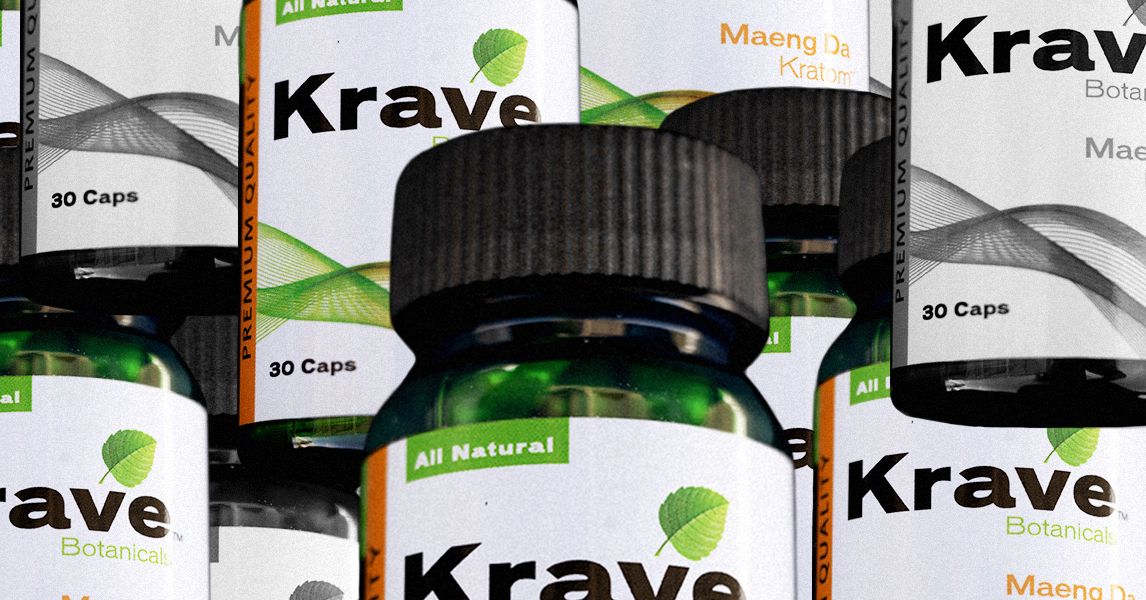
The planned DEA 7-OH ban is already changing behavior among people who use the kratom-derived compound: some are tapering in Reddit and Discord groups, while others are buying enough to outlast the first shock of a federal crackdown.
The Drug Enforcement Administration plans to put 7-hydroxymitragynine, known as 7-OH, on Schedule I of the Controlled Substances Act along with MGM-15 and MGM-16. According to the agency’s Federal Register notice, the temporary scheduling could begin no earlier than August 5 and would last two years, with a possible one-year extension while the DEA pursues permanent scheduling.
7-OH is a potent compound found in kratom, the Southeast Asian plant sold in the US as powders, capsules, drinks and other products. The compound activates opioid receptors, which is the mechanism behind both its appeal for pain relief and the agency’s concern about misuse. Kratom itself naturally contains only trace amounts of 7-OH, so ordinary kratom products would not meet the DEA’s threshold under the planned action.
What would the 7-OH ban do?
The DEA’s temporary order would ban manufacturing, sales and possession of 7-OH, MGM-15 and MGM-16 at the federal level by placing them in Schedule I, the same legal category as heroin. The DEA says 7-OH products pose a public health risk because of their opioid activity and abuse potential, especially as products sold as dietary supplements are not reviewed by the Food and Drug Administration for safety and effectiveness before sale.
WIRED reported that 7-OH is available through gas stations, smoke shops and online sellers, and that a dozen states have already banned it. Users interviewed by the publication described using it to self-treat chronic pain, anxiety and withdrawal from other drugs. That is the mess at the center of this policy fight: an unregulated opioid-like market with real dependency reports, sitting next to people who say it has kept them functional.
One 36-year-old New York resident identified as Cam told WIRED he began using 7-OH after a severe motorcycle crash left him with constant pain. He said he later bought the compound online in bulk, spending about $500 for a month’s supply, and also used MGM-15 because it lasted longer. Cam said stopping 7-OH feels like opioid withdrawal, but said the drug improved his daily life after prescribed oxycodone did not control his pain.
Other users reported darker outcomes. WIRED said one person spent $175 every four to five days before quitting, became too sick to work and eventually could not pay rent. Online groups such as r/quitting7oh, which has about 11,000 members, now trade taper schedules and suggestions for handling symptoms such as anxiety, insomnia and chills.
Archie, a pharmacy student using a pseudonym, told WIRED he started 7-OH in March for jaw pain and soon found that missed doses brought severe withdrawal. He said a third-party testing site gave the brand he used an F grade because it was stronger than advertised and contained MGM-15, which was not listed on the label. After the semester ended, he checked into detox and received buprenorphine in decreasing doses.
Petros Levounis, chair of psychiatry at Rutgers New Jersey Medical School and chief of service at University Hospital, told WIRED he now sees several emergency-room patients each month seeking help for kratom or 7-OH withdrawal. He said doctors use a protocol similar to opioid withdrawal treatment, while acknowledging that clinicians are still learning how best to treat problems linked to these substances.
The politics are as clean as a gas-station supplement label, which is to say, not very. The mainstream kratom industry argues that concentrated 7-OH should not be treated as kratom because it is far more potent. Supporters of 7-OH argue the compound helps people and cannot be separated from kratom. Health and Human Services secretary Robert F. Kennedy Jr. has backed the crackdown and called the 7-OH industry “sinister,” while WIRED has reported that Kennedy and Markwayne Mullin have ties to the kratom industry. HHS did not respond to WIRED’s request for comment.
Several users told WIRED they want testing, accurate labels and warnings that 7-OH can be addictive, rather than sales through gas stations. For people already dependent, the DEA’s clock is now the practical problem: quit, taper, stockpile or gamble on whatever market replaces the legal one.
This story draws on original reporting from WIRED.


