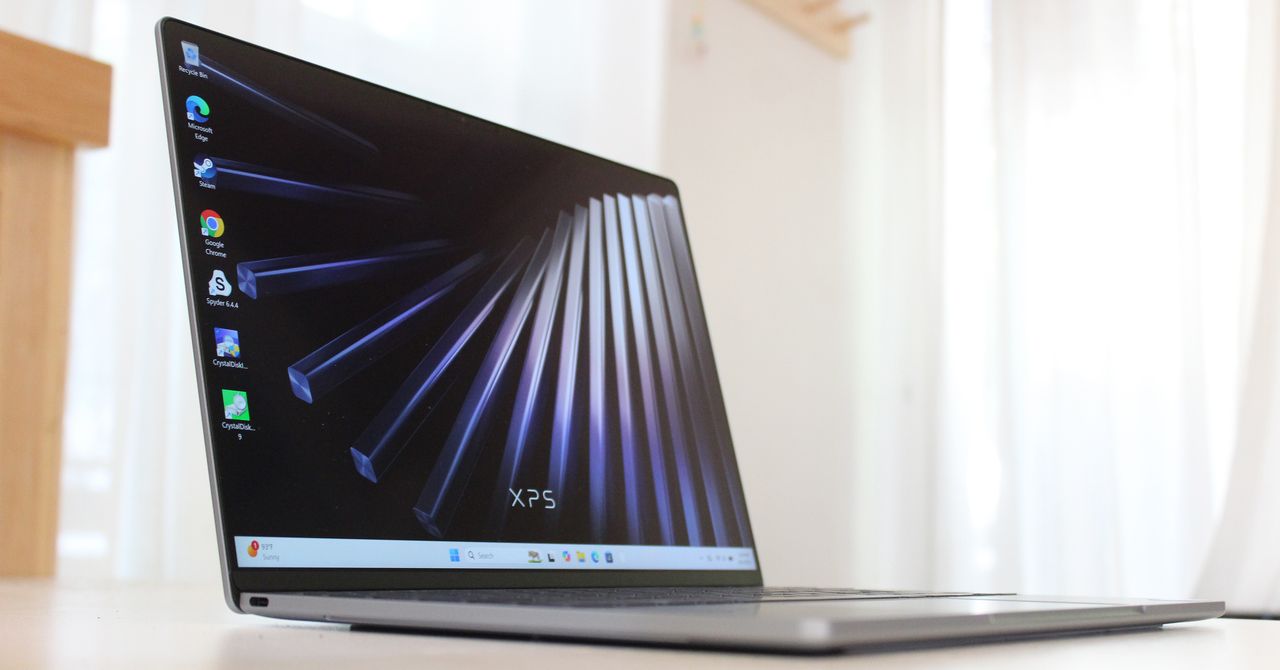
This Dell XPS 13 review comes down to a familiar budget-laptop trick with an unusually polished execution: Dell has put premium-feeling hardware around an entry configuration that is short on memory. The 2026 XPS 13 starts at $700 with an Intel Core 5 320 processor, 8GB of RAM and 512GB of storage, positioning it against Apple’s MacBook Neo at roughly the same price.
For that money, Dell has made a Windows ultraportable that does not look as though it escaped from the cheapest shelf. WIRED found the aluminum chassis unusually well-built among Windows laptops below $1,000, and reported that it is about half an inch thick, with minimal display bezels. Engadget likewise found no flex in the aluminum case and put the system at 2.2 pounds.
The XPS 13’s base hardware also avoids several penny-pinching moves. It has a 2560-by-1600 touchscreen capable of up to a 120Hz refresh rate, a backlit keyboard and 512GB of storage in every model, according to WIRED. The MacBook Neo starts with 256GB, Engadget reported. Dell also includes two USB-C ports, one on each side, that WIRED says support charging, 10Gbps file transfers and 4K output at 60Hz.
Is the Dell XPS 13 worth buying with 8GB of RAM?
Only for light-duty use and a strict budget. The $700 model has enough processor performance for ordinary work, according to WIRED’s testing, and the publication recorded 15 hours of local video playback. But 8GB is the machine’s central concession, especially on Windows 11.
Engadget reported that its 8GB review unit had 80% of its memory committed immediately after booting, then reached 95% after browser tabs were opened. The reviewer saw intermittent responsiveness problems and one instance in which Evernote took 30 seconds to display recent notes. Those observations are not a universal benchmark result, but they are a poor sign for buyers expecting years of browser-heavy multitasking.
Dell offers a 16GB configuration for $900, according to WIRED. That $200 jump weakens the neat entry-price comparison with the Neo, but it turns the XPS into a more credible choice for people who need a compact Windows machine for routine multitasking. Engadget explicitly advised most buyers to choose 16GB, while WIRED identified the base model’s 8GB as its main concern.
Where does the XPS 13 beat the MacBook Neo?
On the feature list, Dell has a credible answer: touch input, a 120Hz panel, keyboard backlighting, 512GB of starting storage and two 10Gbps USB-C ports. WIRED also says the XPS 13 can drive two 4K monitors, or three with its lid closed. The Neo does not offer a 16GB memory configuration, Engadget reported.
There are less glamorous cuts. The XPS 13 has no headphone jack. Its touchpad is mechanical rather than haptic, and reviewer views diverge: WIRED praised the glass pad, while Engadget called it a downgrade from recent XPS models and noted that its upper third does not register clicks. Engadget also found the Core 5 320 substantially slower in Geekbench 6 CPU and graphics testing than certain 2024 XPS 13 configurations.
The verdict is configuration-dependent. The base XPS 13 is a handsome, capable light-use laptop with hardware that WIRED says is rare at this price. The 16GB version is the safer purchase for Windows users who expect to keep several apps and browser tabs open without negotiating with their laptop.
This story draws on original reporting from WIRED.


