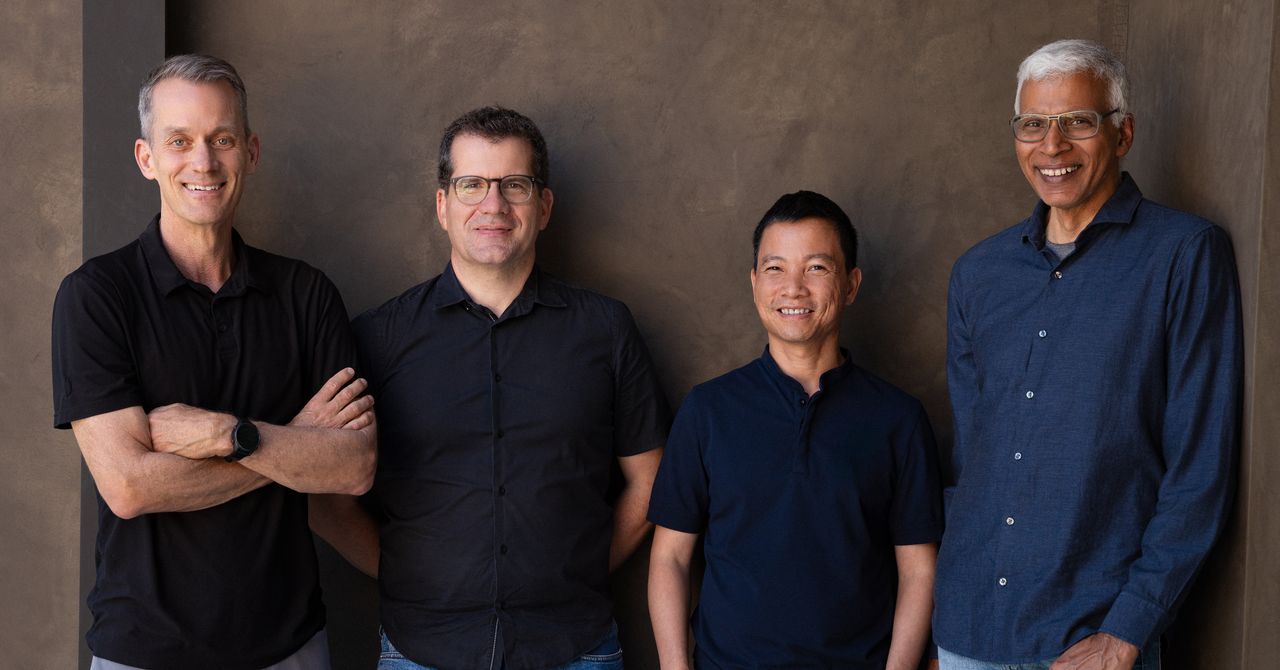
Discovery Loop’s Google founders, Jeff Dean, Sanjay Ghemawat, Oriol Vinyals and Quoc Le, left the company on August 5 to form a public-benefit AI startup aimed at automating parts of scientific and engineering research. The departure removes four prominent researchers and engineers from Google, while leaving the new company with investment from Google and a Google Cloud computing partnership, Reuters reported.
Dean, who joined Google in 1999 and co-founded Google Brain in 2011, is set to be Discovery Loop’s chief executive, according to The Wall Street Journal. The other founders are longtime Google veterans: Ghemawat, Vinyals and Le.
The arrangement is therefore less clean break than Silicon Valley exit cliché. Google has lost the founders as employees, but it remains financially and technically connected to the company they created. Reuters did not report investment terms or the scope of the cloud agreement.
What is Discovery Loop trying to build?
Discovery Loop says it wants to automate the repeated steps behind research: proposing an experiment, preparing and running it, then assessing the results to decide what to try next. Dean described that process to Wired as an automated form of the scientific method.
The startup’s initial work will focus on machine-learning research and engineering using its own internal technology stack, The Wall Street Journal reported. The founders’ longer-term plans include applying the approach to hardware design, drug discovery, materials and other scientific or engineering problems. Those are proposed uses, not demonstrated results.
The basic pitch is that software could run far more research iterations than a small human team can manage manually. That still depends on the system producing useful experimental ideas, setting up valid tests and correctly interpreting results. Vinyals told Wired that generating new ideas is an area where current models are not especially strong.
Wired reported that the founders expect people to co-develop ideas with the system at first, while aiming for greater automation later. Le said the company is interested in automating machine learning itself, including the possibility of finding different model architectures. The company has not established that it can do so.
Why did Google’s AI leadership change at the same time?
The founders’ exit coincided with Alphabet’s broader overhaul of its AI leadership. Demis Hassabis moved from chief executive of Google DeepMind to chairman of that unit and became Alphabet’s chief scientist, Reuters reported. Koray Kavukcuoglu, previously Google DeepMind’s chief technology officer, took on day-to-day responsibilities as a senior vice president while retaining his role as Alphabet chief AI architect.
Google had merged Google Brain and DeepMind into Google DeepMind in 2023, installing Hassabis as CEO and Dean as chief scientist, according to Reuters. Alphabet gave no explanation for what prompted the simultaneous personnel moves or whether they were connected.
Discovery Loop’s immediate target is internal machine-learning research and engineering. Its stated ambitions in hardware, medicine, clean energy and wider scientific discovery remain a roadmap, not a result.
This story draws on original reporting from WIRED.


