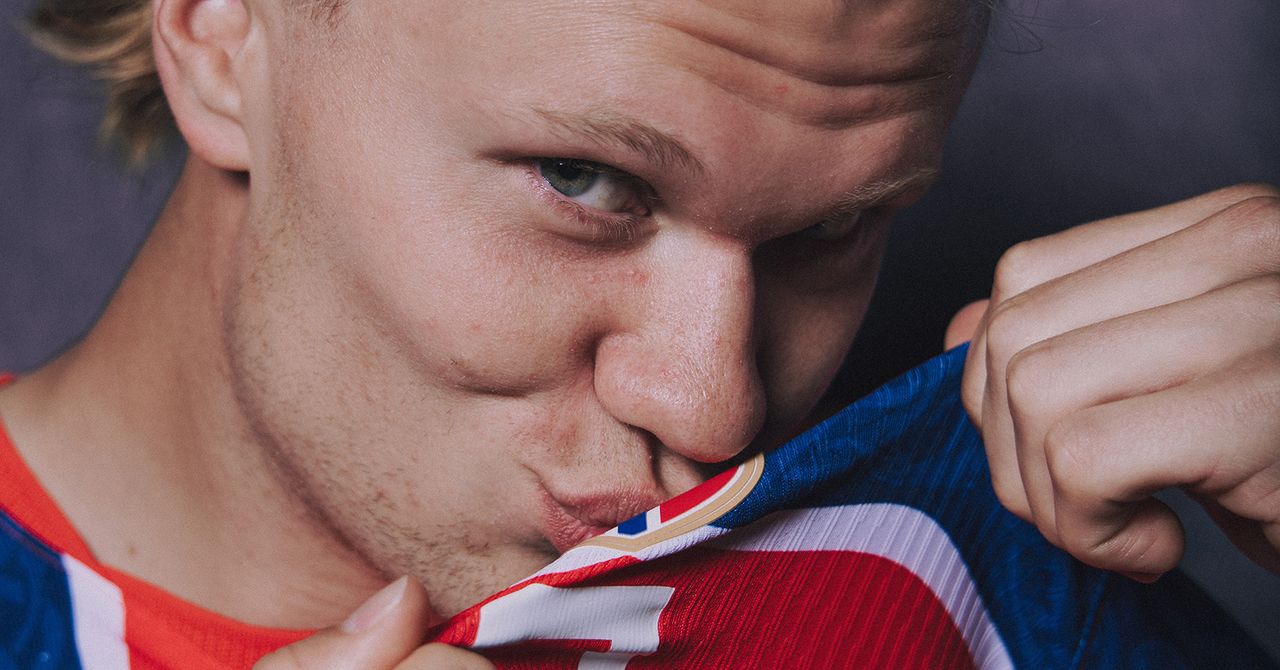
A video that looked like Erling Haaland eating in a restaurant and recoiling at his own reflection was shared across X during the 2026 World Cup, with one post drawing more than 31 million views in a few days. The man in the clip was not Haaland.
Fact checkers traced the original footage to a slapstick video by Chinese comedian Jin Long, who posted it to TikTok in mid-June. The viral version rode on Haaland’s face and online persona, not on any real restaurant moment involving the Norwegian striker. The correction did not stop the clip from circulating, which says plenty about how sports fandom now treats famous athletes online.
The clip landed because it matched the character fans had already built around Haaland: terrifying on the pitch, oddly goofy away from it. AI did not need to produce a convincing documentary record. It only needed to make a fake that felt plausible inside the running joke.
Haaland’s China meme loop
Haaland’s online celebrity in China gave the fake plenty of runway. He has appeared in a commercial for a Chinese herbal drink, attempted Mandarin on camera, been turned into songs, and picked up the nickname “Habao,” roughly translated as “Ha Baby,” among fans. The joke hinges on the contrast between Haaland as a relentless scorer and Haaland as an affable, off-field oddball.
As his popularity grew, Haaland opened official Douyin and Weibo accounts and drew millions of followers, according to reports cited around the accounts. The restaurant fake was one item in a larger stream of AI Haaland edits and memes. The content factory did what content factories do: find a reusable template, then grind.
The mechanism is not mysterious. A recognizable athlete becomes a set of traits, gestures, poses, jokes and catchphrases. AI tools can then graft that public image onto existing footage or generate new scenes that fit the template. Fans share it because it extends the bit, even when the factual claim under it is mush.
Fans are following players, not just teams
The shift is backed by research from the sports-content company WSC Sports, which reported that Gen Z fans feel more attached to individual athletes than teams. Consulting firm Oliver Wyman found that social media posts from athletes are the largest driver of Gen Z sports engagement.
That helps explain why synthetic clips can travel so easily. A footballer’s public image now works more like a character file than a press kit. Fans build lore around real posts, interviews and match footage, then AI fills in extra scenes. The line between tribute, joke and deception gets annoyingly thin.
Haaland is not the only player getting this treatment during the tournament. Kylian Mbappé has been recast in “Dictator Mbappé” AI memes, including versions that portray him as Mao or Kim Jong Un and other fictional settings. The meme reportedly dates back to 2023 after a dispute involving a kebab joke, but resurfaced during the World Cup in AI-rendered form.
Celebrity deepfakes have already shown the same pattern outside football. The @deeptomcruise TikTok account drew millions of views in 2021 with Tom Cruise deepfakes. In 2023, an AI-generated song imitating Drake and The Weeknd attracted listeners before labels moved to have it removed. The AI-generated image of Pope Francis in a Balenciaga-style coat fooled many viewers and was widely admired before the fakery caught up.
For Haaland, the fake clips sit alongside real material he posts himself, including Snapchat updates followed by 3.3 million users, memes, fan interactions, filters, Q&As and comedic videos. AI has not replaced the athlete’s own performance of celebrity. It has made that performance easier for fans to remix without waiting for him to do anything.
This story draws on original reporting from WIRED.


