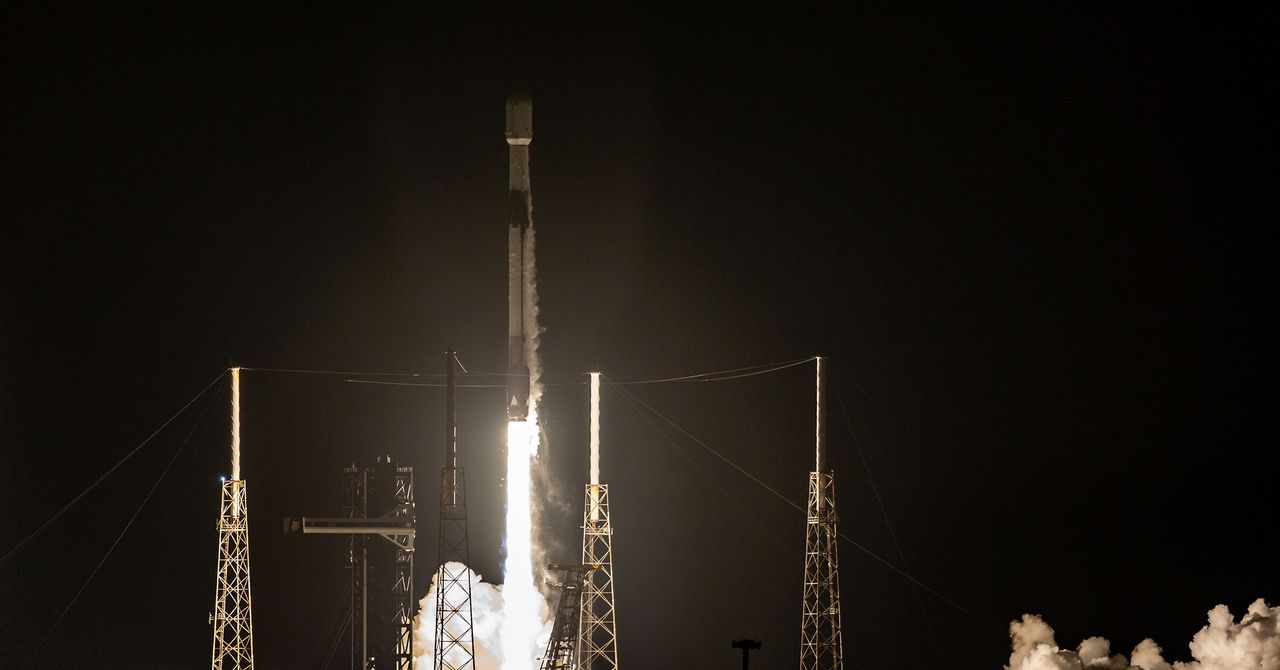
A Falcon 9 moon crash expected on Aug. 5 could give astronomers a rare view of human-made space junk smacking into the lunar surface. Researchers say a spent SpaceX upper stage is forecast to hit the Moon’s sunlit western edge near Einstein crater at about 6:34 am UTC, traveling at more than 5,400 mph.
If the prediction holds, the impact may kick lunar soil high enough to be seen from Earth through a capable telescope. Scientists are especially interested because, according to researchers involved in two new preprint studies, no impact flash has been recorded on the Moon’s sunlit face before. That is also what makes the observation annoying: the plume has to be picked out beside the bright lunar surface, which is not exactly a friendly background.
Can I see the Falcon 9 moon crash from Earth?
Possibly, but the useful answer is: only with the right gear, clear skies, and a cooperative atmosphere. Laurence Trafton, an astronomer at the University of Texas at Austin, says a plume extending 50 kilometers beyond the lunar limb would cover about 28 arcseconds in the sky, large enough for a small telescope to resolve.
Brightness is the problem. Trafton estimates the plume could be 30 to 300 times dimmer than the nearby Moon, and scattered moonlight will make contrast worse. He says observers will need a very steady telescope mount. The plume is expected to peak roughly 90 seconds after impact, long enough to catch if the telescope is already pointed at the right patch of lunar edge.
Location also matters. Trafton says viewers north of a line running from Massachusetts to Texas will see the Moon low in the sky, meaning the light must pass through more than three times the usual amount of atmosphere. That extra air can blur and dim the view. He puts the best US viewing odds in the Southeast.
What will hit the Moon?
The object is the spent upper stage of a SpaceX Falcon 9 that carried two landers toward the Moon in January 2025. Bill Gray of Project Pluto first flagged the coming impact, and scientists have circulated an observation plan asking professional and amateur astronomers to try to record it.
William Jo, a doctoral candidate at UT Austin’s Cockrell School of Engineering, led a preprint posted July 27 to arXiv that models the collision. His simulation treats the stage as about 3,900 kilograms of mostly empty metal, unlike a dense rock meteorite. David Goldstein, the UT Austin aerospace-engineering professor who supervised the work, described the stage as more like an empty shell with a heavier rocket engine at one end.
That shape changes the expected splash. In Jo’s model, the rocket body crushes inward rather than punching into the surface like a solid projectile. The result is a broad, low sheet of lunar dirt spreading as much as 183 kilometers across, plus a narrower spray rising much faster upward. The model estimates about 12,700 kilograms of debris would be displaced.
The researchers are not pretending the model is prophecy. Jo’s simulation is two-dimensional and assumes the stage comes straight down engine-first. Goldstein says that makes it an optimistic case for producing a visible spray. The real booster is more likely to strike at an angle, which could make the plume smaller and harder to see.
There is science in the mess. NASA has deliberately crashed hardware into the Moon before to study what comes out: Lunar Prospector in 1999 did not find the water signal scientists hoped for, while a 2009 impact produced evidence of water ice in the plume. This Falcon 9 event is unplanned, like a 2022 rocket-body impact that Gray and others later said was probably a discarded Chinese booster rather than a Falcon 9.
The coming collision also previews a practical lunar problem. NASA and China both plan more activity on the Moon, and more landers mean more hardware that can eventually fall. Jo warns that fast, abrasive lunar particles could threaten astronauts and equipment. Goldstein points to Apollo-era dust as the low-tech villain that keeps coming back: Moon dirt gets everywhere, and future crews will have to deal with it.
This story draws on original reporting from WIRED.


