The Federal Communications Commission said Tuesday that a new FCC robot import ban will cover foreign-made “advanced robotic devices” and power inverters, putting Washington’s security fight with Chinese hardware into another category of connected machines.
The agency said the restrictions apply to devices it views as posing “unacceptable risks to the national security of the United States or the safety and security of United States persons.” Reuters earlier reported that the Trump administration was preparing a ban aimed at Chinese robots and inverters tied to protecting the country’s AI buildout.
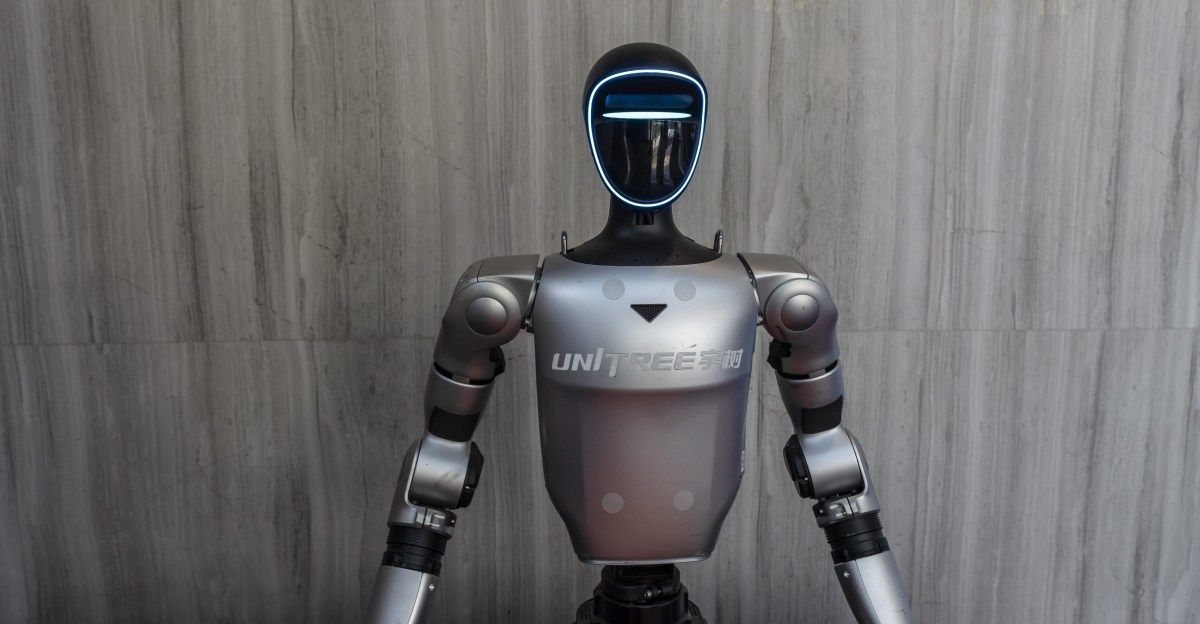
The FCC said the policy is not written against one country. The practical blast radius, though, points straight at China, which has been pushing hard into humanoid robotics, according to the Associated Press, and is home to major makers whose machines have become social-media fixtures. Unitree, the Chinese robotics company, is one obvious manufacturer likely to feel the impact.
What does the FCC robot import ban cover?
The FCC’s FAQ defines an advanced robotic device as a machine that can move on the ground, avoid obstacles, handle navigation or otherwise perform locomotion, and that also includes sensors to read its surroundings plus a chip for network connectivity. That definition captures mobile robots such as humanoids and quadrupeds, but the agency said the category is not limited to walking robots.
That last part matters. The line the FCC is drawing is not “does it look like a person” or “does it have four legs.” It is closer to: can the device move through physical space, sense what is around it and connect to a network. In policy terms, that makes the robot less like a dumb appliance and more like a roaming computer with motors, cameras or other sensors attached.
The announcement comes as humanoid robots have become a visible, if uneven, part of China’s tech push. The Associated Press has reported on China’s effort to increase humanoid robot production. Chinese robots have also drawn attention through viral clips, including dance routines, robot fighting demonstrations and a televised appearance on America’s Got Talent.
Why are power inverters included?
The FCC’s action also covers foreign-made power inverters, equipment commonly used in solar arrays and other renewable energy systems. Inverters convert electricity from one form to another so power generated by panels or stored in systems can be used by the grid or by buildings.
China is central to that market as well. Wood Mackenzie has identified Sungrow and Huawei as leading global solar inverter producers. Huawei is already blacklisted in the United States, and the new restriction adds another category of grid-adjacent hardware to the government’s security perimeter.
The FCC’s stated concern is security, not product quality or robot slapstick. Connected robots and energy equipment can contain chips, radios and software that move data or receive commands. The commission has not publicly framed the rule as a response to a specific model or disclosed incident in the announcement, so the confirmed rationale remains the broader national-security risk it cited.
The ban arrives while US companies are also chasing robotics. Tesla has made room for production of its Optimus humanoid robot after discontinuing its Model S and Model X vehicles, according to earlier reporting by The Verge. The FCC action does not say it favors domestic robot makers, but it does put foreign connected machines, especially Chinese ones, on a much rougher path into the US market.
This story draws on original reporting from The Verge.