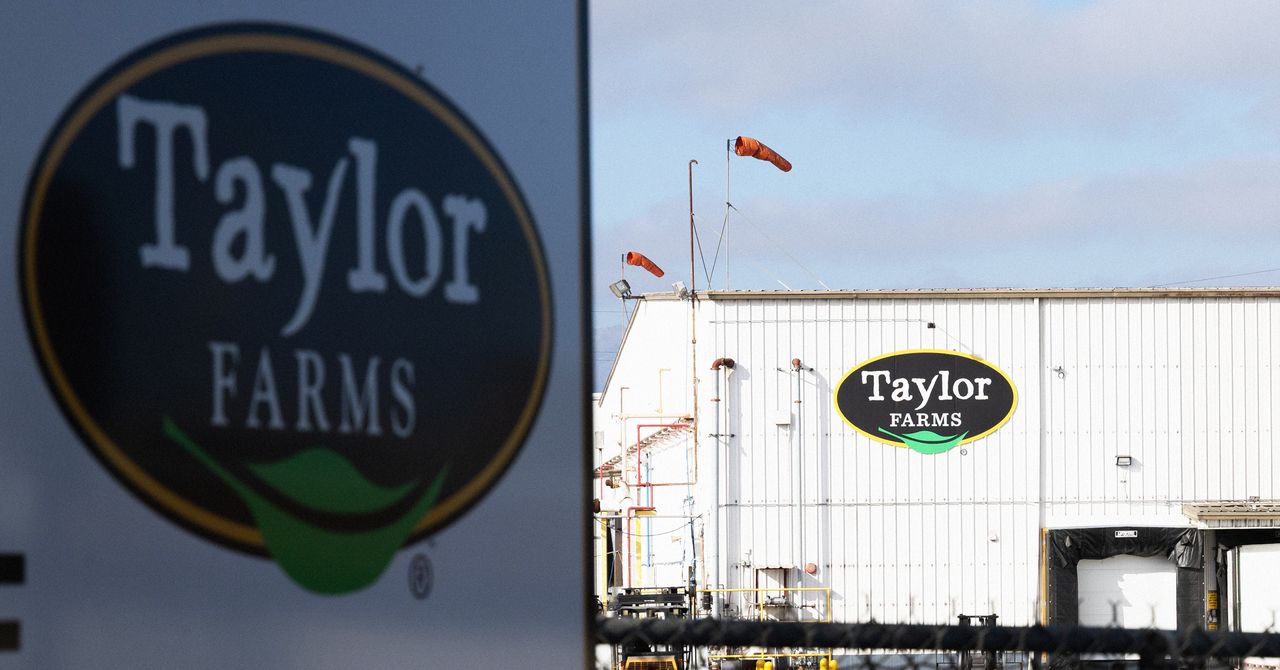
The Food and Drug Administration says it did not formally apologize to Taylor Farms after a lab result tied to a cyclospora outbreak was deemed a false positive, and the agency is keeping pressure on the company’s iceberg lettuce recall.
The dispute matters for shoppers, restaurants, and retailers because the recall remains active across 27 states, including some lettuce sold to Taco Bell and Walmart, according to the FDA. Taylor Farms issued the voluntary recall on July 17 for iceberg lettuce sourced from Central Mexico after illnesses were reported in at least five states.
Cyclospora is a parasite that can cause cyclosporiasis, an infection associated with severe diarrhea. Since May, thousands of people have become sick, while health officials have worked to identify the outbreak’s source. Michigan authorities have reported 6,148 cases in that state alone, and experts previously told WIRED that national case counts are likely higher than official numbers show.
A false positive, and a fight over wording
On July 18, the FDA said it had found Cyclospora in a Taylor Farms lettuce sample that was outside the company’s first recall. A day later, Taylor Farms and the FDA said that result was a false positive.
Taylor Farms then posted on X on July 19 that the FDA had apologized to the company. An FDA official gave reporters a narrower account on July 20, saying the agency had not made an “official apology.” The official said the agency was mainly giving Taylor Farms factual information about the difficulty of testing for Cyclospora and tracing outbreaks caused by the parasite.
The FDA also used its own X account to draw a bright line around the bad lab result. The agency said the false positive did not change the basis for its continuing outbreak investigation or the epidemiological evidence supporting Taylor Farms’ voluntary recall.
That distinction is less semantic than it sounds. Taylor Farms said in its July 19 post that the FDA had not identified a positive product test for Cyclospora. According to the available record, that statement is accurate. It also leaves out how foodborne outbreak investigations often work.
Investigators do not need a contaminated package in hand to build a case. They often rely on epidemiological evidence: who became sick, what they ate, where products were distributed, and what patterns connect confirmed cases. Product testing can help, but parasite detection is difficult, and a clean or absent test result does not erase interview data or exposure patterns.
Taylor Farms challenged the investigation
Taylor Farms has objected to parts of the government investigation, according to reporting by The New York Times. A company spokesperson told the Times that Taylor Farms met with White House and FDA officials last week to discuss what it described as “shortfalls” in the response by government organizations.
The Times reported that Taylor Farms executives used the July 16 meeting, one day before the recall, to question conclusions reached by the FDA and the Centers for Disease Control and Prevention. Taylor Farms did not respond to WIRED’s requests for comment.
For now, the practical guidance has not changed: the recall is still in effect, and the FDA says the false-positive sample does not undercut the evidence behind it. The agency and Taylor Farms are arguing over a lab result and the word “apology.” Consumers get the less tidy part, a multistate parasite outbreak with a recall that still stands.
This story draws on original reporting from WIRED.


