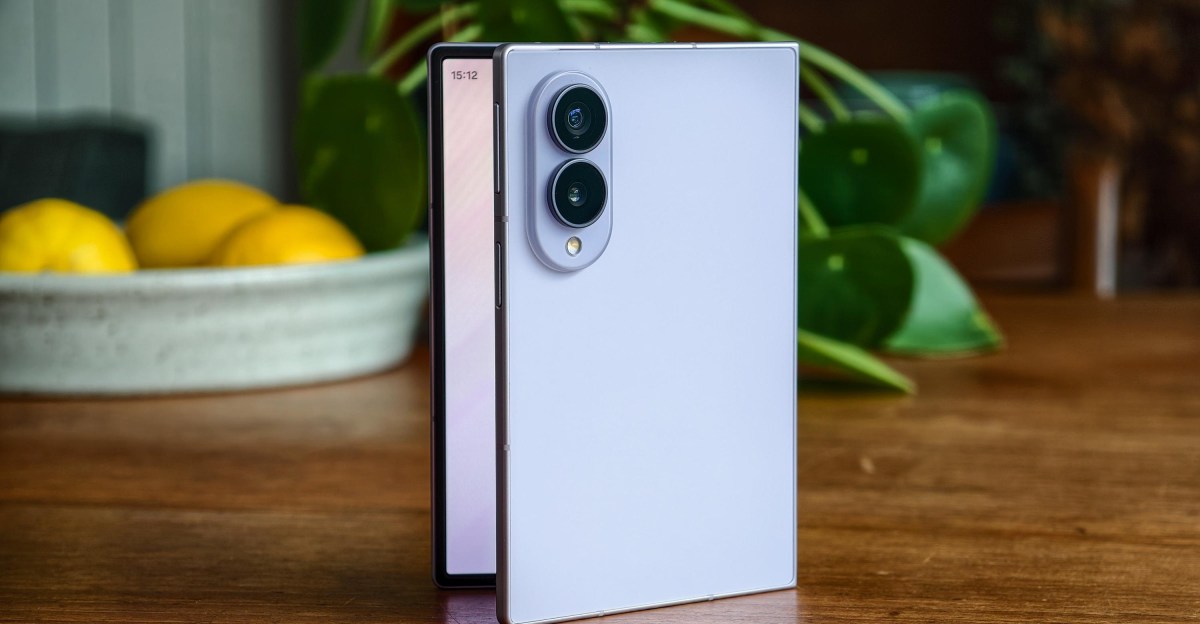
The first Galaxy Z Fold 8 review from The Verge frames Samsung’s newest foldable as a serious shift in the shape of book-style phones: shorter, wider and less like a remote control with a hinge. Reviewer Dominic Preston says that after a week with the $1,899 device, the odd proportions started to feel ordinary, which is probably the exact outcome Samsung wanted.
Samsung has put the Z Fold 8 name on its new wide foldable, a move Preston reads as the company treating this format as the default future for the line rather than a one-off experiment. The review says the phone is comfortable to use while closed, despite being unusually squat compared with earlier foldables.
The big mechanical change is the display geometry. The outer screen is shorter than the tall covers Samsung has used before, while the opened phone uses a 4:3 inner display. That ratio gives documents, feeds and video more usable room than the narrow unfolded layouts that have made some foldables feel like two phone screens pretending to be a tablet.
Is the Galaxy Z Fold 8 worth buying?
Preston’s answer is mostly yes, with the usual expensive-foldable caveats attached. The Verge gave the Galaxy Z Fold 8 a score of 8, citing comfortable closed use, a better inner screen for reading and video, strong battery life and the lightest build yet for Samsung’s Fold line.
The review’s complaints are the kind that matter when a phone costs nearly two grand. The Z Fold 8 has two rear cameras, down from three on last year’s model, and Preston calls the missing telephoto camera a meaningful downgrade. The phone also still lacks an IP68 rating, according to the review.
There are software rough edges too. Preston says some apps can misbehave on the shorter outside display, though he describes those cases as uncommon. That is the boring part of foldable innovation: developers and Android layout rules still have to keep up with whatever rectangle hardware makers ship next.
Why does the wider foldable design matter?
A foldable lives or dies by whether people bother to open it. Preston says the 4:3 inside display made him use the Z Fold 8 as a foldable more than earlier models, because the larger screen felt better suited to reading and watching video.
The Verge also notes that Samsung is not alone in pushing toward this shape. Huawei reached a similar idea earlier with the Pura X Max, and The Verge says rumors point to Apple using a comparable squat design for its first foldable iPhone, which is expected in September.
That Apple piece remains unconfirmed rumor, and Preston is careful not to declare the foldable market settled before Apple actually ships anything. What is confirmed from this review is narrower: Samsung’s Z Fold 8 design apparently makes the weird phone-tablet compromise feel less weird, while leaving buyers to decide whether better proportions offset a reduced camera setup and a $1,899 price.
This story draws on original reporting from The Verge.