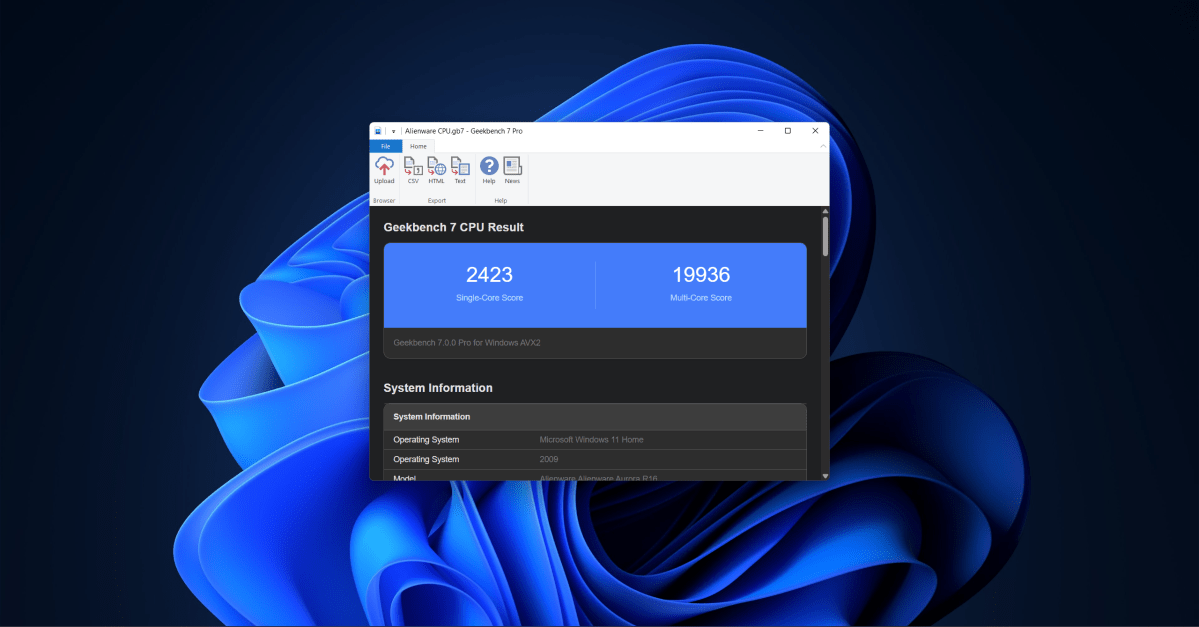
Primate Labs is rolling out the Geekbench 7 release, a new version of its widely used benchmark for phones and computers that is meant to make modern CPUs and GPUs work harder than Geekbench 6 did.
The company says the update keeps the same basic look and behavior as Geekbench 6, so this is less a user-interface reset than a new set of chores for silicon. The point, according to Primate Labs, is to use larger and more demanding datasets that better match what current applications ask of hardware.
Geekbench is a synthetic benchmark: it runs a defined set of workloads and produces scores that reviewers and buyers use to compare devices. That makes it convenient, but synthetic tests are only one slice of performance. Short runs can favor burst speed over sustained performance, where heat and power limits start spoiling the party.
What is new in Geekbench 7?
Primate Labs says Geekbench 7 adds new audio and video encoding and decoding tests, including workloads covering AV1 and Opus. The suite also models video conferencing, streaming, and content-consumption tasks.
The CPU and GPU tests now use larger datasets, which should give chips more to chew through than the lighter workloads in the previous version. According to Primate Labs, the goal is to better reflect the demands of current software rather than letting newer hardware sprint through older tests with too little resistance.
The multi-core benchmark has also been redesigned. Primate Labs says the new workloads only run in multi-threaded mode when the task being modeled would behave that way in real software. That is a useful correction if it works as claimed, because not every job on a computer spreads cleanly across all available cores, no matter how much benchmark marketing likes neat scaling charts.
Geekbench 7 scores will not match Geekbench 6 scores
Anyone comparing old results to new ones will need to start fresh. Scores from Geekbench 6 are not compatible with Geekbench 7, according to the release details. That is expected when a benchmark changes its workloads, but it also means databases, review spreadsheets, and forum arguments will need new baselines.
Despite the heavier tests, Geekbench 7 runs are still described as taking only a few minutes. That keeps the tool useful for quick comparisons across laptops, desktops, and phones, while leaving longer stress tests to tools built to expose throttling over time.
How much does Geekbench 7 Pro cost?
A Geekbench 7 Pro license costs $99, the same listed price as the prior Pro license. Primate Labs is offering it for $79 until August 6.
The Pro license supports offline benchmarking, which means results do not have to be uploaded to the Geekbench Browser. It also covers the compatible desktop platforms: Windows, macOS, and Linux.
For users who only care whether one laptop or phone is faster than another, Geekbench 7 keeps the familiar quick-test format. For reviewers and hardware obsessives, the larger datasets and revised multi-core rules mean the old score book gets tossed and the testing starts again.
This story draws on original reporting from The Verge.