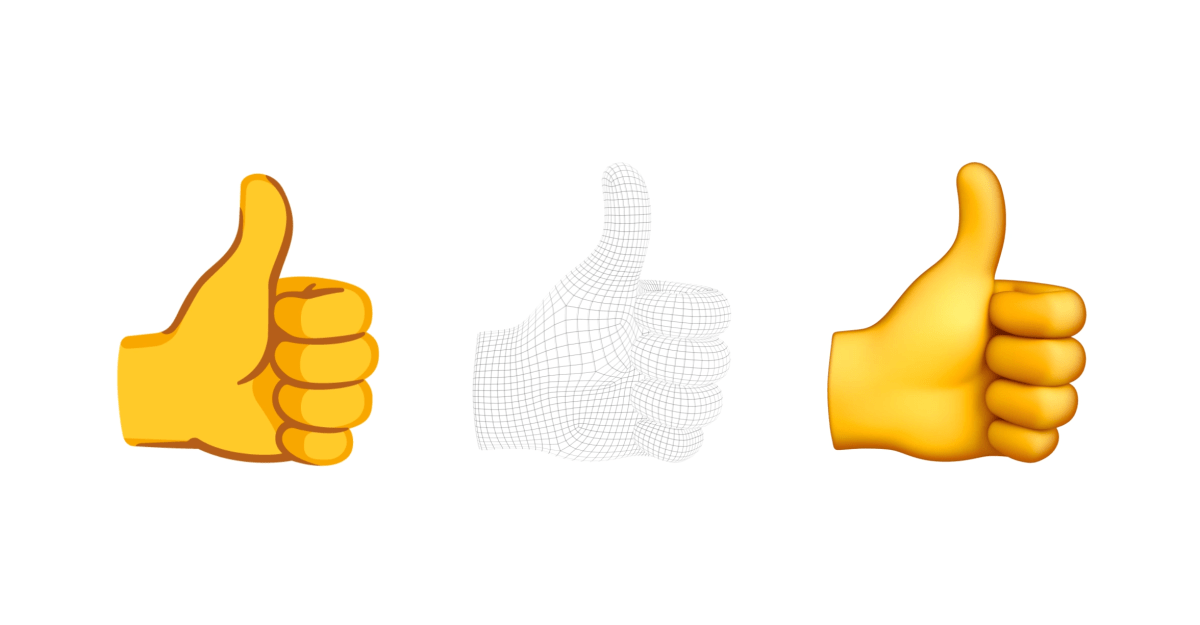
Google is making its Noto Emoji 3D set available for public reuse, the company said as part of its World Emoji Day update on Friday. For designers and developers, the practical change is access to raw .OBJ files: actual 3D assets, rather than screenshots, stickers or flattened illustrations.
The company said it is “handing over raw .OBJ files to the community” so people can use them in “immersive VR worlds, indie apps or weird memes.” That is Google’s pitch, and yes, it includes the apparently serious possibility of building a three-dimensional environment full of emoji faces. The internet has made stranger choices with fewer polygons.
The move matters because emoji are usually treated as small interface garnish, while 3D assets behave more like production materials. A flat smiley can cheat perspective, lighting and silhouette. A 3D version has to survive rotation, shading and proximity. Once the object can sit inside an app scene or VR space, the design decisions become harder to hide.
Why 3D emoji are different
Google also used the announcement to describe some of the design questions behind the set. The company pointed to a basic problem that flat emoji do not have to answer cleanly: what is a smiley face when it becomes a model? It could be treated like a sphere, a mask or a flat disc. Each choice changes how the face reads from the side, how shadows land and how much of the familiar emoji expression survives outside a straight-on view.
That is the boring engineering-design part of emoji work, which is also the part that determines whether the result looks intentional or like a novelty keychain rendered in a hurry. Moving from 2D to 3D means the icon has volume, and volume means the old drawing shortcuts stop being free.
Google’s Noto Emoji 3D set first appeared in May, according to the company’s earlier announcement. The designs did not arrive to universal applause. The Verge noted at the time that some of the new takes drew uneasy reactions, including criticism of Google’s changed cat emoji designs.
Open-sourcing the files gives outside creators room to use, remix or place the models in their own projects, subject to whatever terms Google attaches to the release. The confirmed piece is the asset format Google named: raw .OBJ files. That should make the emoji easier to pull into 3D tools than a conventional emoji font or image set, which is the whole point if someone really does decide a VR room needs a floating grimace face.
This story draws on original reporting from The Verge.


