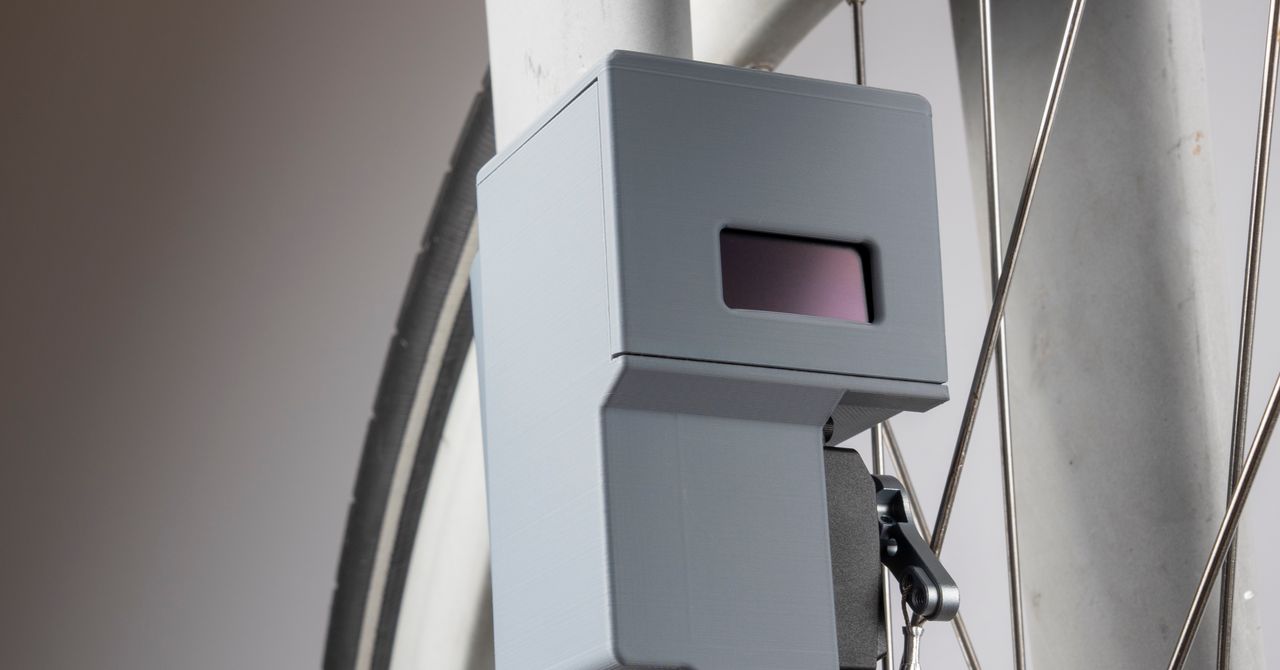
The Ground Truth Citi Bike project is designed to make New York housing data felt in a rider’s legs. Brooklyn artist Justin Blinder built a prototype that increases a bike’s pedal resistance when it enters places his dataset identifies as having greater rent insecurity, according to WIRED. The important caveat, before anyone assumes Lyft has found a new way to make a bike-share trip worse: this is not an official Citi Bike feature or a product riders can use.
Blinder, who WIRED identifies as a Meta contractor, received a $10,000 grant from Brooklyn arts organization Idle Hands for the work. He said his experience delivering food by bicycle after losing his job shortly before the Covid-19 pandemic made the city’s block-by-block economic differences hard to ignore.
Ground Truth’s point is not to measure a rider’s fitness or route efficiency. Blinder said he wants to turn large datasets into something tangible and confrontational, while drawing attention to housing affordability and rising Citi Bike costs.
How does the Ground Truth Citi Bike project work?
The prototype is a box mounted to a bike’s fork and connected to its front brake line. A battery-powered GPS component determines where the bike is, then checks that location against US Census Bureau American Community Survey household-economic data stored on the device, WIRED reported.
When the data indicates a higher share of rent insecurity in an area, a microcontroller triggers a small motor that applies the brake and adds resistance. In areas described as more economically well-off, the bike is easier to pedal. Blinder has built one version for a regular bicycle and another specifically for Citi Bikes.
The project uses “rent burden” as its affordability measure. In the reported framing, that means residents spend more than 30% of their income on rent. That is a defined proxy in the artwork’s mapping, not a real-time reading of rents or a claim about every household on a block.
Can Citi Bike riders use Ground Truth?
No. Blinder told WIRED that Ground Truth is not a working public product and will not be available for other people to use. He said he rode roughly 35 miles while filming the prototype as its resistance changed between communities.
The available reporting does not establish whether Citi Bike, Lyft, or New York City authorized the attachment. It also supplies no public exhibition timetable, safety assessment, technical test results, or independent check of how the device maps rent burden to particular locations.
Ground Truth also should not be confused with separate policy discussions about Citi Bike e-bike speeds. Streetsblog reported in June 2025 that Lyft said City Hall and the Department of Transportation had directed it to cap pedal-assist speeds at 15 mph. That report concerned a fleet-level speed cap, not Blinder’s location-based art prototype.
Blinder’s device therefore changes no rider’s ordinary trip. It uses a bike, GPS and census data to make an argument about how unevenly affordability is distributed across the city.
This story draws on original reporting from WIRED.


