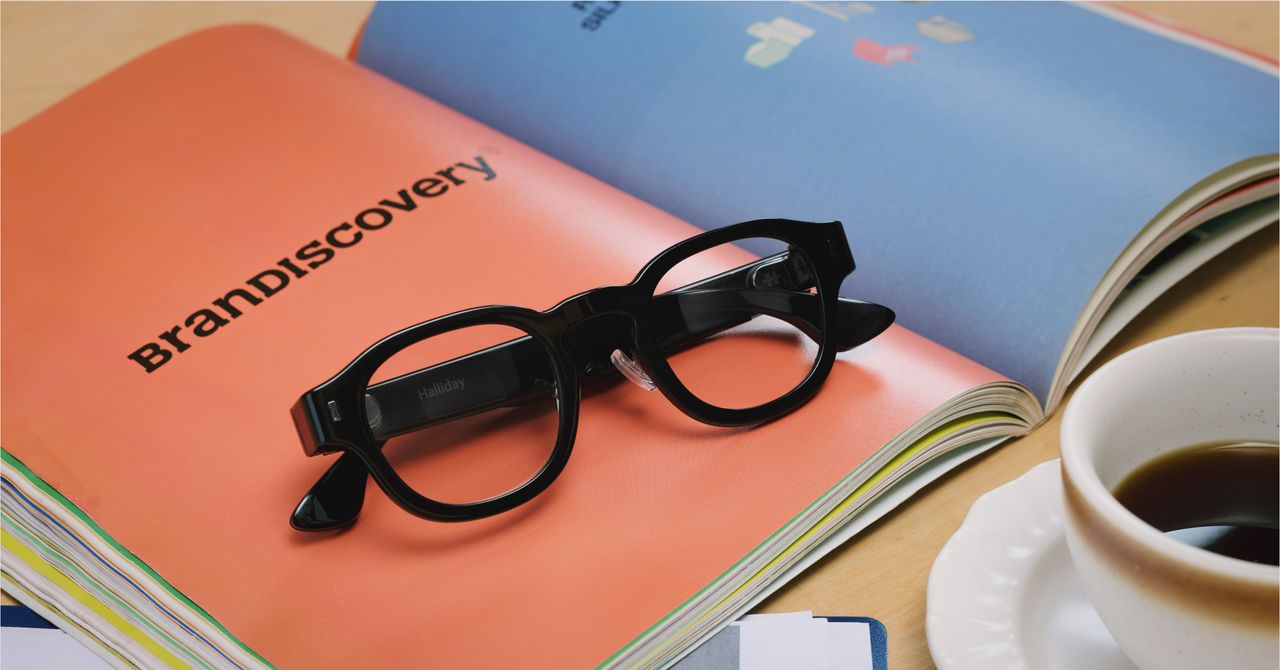
Halliday G2 smart glasses are being pitched as workplace eyewear for people who want AI notes in meetings without putting a camera on their face. Halliday says the new glasses use microphones and its Meeting Flow AI service to listen to conversations, transcribe them, surface useful points during a meeting, and generate summaries afterward.
The company says the G2 will cost $599, with initial shipments planned for September 2026. AI service plans range from a free tier with 120 minutes of recording time to paid subscriptions priced from $10 to $99 per month.
Halliday is trying to make the device look acceptable in offices, client meetings, and other places where a visible camera can get a wearer side-eyed or shown the door. In a press release, the company said the lack of a camera makes the glasses better suited to professional and social settings where recording devices may be unwelcome.
What are Halliday G2 smart glasses?
The G2 is Halliday’s second generation of smart glasses. It has a small display area near the top of the lens, so the wearer can glance upward to read text, while microphones in the frame capture nearby speech.
Halliday says the glasses can show live subtitles, translate speech in 45 languages, display phone and message notifications, and support calls. The company also says the microphones can be used for meetings, AI voice commands, and phone calls, and are turned off when they are not needed.
The meeting features are the main sell. Halliday’s Meeting Flow service is supposed to process what people say, track topics even when a discussion drifts, and identify decisions or commitments. The company names features called Thread Tracker, Decision Confirmation, and Commitment Check. Full transcripts and meeting summaries are available through a companion app, according to Halliday.
What is the privacy issue?
Removing the camera solves only one category of smart-glasses creep. WIRED reported that Halliday’s G2 glasses do not include an indicator light or another visible signal telling people nearby that audio is being recorded.
A Halliday media contact told WIRED that disclosure falls on the wearer: “The user should disclose to the room that the recording is in progress, as it is required by any other recording device.” That is tidy on paper and much messier in real conference rooms, where an AI notetaker in a browser tab is obvious and a pair of glasses is just a pair of glasses.
Other always-listening wearables, including Bee’s Pioneer, use a light to show recording status, though WIRED noted that people may not understand what such indicators mean. Halliday’s version skips even that limited cue, according to WIRED.
How does it compare with other smart glasses?
Halliday is joining a small but growing group of companies trying to separate smart glasses from face-mounted cameras. Even Realities launched its own G2 glasses late last year with a similar emphasis on having no camera. WIRED noted that both companies use “G2” to mean Generation 2, rather than necessarily as a distinctive brand name.
Meta’s Ray-Ban smart glasses still dominate the category, according to WIRED, but their built-in cameras have drawn criticism after people used them to capture images and video without subjects realizing it. Some competitors have responded with camera covers. Halliday and Even Realities have gone further by leaving cameras out entirely, while keeping audio capture central to the product.
Halliday’s first glasses, shown at CES 2025, received mixed reviews and ended up in WIRED’s “Don’t Bother” smart-glasses recommendations. The original Kickstarter-backed version also drew complaints from backers. With G2, Halliday is raising the price and aiming at what it calls high-performance professionals, including founders and CEOs.
The company is also adding features meant to make the glasses less distracting. Halliday says a “Stealth mode” dims the display in dark rooms, while a teleprompter-style mode called Cheatsheet can keep bullet-point reminders visible to the wearer.
Smaller smart-glasses makers are trying to establish useful niches before Samsung, Google, Apple, and other large tech companies push harder into the category. Halliday’s bet is that meetings are boring enough, and note-taking annoying enough, that some workers will pay $599 to put the recorder on their face.
This story draws on original reporting from WIRED.


