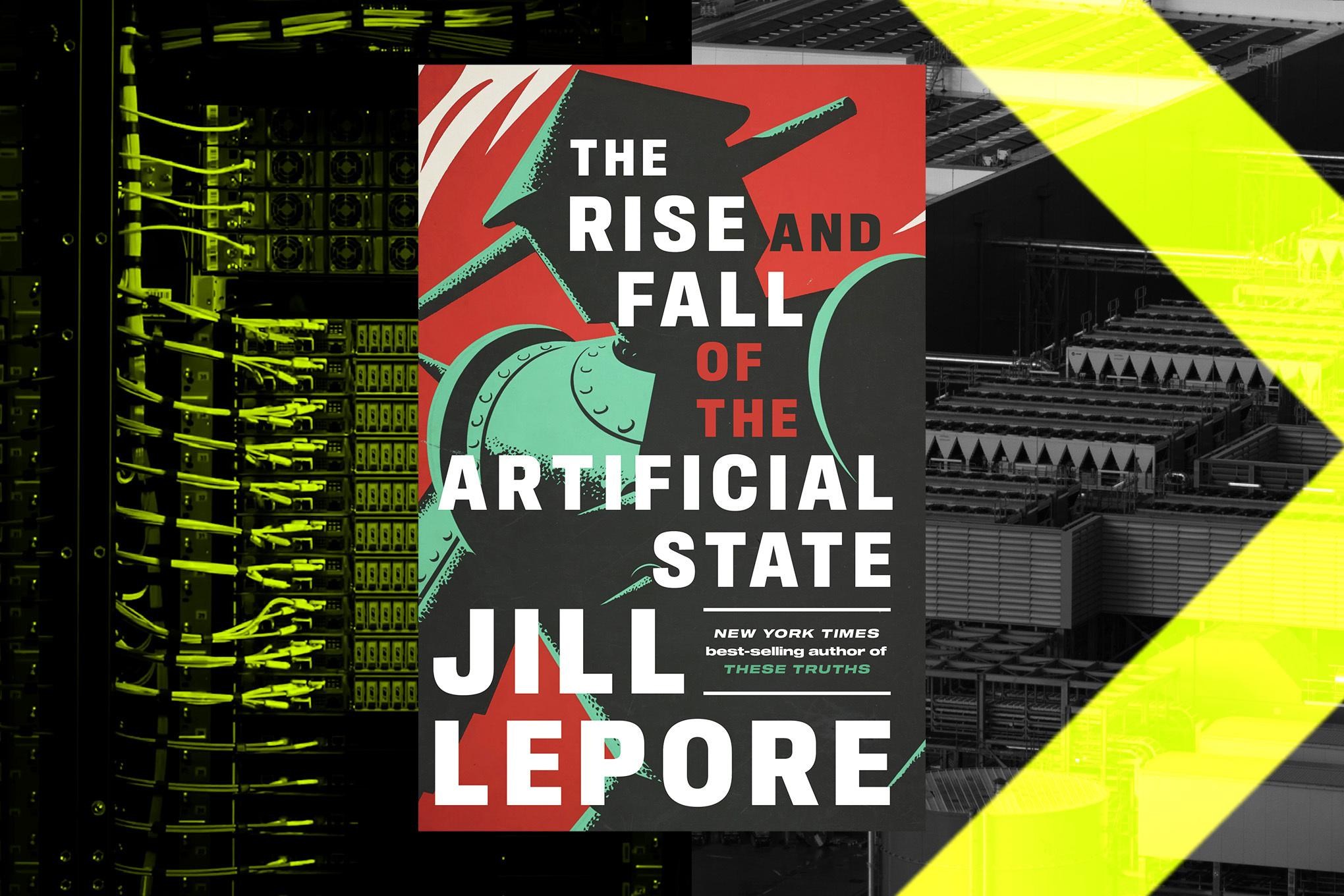
Harvard historian and New Yorker staff writer Jill Lepore is using her next book to pick a fight with a familiar tech premise: that more measurement, more automation and more computational efficiency make public life better.
In an interview on The Verge’s Decoder, Lepore described The Rise and Fall of the Artificial State, due August 25, as an argument about what happens when the work of democracy gets handed to private systems built to quantify people. Her term for the result is the “artificial state,” a successor to the liberal nation-state in which corporations take over functions once tied to citizenship, deliberation and constitutional rights.
Lepore’s clearest example is the public square. She argued that political conversation now largely happens on corporate platforms whose incentives are not civic debate but the monetization of attention and anger. She also said platforms including X, Facebook and TikTok are increasingly dominated by bots controlled by companies, governments, non-state groups, criminals and terrorists. That is a grim little operating model for self-government.
Polling was an early version of the machine
Lepore does not start the story with ChatGPT or social media. She traces it through older systems of counting and classification, including census-taking and modern opinion polling. She pointed to George Gallup’s founding of the American Institute of Public Opinion in 1935 as a turning point in politics.
Her argument is mechanical, not mystical. Campaigns once had to send people into neighborhoods, meetings, libraries and ballgames to hear what voters cared about. Polling, and later data mining, let campaigns replace some of that contact with quantified opinion. Lepore said that made campaigns more efficient, but removed the ordinary conversations that help bind civic life together.
AI extends that logic. Lepore said some voters in 2026 election contests are asking ChatGPT how to vote, while campaign messages may be generated by AI and targeted by AI systems. In her telling, politics risks becoming a machine-mediated exchange where voters, candidates and consultants increasingly outsource judgment to software.
Silicon Valley keeps mistaking dystopia for a roadmap
Lepore also criticized the tech industry’s habit of treating older warnings as product requirements. She discussed Isaac Asimov’s 1950s story “Franchise,” in which a computer chooses a single representative voter whose answers determine a presidential election. She contrasted that dystopian setup with OpenAI CEO Sam Altman’s appearance on Joe Rogan, where Altman talked about the idea of AI choosing a president. Lepore said he was joking, but also serious about the efficiency fantasy behind it.
She tied that attitude to a broader Silicon Valley rejection of historical knowledge. Lepore singled out figures including Peter Thiel and Elon Musk as examples of a culture that prizes disruption and “first principles” thinking while dismissing humanistic study as an obstacle. Her complaint is not that tech leaders lack intelligence. It is that they treat old institutions, literature and civic habits as debris to clear away.
The interview also covered the older marketing arc of personal technology. Lepore described Apple’s 1984 Macintosh ad as part of a libertarian promise that personal computers would advance freedom, then pointed to similar claims made for the commercial internet in the 1990s, social media in the 2000s and now “democratic AI.” She allowed that the internet had democratic potential, but said those promises were packaged and sold long before they were realized.
Lepore’s remaining optimism is not in another platform slogan. She told Decoder that public resistance, including college graduates booing AI executives at commencement ceremonies, gives her hope. For Lepore, backlash is not a Luddite spasm. It is evidence that people still notice when institutions are being hollowed out and replaced by systems that count them more readily than they hear them.
This story draws on original reporting from The Verge.


