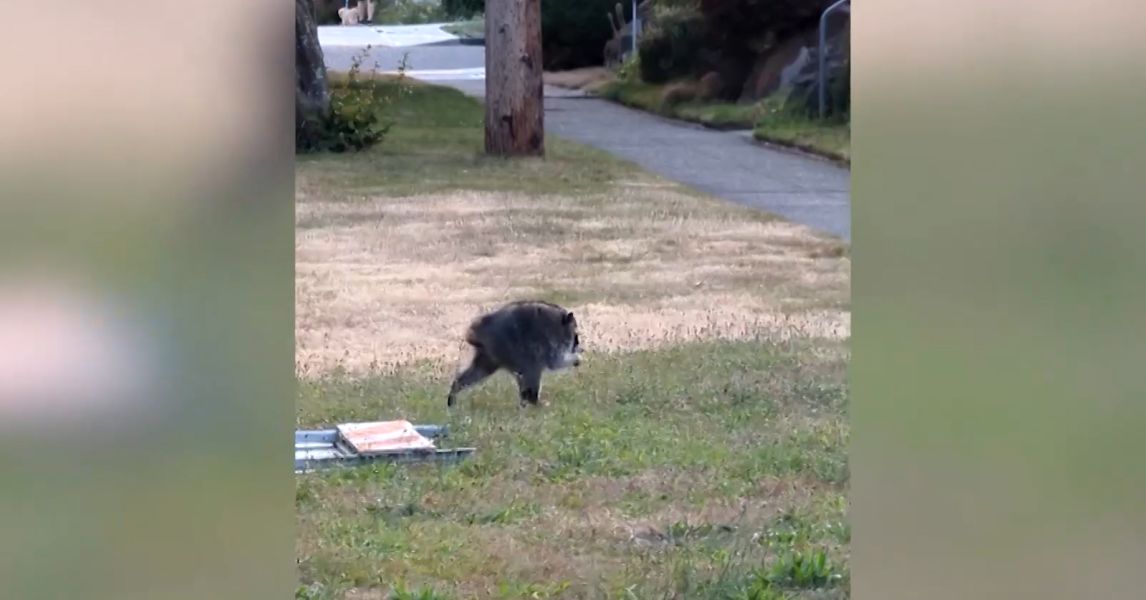
Jimothy raccoon Seattle mania started with a July 14 Instagram video from Kiana Hall, who filmed a small raccoon in Ballard with a curved back and shortened tail. Hall called the animal Jimothy, later telling commenters the name fit him. The clip ran up millions of views within days, according to The Seattle Times, and the internet did what it does: memes, fan art, plush toys and a lot of emotional investment in a wild animal that did not ask to become a brand.
Seattle officials have leaned into the joke, with KOMO reporting a civic “Jimothy Summer” proclamation. The Seattle Mariners have also scheduled a “Jimothy Night” at T-Mobile Park, according to MyNorthwest, with T-shirts for ticket holders. Another Seattle resident, Ben Trammell, added to the backstory by posting older backyard video that appears to show Jimothy as a baby raccoon with his mother and siblings.
Is Jimothy the raccoon healthy?
Jimothy appears to have a congenital spine condition, though the exact diagnosis has not been confirmed. Rebecca Calisi-Rodríguez, a UC Davis wildlife biologist who studies animal behavior and stress, told WIRED that nobody can say how much the condition affects him without examining him. She said some congenital abnormalities do not sharply cut an animal’s survival odds or quality of life.
The public footage shows a raccoon that is moving, alert and able to live in a city. That suggests adaptation, Calisi-Rodríguez said, but it does not allow anyone to predict his lifespan. PBS puts wild raccoon life expectancy at about two to three years, and Trammell’s baby footage indicates Jimothy is at least a year old.
Jimothy’s survival so far may owe something to ordinary raccoon biology. Research cited by WIRED points to the species’ strong intelligence, and raccoon mothers protect young after weaning longer than many small mammals do. Studies also show the early odds are rough: as many as half of young kits die before leaving the den where they were born.
What is the biggest risk to Jimothy now?
Jessica Castillo-Vardaro, who runs a molecular ecology and urban wildlife lab at San José State University, told WIRED that Jimothy is probably past the most fragile stage of life. She said his largest danger now is likely traffic, not predators. His body shape could make an encounter with a dog or coyote worse, but she said his continued survival suggests he has learned to avoid some threats.
The internet attention is the uglier variable. Castillo-Vardaro said urban raccoons tend to have small home ranges, so people trying to find Jimothy for videos can disturb him and add stress. If he leaves familiar territory to avoid humans, he may face new hazards: cars, pets, disease exposure and a dangerous comfort around people.
The experts’ advice is not complicated, which may be why it is so hard for content-hungry humans to follow. Enjoy the clips from a distance. Do not chase him, feed him, pose with him, stage rescues or try to make a wild raccoon into a mascot with a call sheet. Castillo-Vardaro told WIRED the best outcome may be that people eventually lose track of Jimothy and leave him to keep living somewhere safer.
This story draws on original reporting from WIRED.


