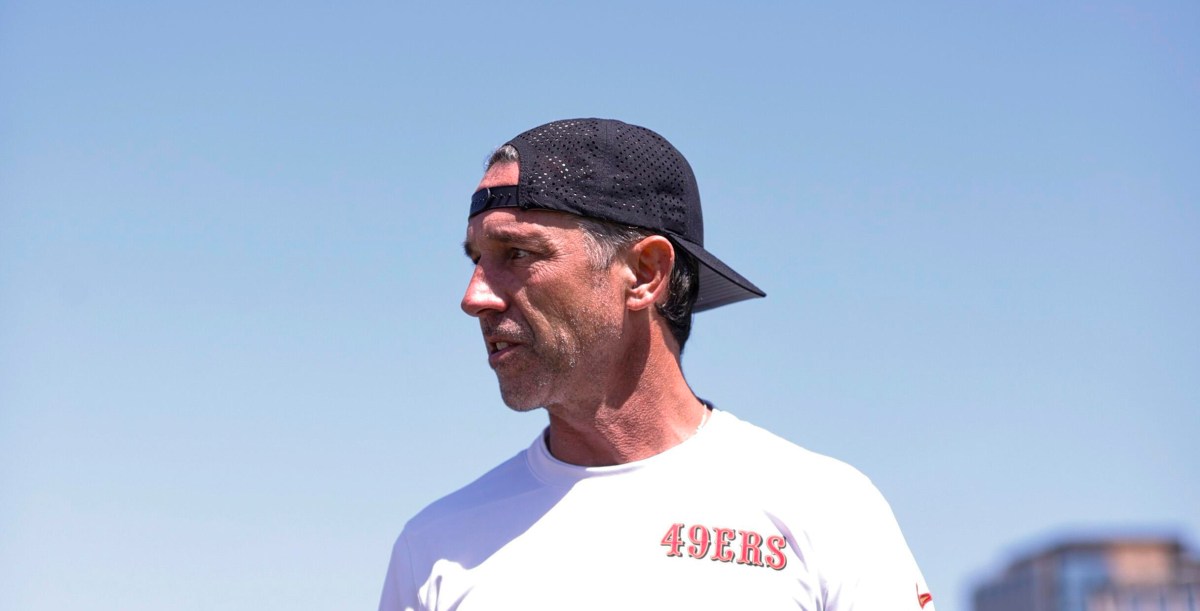
Kyle Shanahan Tesla Autopilot crash accounts now include a detail the San Francisco 49ers coach had not previously made public: Shanahan said his Tesla Model S had its Autopilot feature engaged when he crashed on July 14 in Palo Alto. He also said he does not know whether the system failed or whether he accidentally disengaged it while reaching for a dropped phone.
The unresolved technical question is doing a lot of work here. Shanahan's remarks establish his account of what was enabled in the car, not an independent finding about what caused the collision. No vehicle data, police report, Tesla analysis or regulator finding in the available reporting resolves whether Autopilot was operating as intended, malfunctioned, or had been switched off.
Speaking to reporters, Shanahan said he had used the feature in some form for nine years and had become comfortable with it. He said he turned away after his phone fell out of reach. CBS Sports reported that Shanahan said he crossed into oncoming traffic, rather than the 21-year-old driver of the other vehicle.
Shanahan accepted responsibility for the crash. He said a driver cannot look away from the road or hand the job to a computer, whether the automated feature is active or not. He also said he was not sure what happened during the moment he looked away.
Did Kyle Shanahan say Tesla Autopilot malfunctioned?
No. Shanahan raised malfunction as one possible explanation, alongside the possibility that he inadvertently knocked Autopilot off. He did not say Tesla's system caused the crash. That distinction is more than semantic: an enabled driver-assistance feature and a demonstrated system failure are different claims, and the second has not been established by the reporting.
Shanahan suffered a concussion, three broken ribs and a broken left hand, according to CBS Sports. He said he was nearing full strength and expected to coach the 49ers' preseason opener against the Tennessee Titans.
What do Tesla's manuals say about driver attention?
Tesla's current manuals for other models make clear that its automated-driving features still require driver supervision. The company says Model Y Autosteer is hands-on, requiring drivers to keep their hands on the wheel and be ready to act immediately. Its Model 3 documentation says Full Self-Driving (Supervised) requires an attentive driver prepared to take over at any time.
Those documents do not establish the software version, settings or behavior of Shanahan's Model S on July 14. They do, however, align with the warning Shanahan gave after the crash: drivers remain responsible for watching the road.
CBS Sports reported Shanahan's account and injuries. Tesla's Model Y manual describes the company's driver-attention warnings for its relevant features.
This story draws on original reporting from The Verge.


