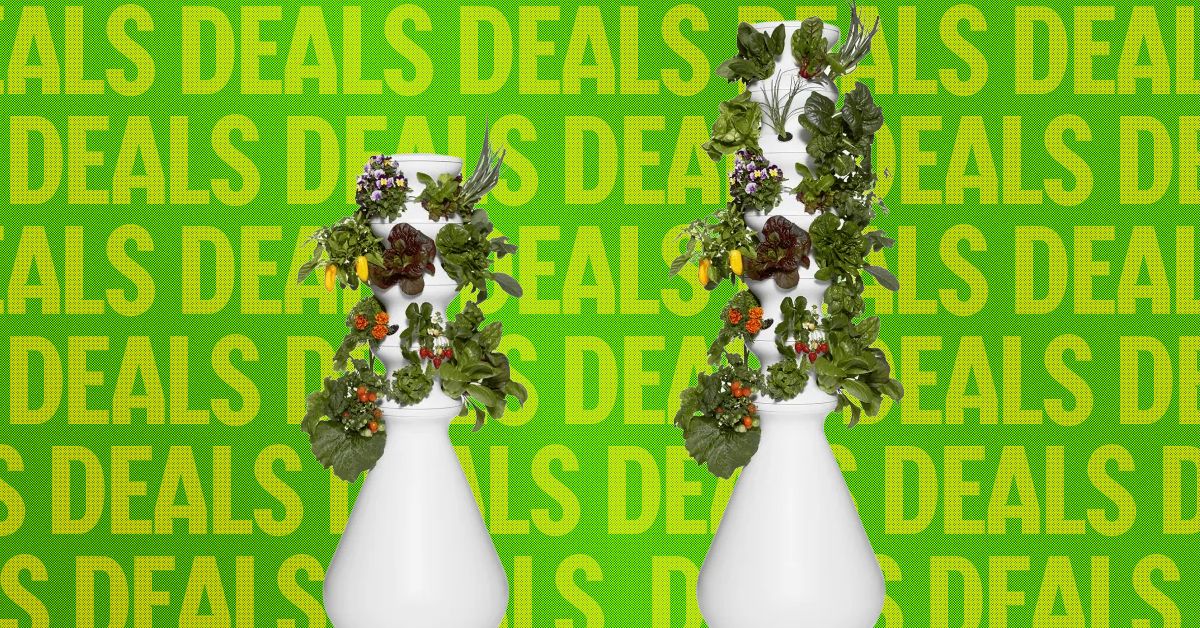
A Lettuce Grow Farmstand discount was featured by WIRED in a commerce article that tied an indoor gardening product to the appeal of skipping grocery-store lettuce. The deal listed 20% off Farmstand models with the code SUNGROWTH20, though the supplied listing does not establish that the offer remains available.
The important distinction is less glamorous than the marketing: Farmstand is a hydroponic growing system for producing plants at home, indoors or outdoors. The available evidence does not show that buying one prevents cyclosporiasis, salmonellosis, diarrhea, or any other foodborne illness.
WIRED listed sale prices of $778 for the indoor small model, $898 for indoor medium and $1,138 for indoor large. Its writer said the medium indoor unit shown has room for 24 plants. The writer also said they had used a living-room Farmstand for nearly two years to grow salad greens, herbs, beans and zucchini, and that it supplied enough produce for their three-person household to avoid buying nearly all vegetables at grocery stores. That is one household's account, not a measured yield study.
Can a Lettuce Grow Farmstand make lettuce safe?
No conclusion like that follows from the available reporting. WIRED said investigators had identified iceberg lettuce sold through Taylor Farms de Mexico as the likely culprit in a 2026 multistate cyclospora outbreak, and said the main summer threat might be waning. But neither that reporting nor the product promotion provides public-health evidence that home hydroponics eliminates contamination risks.
Growing at home changes where the food comes from and gives the grower more control over the system. It does not turn food safety into a solved engineering problem. WIRED's writer reported earlier pest trouble with Farmstand seedlings and said Lettuce Grow now recommends quarantining and treating seedlings upon arrival. The writer said that approach resolved the issue with the current batch of company-provided seedlings.
What does the Farmstand require?
The system uses a water pump and LEDs, according to WIRED. The writer said the units include an initial set of seedlings and nutrients for a couple of growing cycles. That is a product feature claim and not a forecast of upkeep, crop output or operating cost.
A separate reviewer, writing on the blog What Savvy Said, described more hands-on drawbacks in an indoor setup: roots that needed trimming, water leaking associated with root growth, and recurring pump trouble. The reviewer said a pump was replaced under a one-year warranty. Those are individual experiences, not a reliability record for the product line.
For people who want hydroponic lettuce without a branded tower, TCPalm described a passive Kratky-style setup that calls for a clean, lightproof food-grade reservoir, a growing medium, hydroponic nutrients, seeds, and either a sunny windowsill or full-spectrum LED lighting. It is an assemble-it-yourself route, not a documented price comparison with Farmstand.
That leaves the Farmstand promotion in its proper box: a discounted home-gardening product, with a useful personal growing anecdote attached. It is not a verified food-safety intervention.
This story draws on original reporting from WIRED.


