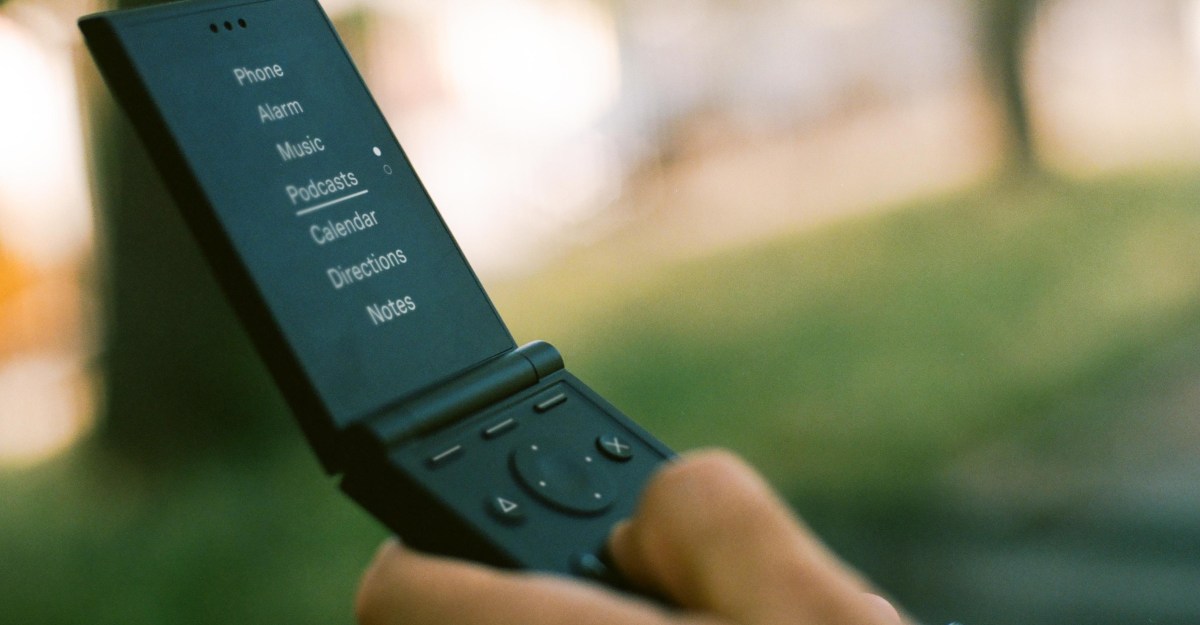
Light plans to ship a flip phone in early 2027 for people who want fewer phone-shaped excuses to stare at a screen. The company’s new Light Flip takes the minimalist software from the Light Phone III and puts it in a clamshell with physical controls, a lower price, and no outside display.
Kaiwei Tang, Light’s cofounder, told The Verge that customer feedback after the Light Phone III pushed the company toward the design. The Phone III was still built around Light’s anti-distraction pitch, but it looked much more like a conventional smartphone: rectangular, touchscreen-driven, and equipped with a camera. Tang said some users, especially younger ones, objected to carrying anything that resembled an iPhone or Galaxy device and repeatedly asked for a flip version.
The result is a phone that makes opening the device part of the interface. Light chose not to add an external screen, according to Tang, so a user has to flip it open before doing anything more than noticing the front notification light. That is a small hardware decision with an obvious behavioral bet behind it: fewer glances, fewer half-checks, less pocket casino energy.
What Light is putting in the clamshell
The Light Flip has a 2.8-inch screen on the top half, and it is not a touchscreen. Input runs through the lower half: a standard number pad, a D-pad, and function buttons. Light is also offering the device in multiple colors, a shift from the all-black Light Phone III.
Inside, Light says the phone uses a MediaTek MT8873 processor with 128GB of storage and 6GB of RAM. The hardware list includes USB-C charging, a headphone jack, one rear camera, and the front notification light. There is no NFC chip, which means no tap-to-pay support.
Tang described the Light Flip as primarily a second phone, meant for leaving a full smartphone at home rather than replacing it for every task. Light tried that pitch with the Phone III as well, although Tang said the $699 price drew most of the criticism he heard. The Flip will cost $299. Light will also sell it with the company’s cellular service for $39 per month, with ownership transferring to the customer after 24 months.
Same LightOS, now with user-built tools
The Flip runs the same LightOS software as the Light Phone III, according to Tang. That means tools such as the camera, notes, and navigation carry over, aside from the NFC-dependent payment feature.
Light has also opened a path for users to write software for the platform. The company recently released an SDK for its app toolbox, allowing owners to build apps for personal use or submit them to a broader library. That is a notable concession from a company whose whole pitch is restraint, and it follows some Light Phone III owners hacking full Android onto the device to run software Light did not provide.
Tang told The Verge he accepts that Light cannot write every tool customers need. He said users own their devices and should control their software, even if he would rather not see social media running on Light phones.
He also said he expects some developers to bring AI agents into LightOS, though he is not trying to make that a centerpiece. Tang said young people he interviews do not ask for an AI button, and that some users instead want assurances that AI is absent from Light’s products.
Light is selling the Flip as a deliberate rejection of the modern glass slab, without pretending people no longer need maps, notes, calls, texts, or a camera. The wager is that the hinge does some of the work software limits usually fail to do.
This story draws on original reporting from The Verge.