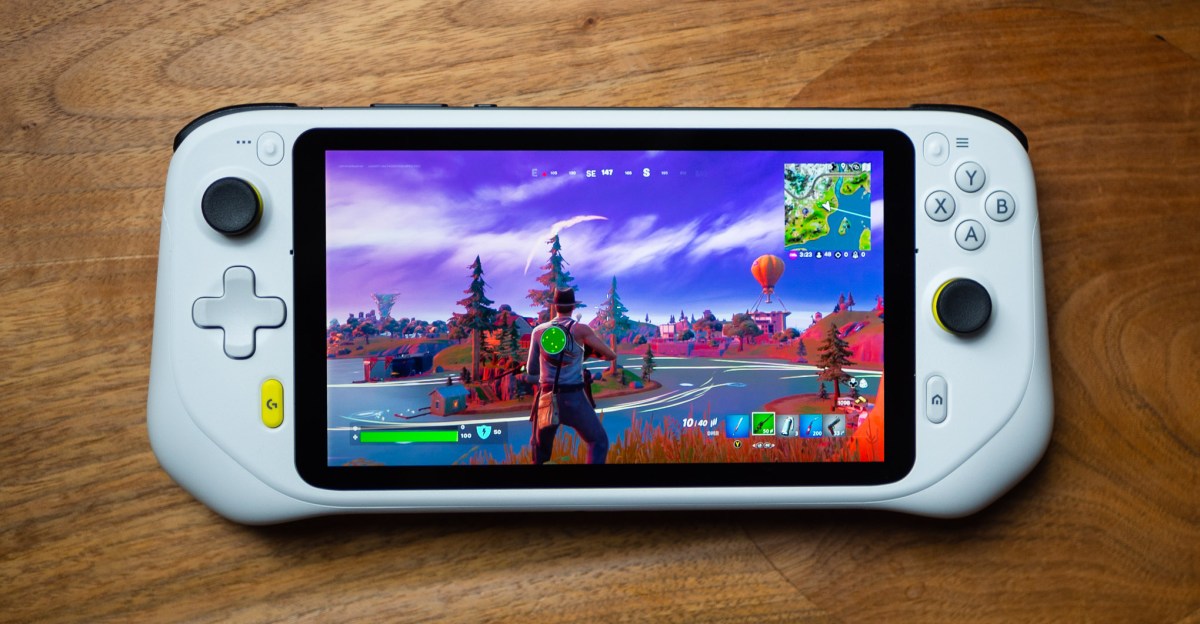
Do not expect a Logitech G Cloud 2 soon. Robin Piispanen, the new global head of Logitech G, told The Verge that Logitech is not currently building a follow-up to its cloud gaming handheld and is unsure when, or whether, the company should return to the category.
Piispanen said Logitech likes the idea of handheld gaming, but the company has more urgent work than making a second G Cloud. That is a blunt read on a product category that has produced a lot of hardware and not a lot of easy profit, unless the company selling the device also controls a major game platform.
The original Logitech G Cloud launched in 2022 as a $350 handheld built around streaming games rather than running demanding PC titles locally. It arrived with Tencent involved and support for services such as Xbox Cloud Gaming and Nvidia GeForce Now. Its problem was obvious at the time: Valve’s Steam Deck started at $400 and could play PC games without depending on a strong internet connection.
Will Logitech make a G Cloud 2?
Piispanen did not rule out another handheld forever, but he told The Verge that Logitech is not working on a second G Cloud right now. He said the first device had a dedicated group of fans, while a much larger share of buyers tried it and stopped using it, estimating that about 80 percent ended up putting it away.
His diagnosis is not that the hardware category is charmless. It is that the use case did not become routine for enough people. A cloud handheld is a thin client: the device handles the screen, controls, battery and network connection, while the actual game runs on remote servers. That can reduce local heat, weight and power draw, but it shifts the hard part to latency, bandwidth and server economics.
Piispanen said cloud gaming did not expand the way Logitech had hoped. He pointed to infrastructure costs and said Microsoft has made clear that cloud gaming is expensive to operate. That matters because a streaming-first handheld is only as good as the services behind it, and Logitech does not own those services.
Why the handheld business looks rough
Piispanen told The Verge that dedicated handhelds usually make more sense at large scale, especially when the company behind the device also owns content. He cited Nintendo and Steam as examples of companies with platform advantages. Logitech, by contrast, is strongest in industrial design and input hardware, not game stores, operating systems or studios.
He also sounded cool on the idea of chasing Windows handheld makers such as Asus, whose Xbox-branded ROG Ally X was mentioned in the discussion. Piispanen said companies in that lane work with thin margins and rely on other firms’ platforms and services to make the product useful.
A standalone Logitech handheld is theoretically possible, according to Piispanen, but he suggested Logitech would likely need a partner for much of the stack beyond controls and design. That is the least surprising part of this story: building a nice shell is not the same thing as building a viable gaming platform, despite what product renders keep trying to imply.
Cloud gaming is still on Logitech’s radar
Piispanen said Logitech is still investing in the future of cloud gaming, even after the G Cloud fell short of the company’s hopes. He told The Verge that Logitech is speaking with major players, including Microsoft and Tencent, about how cloud gaming could become a larger business and where Logitech might fit.
He also agreed with the idea that cheaper or repurposed data center capacity could eventually improve the economics for cloud gaming, but he did not give a timeline. For now, Logitech’s handheld plan is less roadmap than waiting room: the company sees the appeal, sees the cost, and is not pretending the first G Cloud proved the market is ready.
This story draws on original reporting from The Verge.


