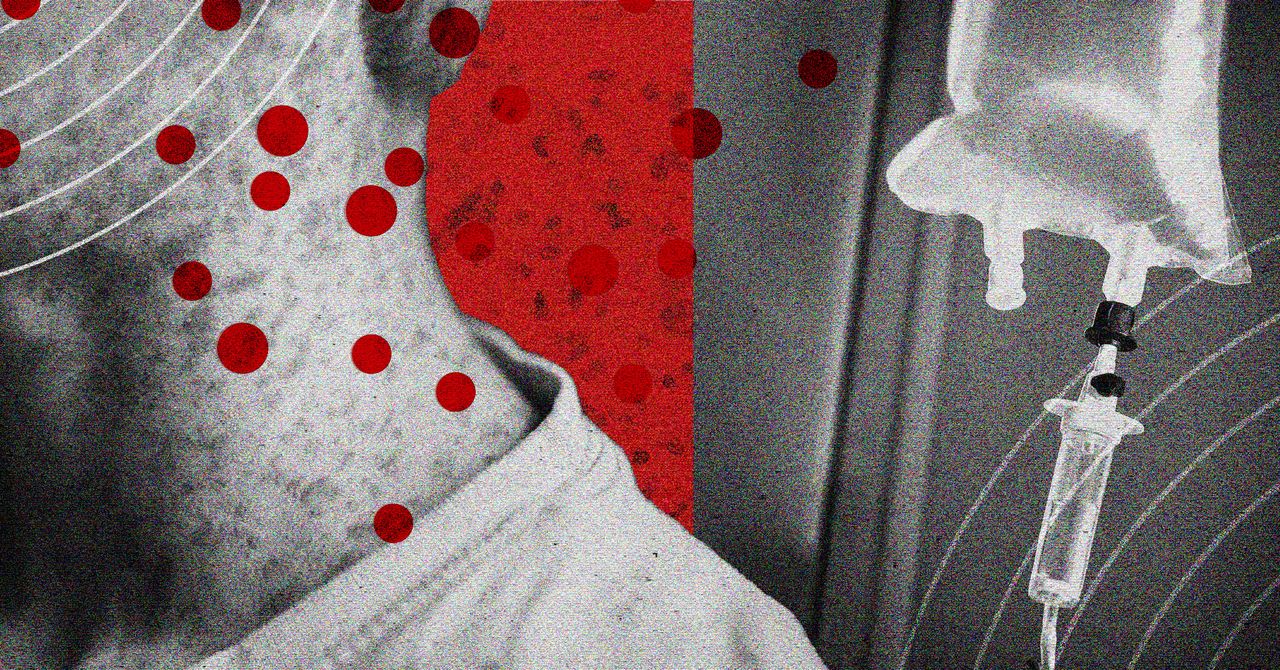
Measles treatments are getting new attention from biotech companies and academic labs as US cases rise to levels not seen in decades and vaccination rates fall in many communities. WIRED reported that outbreaks in South Carolina and Utah helped push the country past 2,289 cases by July, compared with 285 cases in all of 2024.
The shift is awkward and predictable. Measles vaccination has worked so well that drug developers had little reason to build a commercial market around treating the infection. Now, clinicians are facing more exposures among infants, immunocompromised people, and unvaccinated patients, with few tools beyond supportive care.
Michael Mina, an epidemiologist and chief medical officer at Connecticut biotech Invivyd, told WIRED that the current resurgence has exposed “a horrible lack of options” after someone is exposed to measles.
What measles treatments are being developed?
Invivyd is working on a monoclonal antibody for measles. Monoclonal antibodies are lab-made versions of immune-system proteins that can bind to a virus and help block infection or disease. They can be given by IV or injection and may provide protection for a few months, a model used during Covid-19 for some immunocompromised people.
Invivyd has not tested its measles antibody in humans, according to WIRED. Mina said the company is assembling data for the Food and Drug Administration so it can seek clearance to begin clinical trials.
At the La Jolla Institute for Immunology, president and CEO Erica Ollmann Saphire and colleagues have been studying how human antibodies respond to measles. In May, the team published work in Cell Host & Microbe describing antibodies that bind to important sites on the virus and block infection. In rodents, an infusion of those antibodies was associated with a 500-fold reduction in viral load.
Vanderbilt University researchers have also identified potent measles antibodies and are working with Saravir Biopharma on development. James Crowe, director of the Vanderbilt Center for Antibody Therapeutics, told WIRED that his group is aiming for a two-antibody combination to reduce the chance that the virus could mutate around the treatment.
Why measles is hard to handle after exposure
Measles spreads easily enough that public health officials generally need at least 95 percent of a community to receive both vaccine doses to protect people who cannot be vaccinated, including infants under 12 months and some immunocompromised people. WIRED reported that vaccination rates have fallen below that threshold in many parts of the US.
Children face the highest risk of severe complications. Measles can damage the lining of the respiratory tract, suppress immune defenses, and leave patients vulnerable to bacterial infections. It can also cause pneumonia, deafness, and potentially fatal brain injury.
Because there is no measles-specific approved treatment described in the report, doctors mostly treat symptoms: fluids for dehydration, help with breathing problems, and steroids for inflammation. Vitamin A is sometimes used because measles can reduce the body’s supply, but it does not attack the virus itself.
Why the drugs may still take years
The bottleneck is not just biology. Manufacturing monoclonal antibodies at scale is expensive, and clinical trials can cost millions of dollars. Pharmaceutical companies may be reluctant because infectious-disease drugs often produce uneven revenue: outbreaks come and go, and treatment courses are short.
Cost could also matter if any product reaches patients. WIRED noted that in 2022 the US government spent $855 million on 1.7 million doses of Evusheld, a Covid monoclonal antibody. The drug was free to patients, but some were still billed hundreds of dollars for administration.
Antiviral drugs are another possible route. Georgia State University researchers identified an oral antiviral and tested it in rats, ferrets, and dogs infected with related viruses because those animals do not get human measles. The drug reduced viral load, and all treated animals survived, according to WIRED. It has not yet been tested in people.
Regulators would also need to decide how to run trials. New medicines are usually tested first in adults for safety before children receive them, but measles hospitalizations are more likely among children, especially those who are unvaccinated.
The final problem is uptake. WIRED reported that some parents in the Utah outbreak refused immune globulin, a broad antibody product made from donated plasma. Researchers including Crowe argue that funding should continue anyway, especially for people who cannot safely receive vaccines.
This story draws on original reporting from WIRED.


