Northrop Grumman’s Mission Robotic Vehicle launch has put a two-armed satellite servicer on the road to geosynchronous orbit, where the company plans to install propulsion pods on aging spacecraft and test a business the military also cares about for obvious reasons.
The spacecraft lifted off Tuesday from Cape Canaveral Space Force Station in Florida on a SpaceX Falcon 9 rocket. Riding with it were three Mission Extension Pods, small propulsion units that can operate as independent spacecraft. SpaceX deployed all four payloads within roughly an hour of launch, according to the mission description.
The hardware is not at its workplace yet. Northrop’s vehicle and the three pods are expected to spend about a year using onboard propulsion to reach a circular orbit more than 22,000 miles, or nearly 36,000 kilometers, above the equator. That is geosynchronous orbit, the crowded high-altitude belt used by communications satellites, missile warning spacecraft and surveillance platforms.
What is the Mission Robotic Vehicle?
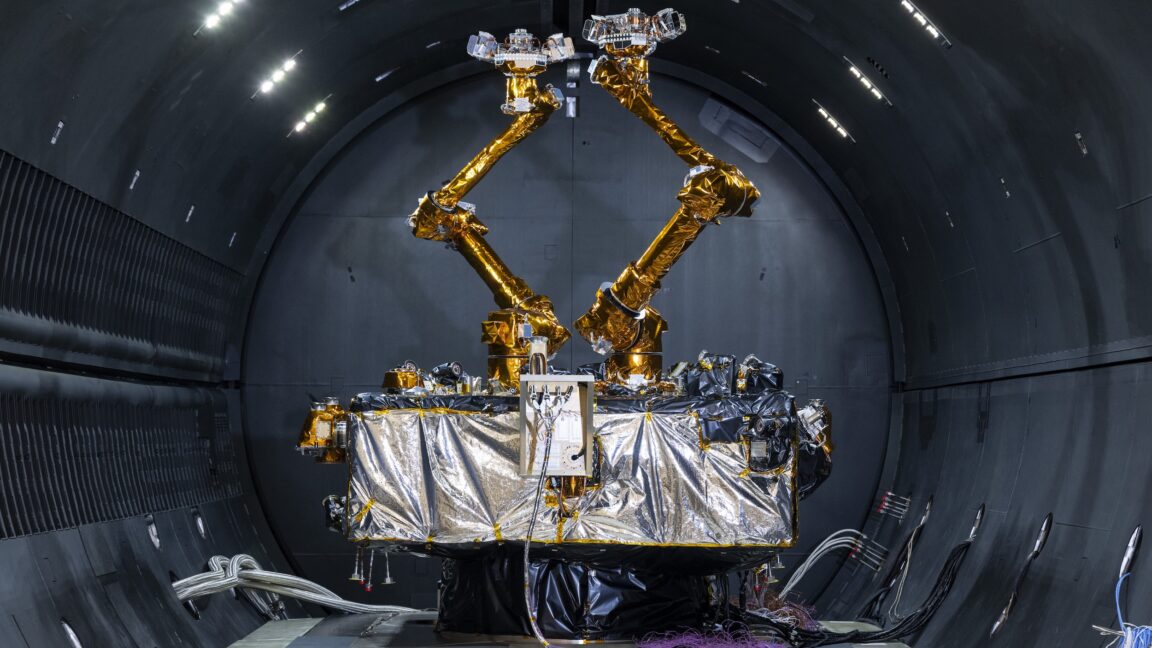
The Mission Robotic Vehicle, or MRV, is Northrop Grumman’s robotic satellite servicing spacecraft, built to rendezvous with satellites in geosynchronous orbit and work on them with two flexible arms. The arms come from the Robotic Servicing of Geosynchronous Satellites program, known as RSGS, developed with funding from the Defense Advanced Research Projects Agency and work by the Naval Research Laboratory.
DARPA spent about $420 million on the robotics payload, while Northrop Grumman invested hundreds of millions of dollars in the broader commercial servicing system, according to the program account. The result is one of the most capable servicing spacecraft publicly known, which is a necessary caveat because China has been flying its own robotic and refueling demonstrations in geosynchronous orbit.
China launched a robotic-arm satellite to that orbit in 2016. Its SJ-21 spacecraft later moved a dead Chinese navigation satellite to a disposal orbit, and SJ-25 docked with SJ-21 in 2025 in what appeared to be a high-altitude refueling demonstration. Gen. Stephen Whiting, head of U.S. Space Command, told Congress last year that China was developing maneuverable dual-use satellites that could threaten U.S. spacecraft, and he cited SJ-21 as an example.
How will Northrop’s satellite servicing work?
The three Mission Extension Pods are roughly dishwasher-sized propulsion packages. Once the MRV reaches geosynchronous orbit, it is supposed to collect a pod with its robotic arms, rendezvous with a customer satellite and attach the pod to the satellite’s engine compartment. The pod can then provide propulsion for up to eight years, letting the client satellite keep station or move as needed.
This is life extension rather than refueling. Northrop’s earlier Mission Extension Vehicles, launched in 2019 and 2020, docked with commercial communications satellites and took over attitude and orbit control. The MRV changes the model: instead of tying one servicer to one customer, Northrop can use the same vehicle to install multiple pods.
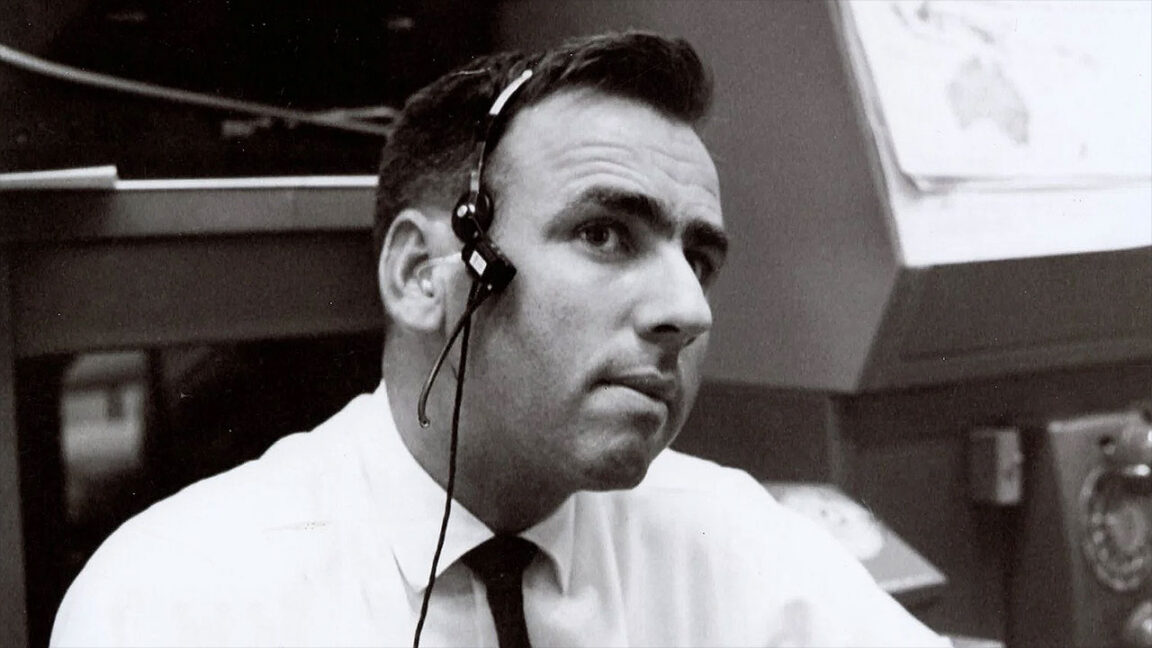
Jim Shoemaker, DARPA’s RSGS program manager, said the spacecraft cannot be flown by joystick from Earth because of the time delay. The system must run uploaded procedures or execute parts of the job autonomously. He also said arm motion changes the spacecraft’s attitude in microgravity, so the control system has to compensate, then adapt again after attaching to another satellite.
The arms can use different tools. The launch configuration includes pod capture tools for grabbing the Mission Extension Pods or other grapple-ready objects, plus tools that can let the MRV directly hold a client spacecraft if needed. Northrop and SpaceLogistics have not named the first satellite the MRV will service, but they have agreements with SES and Optus, and the Space Force is expected to use the vehicle for at least one satellite visit.
Northrop took ownership of the DARPA-funded robotics payload at launch, though DARPA is still due mission performance data through the first servicing demonstration. After that, Shoemaker said, the government role shifts toward the Space Force, while Northrop keeps owning and operating the vehicle. The expected operating life is 10 to 13 years.
Future work could go beyond the three pods now in space. Northrop could launch more pods or new tools, and the MRV itself was designed to be refueled in orbit. That is the larger bet: satellites in high-value orbits may stop being disposable machines abandoned when the fuel gauge hits zero.
This story draws on original reporting from Ars Technica.