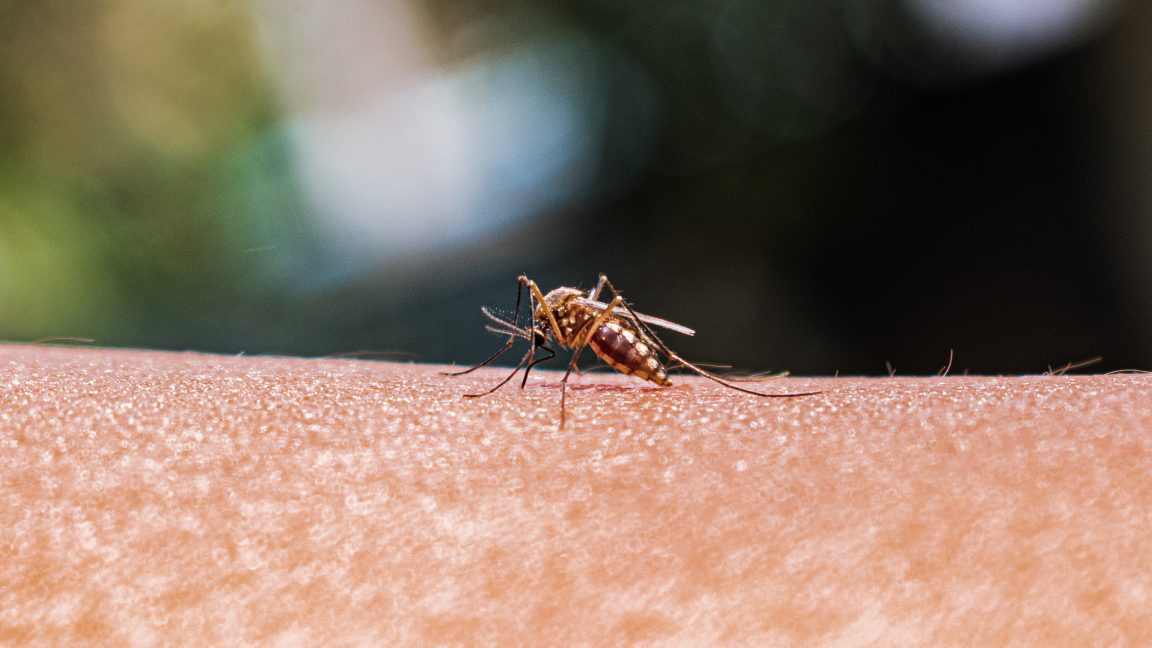
Warmer, wetter summers are changing which mosquitoes show up in places such as New England, and public health workers are warning that the monitoring systems meant to catch the disease risk are uneven at best.
Connecticut’s statewide mosquito program has found 54 species, including the Asian tiger mosquito, an invasive species associated with dengue and Zika transmission. Philip Armstrong, chief scientist at the Connecticut Agricultural Experiment Station, said the mosquito and other species have been moving into the region from historically warmer, more humid areas.
Armstrong’s agency coordinates Connecticut’s trapping and testing program. He said testing mosquitoes directly is how officials find virus hot spots early. Waiting until people are sick gives public health agencies little time to act.
The problem is that Connecticut is more organized than many places. Much of the United States relies on more than 1,000 local mosquito control agencies with different budgets, methods and reporting practices. Dan Markowski of the American Mosquito Control Association said the country should have a national surveillance database that collects and shares data from monitoring programs. He also said the barrier is money.
Connecticut is already finding West Nile virus
Connecticut reported last week that mosquitoes in the state had tested positive for West Nile virus this season. The virus appears each summer and has become the leading mosquito-borne disease in the Northeast. According to the Centers for Disease Control and Prevention, most infections cause no symptoms, but the virus can cause flu-like illness and has been linked to more than 3,300 deaths in the United States since it was first detected in the country in 1999.
Connecticut created its monitoring program in 1997 to watch for Eastern equine encephalitis, a rare mosquito-borne disease that can cause neurological illness. The CDC says it has a fatality rate of about 30 percent. Armstrong said New England is seeing repeated periods of higher virus activity that were not part of the historic pattern, a change he said has “the hallmarks of something that’s being affected by climate change.”
Researchers say warming can shift mosquito-borne disease risk in several ways. It can extend the transmission season, change habitats, reduce mosquito predators and allow vector species to survive in new areas. Brian Leydet, who studies mosquito- and tick-borne diseases at the State University of New York College of Environmental Science and Forestry, said higher temperatures can accelerate mosquito development, creating more mosquito generations in a year in places that previously had fewer.
Leydet also cautioned that the insects are only one part of the system. Environmental change can affect viruses and the animals that carry them, including birds and deer, making the ecology difficult to track.
Surveillance takes people, traps and money
Leydet helped start a monitoring program in St. Lawrence County, New York, in 2024 after an Eastern equine encephalitis outbreak. New York does not have a statewide mosquito surveillance program, and the project announcement said many counties lack the infrastructure and money for routine monitoring.
The work is not glamorous. Crews set and retrieve traps. Specialists identify, sort and test mosquitoes. Some traps use foul water with decaying organic material to attract females. Others use dry ice to emit carbon dioxide, the cue mosquitoes follow when searching for mammals. Leydet’s team had to make its own dry ice because it was difficult to obtain in rural New York.
Leydet said county-run programs often do not share data well, leaving surveillance inconsistent. His lab has found that some invasive mosquito species are being missed under the fragmented system. Programs also disappear when local budgets dry up, he said, leaving officials to respond only after disease is already spreading.
A bill introduced in the New York State Legislature this session would begin building a more comprehensive mosquito surveillance program. The bill describes the current system as “sparse and disintegrated” and says better monitoring would help public health officials respond before outbreaks grow.
Those responses can include removing standing water, using larvicides in breeding areas and warning residents to use repellent and cover skin outdoors. Larger outbreaks may require broader pesticide spraying. Leydet said centralization would help, though the cost remains the part that tends to cool political enthusiasm.
This story draws on original reporting from Ars Technica.


