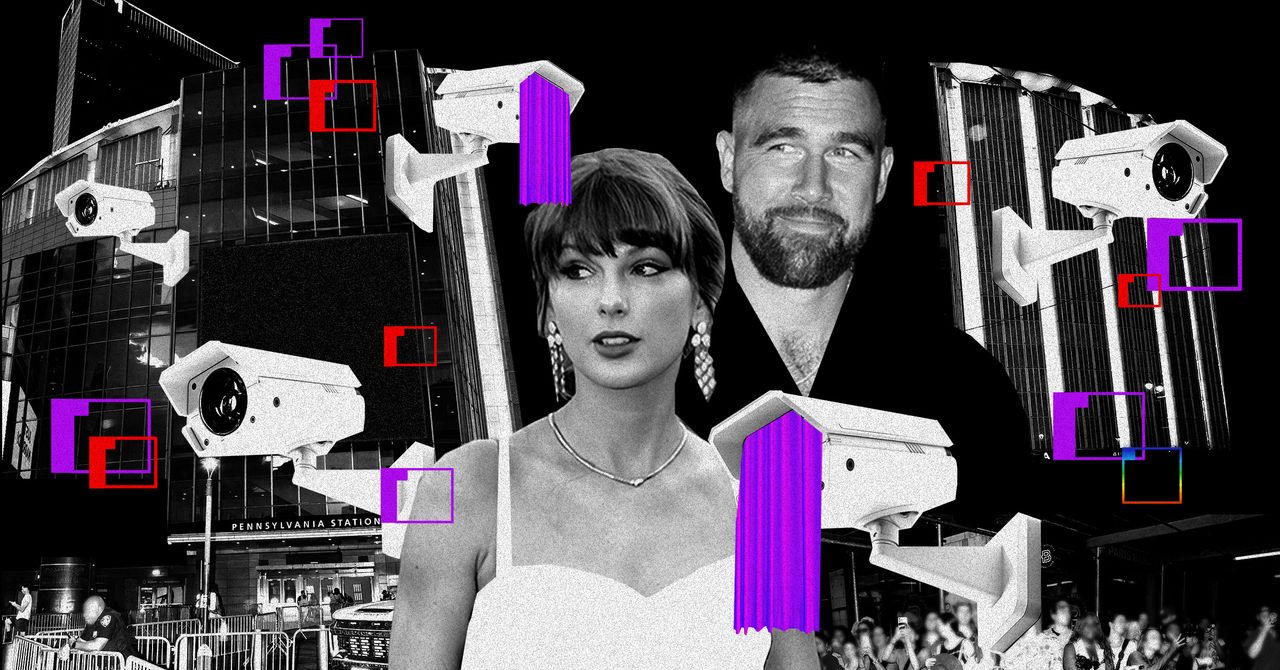
Madison Square Garden restricted access to its internal surveillance system during Taylor Swift and Travis Kelce’s wedding events, limiting the MSG face recognition setup that owner James Dolan has defended as central to venue security, WIRED reported.
An internal MSG document reviewed by WIRED said a company executive ordered a seven-hour lockout of the Garden’s Genetec video management system on July 2 because of a “client privacy request.” The event that night was a rehearsal dinner for about 100 people at the Infosys Theater inside Madison Square Garden. Two people familiar with the venue’s operations told WIRED the restriction effectively kept most MSG security workers from fully running the arena’s face-recognition system that evening.
The order reviewed by WIRED covered July 2. The same two people said they were told the lockout happened again on July 3, the wedding night, when about 1,000 guests from entertainment, sports, media, and business attended.
The memo said only a small group of executives and engineers kept Genetec access. Other accounts were disabled, and staff were warned they would be forced off the system if they still had camera access after 3 p.m., according to WIRED.
Why were Madison Square Garden cameras restricted for Taylor Swift?
The stated reason in the MSG memo was a client privacy request, according to WIRED. The couple’s teams also used other privacy controls: guests signed nondisclosure agreements before receiving digital invitations, cars used tents for arrivals and departures, phones were barred, and one guest’s detailed online account was later deleted, according to reports cited by WIRED.
The restriction stands out because MSG has treated its surveillance system as a security tool. Dolan has said face recognition and cameras help make MSG highly secure. WIRED reported that about 130 police officers were assigned near the Garden on July 2, and city officials were preparing nearby street closures for the following day.
New York was also in what the NYPD considered a heightened threat environment because of America 250 events and the war with Iran, WIRED reported. The memo indicated exterior cameras, which the NYPD can access, stayed on. Swift’s security concerns were not theoretical: in May, a man was sentenced to 15 years in prison for planning an attack at one of her concerts in Vienna, according to the BBC.
How MSG’s face-recognition system works
Genetec software manages MSG’s camera feeds and the tools tied to them. Cameras at guest entrances connect to face-recognition software from eConnect, and when the system flags a person, Genetec can help security follow that person across other cameras in real time, according to a person familiar with the setup quoted by WIRED.
That capability has drawn scrutiny because MSG has used face recognition beyond ordinary crowd safety, according to WIRED’s prior reporting. Critics of Dolan, lawyers involved in disputes with MSG-related entities, and a mother attending a Radio City Music Hall Christmas show with her 9-year-old Girl Scout have been flagged or barred, WIRED and other outlets reported.
Civil-liberties groups said the Swift-Kelce accommodation shows the privacy gap around biometric monitoring. Evan Greer, director of Fight for the Future, told WIRED it previews a world where privacy becomes available to a small elite while ordinary visitors face routine surveillance. Michelle Dahl, executive director of the Surveillance Technology Oversight Project, said in a statement to WIRED that the system looks less essential if it could be sidelined for one of MSG’s most prominent events.
MSG declined to comment to WIRED, citing active litigation with the publication. Representatives for Swift and Kelce did not respond to WIRED’s requests for comment.
This story draws on original reporting from WIRED.