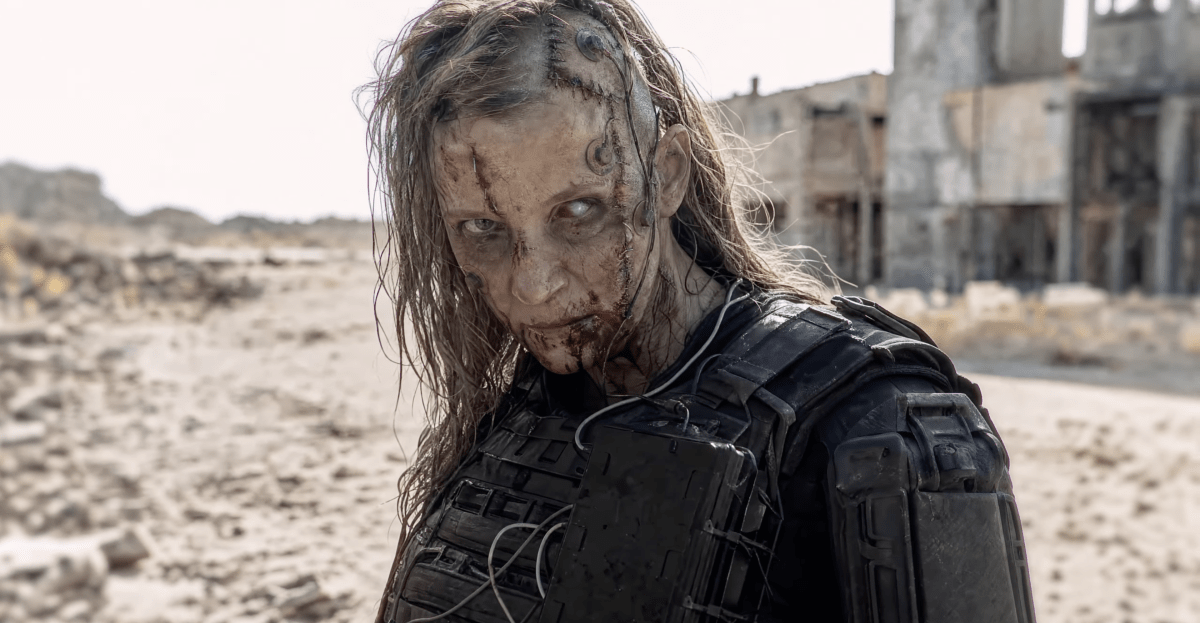
Neill Blomkamp, the director of District 9 and Gran Turismo, has released a 13-minute science fiction short called Nightborne, a zombie-military story made through his new AI startup and production company, Barley Studios.
The technical hook is the whole pitch: according to The Verge’s Charles Pulliam-Moore, every shot in the short was generated with ByteDance’s Seedance 2.0 text-to-video system. The project uses characters whose faces and voices are based on human actors. Blomkamp said on X that 32 actors agreed to have their likenesses used, and that “real concept artists” also worked on the production.
Blomkamp described Nightborne on X as a “test start” for generative AI filmmaking and said he wants to try making a feature-length project in the same format. That is the part Hollywood workers and audiences will read closely, because a director with an established VFX-heavy filmography is now using generative video as a production method rather than as a toy demo.
What the short is about
Nightborne is loosely based on Peter Watts’ 2014 novel Echopraxia, according to The Verge. Its plot centers on a U.S. pilot injured after her helicopter is shot down during a military conflict involving the U.S. and Syria.
In the short, the pilot survives with her head intact while the rest of her body is gravely damaged. That makes her a candidate for Project Nightborne, a government program that turns brain-dead soldiers into remotely controlled undead weapons. The program trains multiple uniformed zombie soldiers for combat in secret.
The film is assembled from brief generated clips, with frequent cuts between the zombified pilot and documentary-style interviews with people tied to the fictional program. Austyn Daines edited the short, according to The Verge. That structure also helps hide a current constraint of AI video systems: Seedance 2.0 produces footage in short bursts, so the edit has to do a lot of glue work.
The AI seams are still visible
Pulliam-Moore’s review argues that the short looks more polished than many AI videos circulating online, while still showing familiar machine-made artifacts. He points to nonsensical background text and line readings that land with odd emphasis, the kind of synthetic performance detail that gives the game away.
The Verge also compares Nightborne with other Seedance 2.0 projects, including Jia Zhangke’s Jia Zhangke’s Dance and Ruairí Robinson’s viral AI video showing Tom Cruise and Brad Pitt fighting. The pattern, according to Pulliam-Moore, is that experienced filmmakers can edit around model limitations, but the underlying systems still struggle with coherent details and convincing human performance.
Yahoo Entertainment reported that the announcement drew fast online backlash from people critical of Blomkamp’s turn toward generative AI. The reaction resembles earlier criticism around Darren Aronofsky’s AI-generated Revolutionary War series, which was also cited by The Verge.
Blomkamp’s short also invites an awkward reading. Its fictional government extracts labor from bodies stripped of agency, while the real production relies on a generative model trained to synthesize images and performances. Blomkamp says human actors consented to this project. The broader argument over AI video, copyright, consent, and labor is still very much alive, and Nightborne just walked straight into it wearing zombie makeup.
This story draws on original reporting from The Verge.


