The Nolan The Odyssey controversy has survived the film’s release, its strong reviews, and a global box office total above $700 million, according to Variety. The latest round comes from classicist Emily Wilson, whose sharp London Review of Books essay faulted Christopher Nolan’s treatment of Homer’s epic and revived an argument that had already been simmering around casting, design, and trailers.
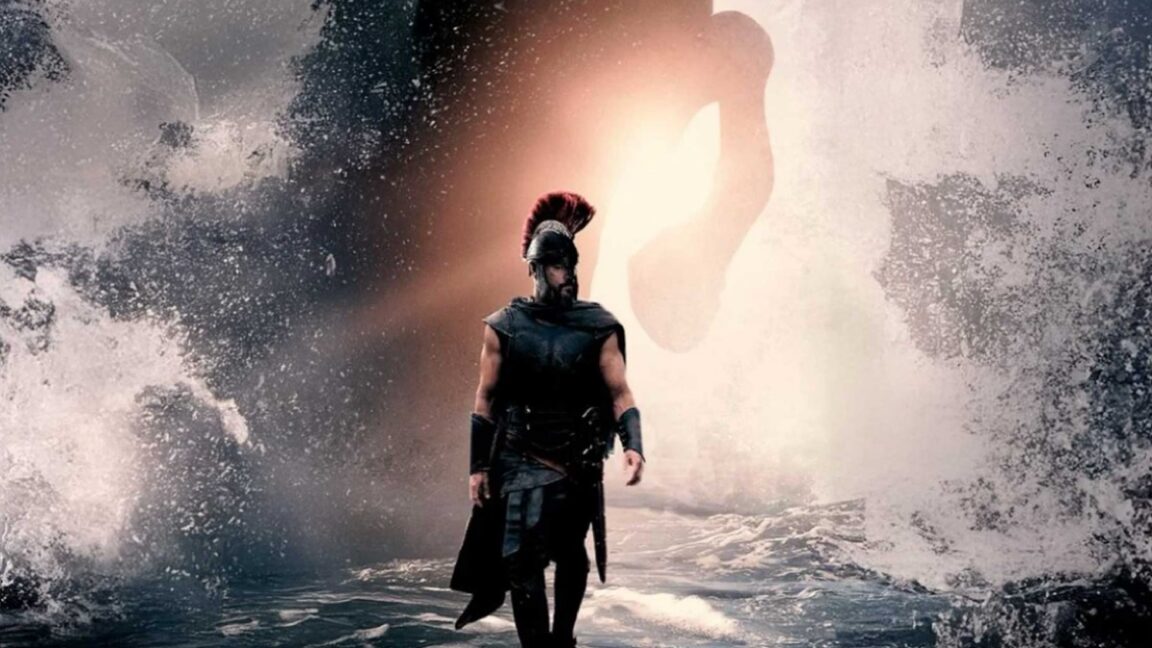
Nolan’s film stars Matt Damon as Odysseus, the king of Ithaca trying to return home after the Trojan War. Anne Hathaway plays Penelope, Tom Holland plays Telemachus, Zendaya plays Athena, Charlize Theron plays Calypso, Samantha Morton plays Circe, Lupita Nyong’o appears as Helen of Troy and Clytemnestra, and Robert Pattinson plays the suitor Antinous.
The movie keeps the poem’s fractured structure, according to Ars Technica senior writer Jennifer Ouellette, who described Nolan’s version as built around Odysseus recovering memories he has avoided. The film begins with a bard, played by Travis Scott, telling a heroic version of Troy’s fall, then moves through nested recollections of war, shipwreck, supernatural encounters, and Odysseus’ delayed return.
Why is Nolan's The Odyssey controversial?
The fight is partly about adaptation. Homer’s Odyssey, generally dated to around the 8th century BCE, is a poem shaped by oral tradition, gods, violence, hospitality customs, and conflicting ideas of heroism. Nolan’s film, by contrast, presents a contemporary interpretation that centers Odysseus’ guilt, memory, and reckoning after Troy.
Wilson, who published a widely discussed English translation of The Odyssey, criticized the film in the London Review of Books. According to Ouellette’s summary, Wilson objected to the way the movie foregrounds Odysseus, argued that some non-white actors were left in thin supporting roles, disliked the dialogue, and said the film did not sufficiently show the victims of Troy or the moral horror of war.
Wilson also criticized Nolan’s decision to reduce the direct role of the gods. Nolan told Time that he wanted to humanize divine figures and present supernatural events through natural phenomena that ancient people might have read as divine intervention. That is an artistic choice, though it also gives classicists plenty to chew on, which they have proceeded to do with academic-grade knives out.
Another point in Wilson’s critique concerned production ethics. She objected to the movie filming partly in Western Sahara, which she described as an occupied territory with violence against Indigenous people. That criticism is separate from the question of how faithfully Nolan adapts Homer, but it has become part of the broader debate around the movie.
How Nolan changed Homer's story
Ouellette wrote that Nolan’s adaptation gives limited screen time to several major actors because many characters exist as fragments inside Odysseus’ memory. Theron’s Calypso, Nyong’o’s Helen and Clytemnestra, Jon Bernthal’s Menelaus, and Benny Safdie’s Agamemnon appear briefly, while Zendaya’s Athena appears in dreamlike sequences tied to Odysseus’ moral collapse.
The film also pulls in material beyond Homer’s Odyssey. Elliot Page plays Sinon, a figure associated with Virgil’s Aeneid rather than Homer’s poem. In Nolan’s version, according to Ouellette, Sinon becomes an unwitting victim of Odysseus’ Trojan horse plan rather than merely a deceiver.
Morton’s Circe is also substantially reworked. Ouellette described Nolan’s Circe as a woman brutalized by men who turns Odysseus’ crew into pigs because she sees them as men behaving like animals, not as the seductive enchantress more familiar from the poem.
Despite the arguments, the film is already a commercial success. Ars Technica reported that its box office total has passed $700 million against a $250 million production budget, and that it has exceeded Oppenheimer’s total haul. Ouellette also predicted major Oscar attention, particularly for technical work and performances.
The argument now is less about whether Nolan’s film found an audience. It plainly did. The fight is over what a modern Odyssey owes Homer, scholars, viewers, and the ancient characters still being recruited into new cultural wars after nearly three millennia.
This story draws on original reporting from Ars Technica.