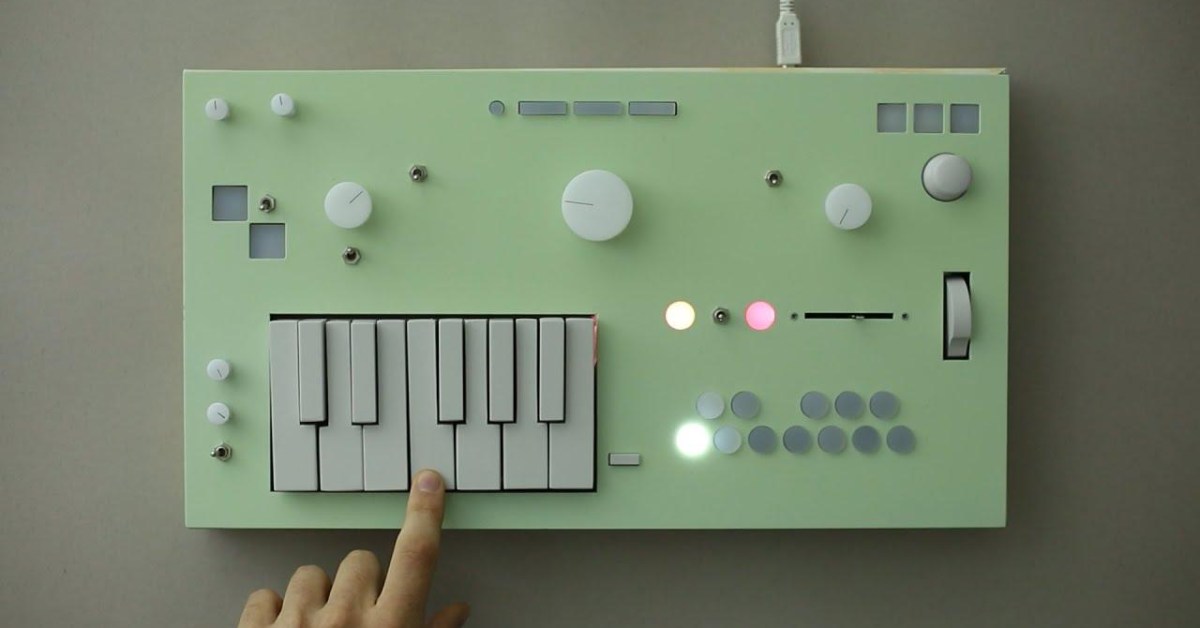
Nopia, the compact chord-focused synthesizer that drew a lot of attention from music gear people after an early 2023 showing, is close to becoming a product people can buy. Creators Martin Grieco and Rocío Gal brought the instrument to MusicRadar for a first look, and told the publication it should launch in “a couple of months” for “around £550.”
That timing points to a release before the end of the year, assuming the schedule holds. The price is also still an estimate, which is the right level of certainty for hardware that has spent years in teaser mode. Nopia’s own pitch is a “harmony machine,” and the actual design is more specific than the usual boutique synth box with a cute color and a handful of knobs.
How Nopia plays chords
The instrument is built around controlling harmony directly. According to MusicRadar’s first look, Nopia combines several performance modules into one instrument: keys, bass, arpeggiator, and pad. The result is closer to a small groovebox without drums than a conventional monosynth or polysynth controlled by a keyboard.
The front panel uses three main chord controls. A one-octave keyboard, called the Chord Builder, sits alongside a 12-button Tonal Selector and an Extensions Dial. Together, those controls set the key and the chord voicing. Grieco and Gal’s idea is to let a player trigger more complex harmonic movement with one or two fingers instead of requiring full keyboard technique.
Nopia also has performance controls for more gestural playing. MusicRadar reported a strum plate in the top-right corner that can pluck individual notes from a chord, plus a slider that bends the pitch of a full chord. That is a useful distinction: the machine is not only selecting chord names, it is giving the player ways to articulate those chords in real time.
Sound engines, effects, and MIDI
The sound side includes virtual analog synthesis and sample-based engines, according to the MusicRadar preview. The onboard effects list is practical rather than exotic: delay, reverb, tape emulation, and beat repeat. Those are the usual tools for making a small box feel less dry, but the more interesting part is the routing.
Nopia includes what MusicRadar described as extensive connectivity, including MIDI output for each module. That means its harmony system can drive external instruments module by module, so the box can act as a chord brain for other synths rather than keeping all of the action inside its own sound engines.
The remaining caveat is obvious: MusicRadar’s report gives an approximate launch window and approximate price, not a dated order page. For now, the confirmed news is that Grieco and Gal have moved Nopia from years of public teasing to a near-finished instrument with a target price and release window.
This story draws on original reporting from The Verge.