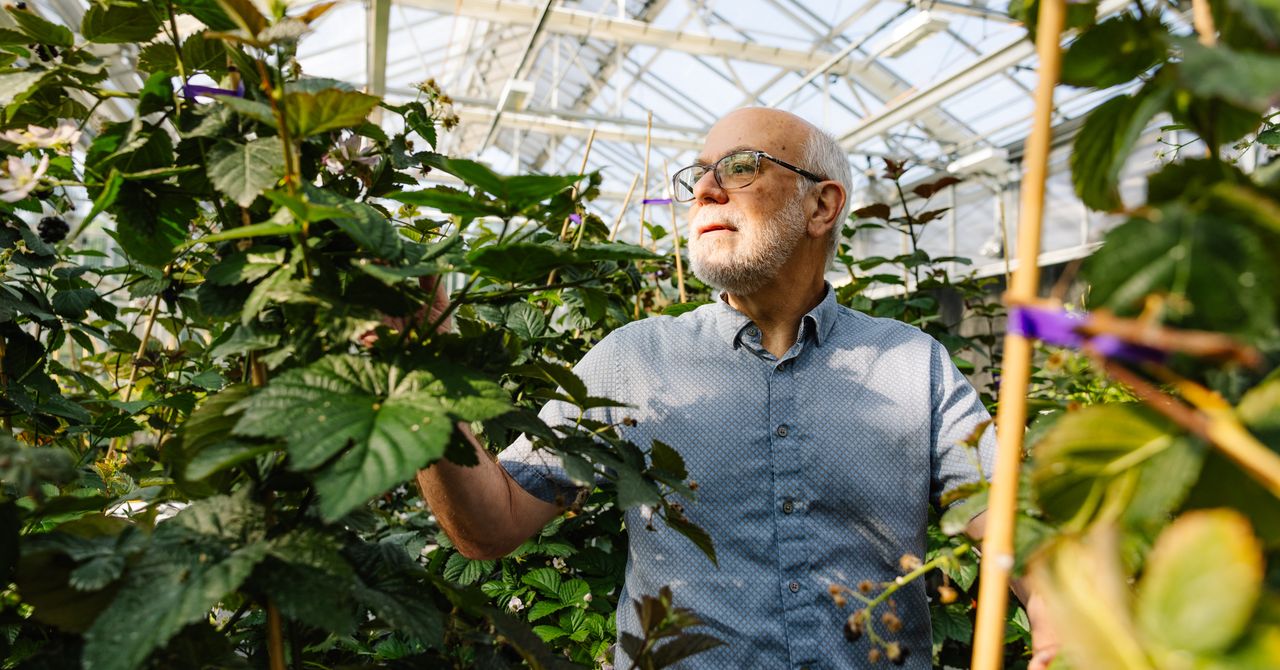
Pairwise seedless blackberries are a real gene-editing project, not a fruit aisle product. The Durham, North Carolina company has developed a blackberry with soft, small seeds and has combined that work with thornless and compact-growth traits. But Wired reports that the proposed triple-trait berries are not expected in U.S. grocery stores before 2030.
The gap matters. Pairwise is presenting a set of promising plant traits, while the commercial and environmental claims attached to them still need to survive field performance, scale-up and the less tidy question of whether growers and shoppers want them.
How do Pairwise seedless blackberries work?
Pairwise used CRISPR, a gene-editing technique that can make targeted changes to a plant's existing DNA. According to a July 2024 account from North Carolina State University, Pairwise researchers identified genes involved in development of the blackberry's hard pit-like seeds, produced edited plants, screened them for the intended changes and evaluated them in controlled conditions.
“Seedless” carries an asterisk familiar from grapes and watermelons. In its June 2024 announcement, Pairwise said the edit removed the fruit's hard pits, producing soft, small seeds rather than necessarily eliminating every trace of seed material. The company also said it edited the same blackberry variety for thornlessness and compact growth.
Pairwise says smaller plants could be planted more densely, while thornlessness and plant structure could make harvesting more efficient. Those are company projections, not independently demonstrated outcomes in the material available here. Its 2024 announcement said outdoor field trials were the next stage and described public availability as a goal for the following few years. Later reporting put the U.S. retail timeline beyond 2030.
A compact cherry plant is a different project
Pairwise is also developing a compact cherry bush, which Wired reported seeing at the company's Durham headquarters. Chief executive Tom Adams said the company envisions compact plants allowing growers to use less land than standard cherry trees and making spraying and mechanical harvesting easier.
That does not establish a seedless cherry. NC State reported that Pairwise scientist Lauren Redpath viewed the blackberry work as a possible foundation for future attempts to remove pits from fruits including cherries. The evidence supports an active research direction, not a finished cherry product or a validated new orchard system.
What has Pairwise sold so far?
Pairwise launched a less-bitter mustard green in the United States in 2023, described by Wired as the first U.S. CRISPR food product. The company said in early 2024 that it would discontinue the green to focus on other edited crops. Wired also reported that Pairwise has received more than 50 regulatory approvals covering five edited crops in nine countries, and that it sells a high-yielding blackberry in limited quantities in Colombia.
The company has raised more than $160 million and works with Bayer, Corteva, Mars, Sun World, universities and other research groups, according to Wired. Still, gene-edited food has not yet proved a broad consumer market. Wired reported that CRISPR crops have avoided much of the regulatory and public opposition associated with genetically modified crops, while warning that consumer or political resistance could still emerge.
Pairwise has a credible technical result to test. It has not yet demonstrated that seedless, thornless blackberries or compact cherry plants will deliver the yield, land-use or adoption gains the company predicts at commercial scale.
This story draws on original reporting from WIRED.