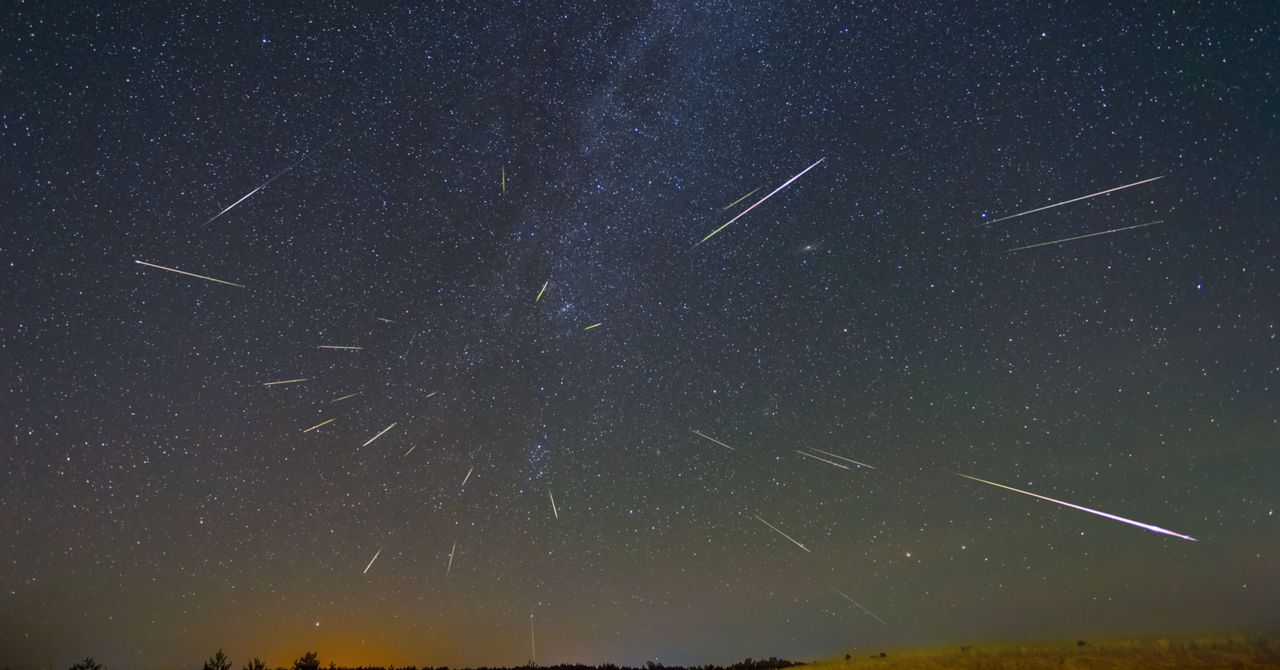
The perseid meteor shower 2026 reaches its main viewing window overnight on August 12-13, with the hours after midnight and before dawn offering the best odds for Northern Hemisphere observers. A new Moon on August 12 should minimize moonlight interference, leaving clouds, smoke, streetlights and an obstructed horizon as the usual enemies of seeing anything.
EarthSky puts the predicted astronomical maximum at 14:53 UTC on August 13. That timestamp is useful for forecasting, not a universal instruction to go outside at one particular local hour. The practical window depends on where you are, whether it is dark, and how high the shower’s radiant has risen.
The Perseids are active from mid-July into late August, according to the Royal Observatory Greenwich and the Natural History Museum. Activity builds toward the peak and drops off more quickly afterward, EarthSky says, so nearby nights can still be worth trying if peak-night weather is garbage.
When is the best time to watch the Perseid meteor shower 2026?
For most people in the Northern Hemisphere, start after midnight and stay out toward dawn on the mornings of August 12 and 13. The apparent origin point, called the radiant, is in Perseus; it rises late in the evening and is highest near dawn, according to EarthSky. More height above the horizon generally means more visible meteors.
Do not fixate on Perseus. The radiant is a perspective effect: trace the streaks backward and they appear to meet there, but the meteors themselves can cross any part of the sky. Watch a broad, dark section overhead instead.
The shower is less favorable farther south. EarthSky says the radiant may not rise for many populated locations in the Southern Hemisphere, and that observers south of roughly 30 degrees south latitude should not expect it to be a major display.
How do you watch without overcomplicating it?
- Get away from urban lighting and find an open view of the sky. The Natural History Museum says darker skies reveal more faint meteors.
- Check the forecast. Clear skies are required, and Outside Online notes that wildfire smoke can also spoil the view.
- Arrive early. Sources recommend roughly 15 to 30 minutes for eyes to adjust to darkness. Put the bright phone screen away while that happens.
- Use your eyes, not binoculars or a telescope. Those tools narrow the field of view when the target can show up anywhere.
- Bring a reclining chair or blanket and dress for local conditions. Meteor watching involves long stretches of staring upward, occasionally rewarded.
There is no honest fixed count to promise. Published estimates range widely and assume a dark, clear site; light pollution, weather, latitude and the radiant’s altitude all cut into the total. The favorable new-Moon timing improves the setup, but it does not negotiate with clouds.
The streaks come from dust and small debris shed by comet 109P/Swift-Tuttle. As Earth passes through that material, the particles enter the atmosphere at high speed and heat up, producing the flashes called meteors. No telescope required, no app required, and no reason to stare at one constellation all night.
This story draws on original reporting from WIRED.