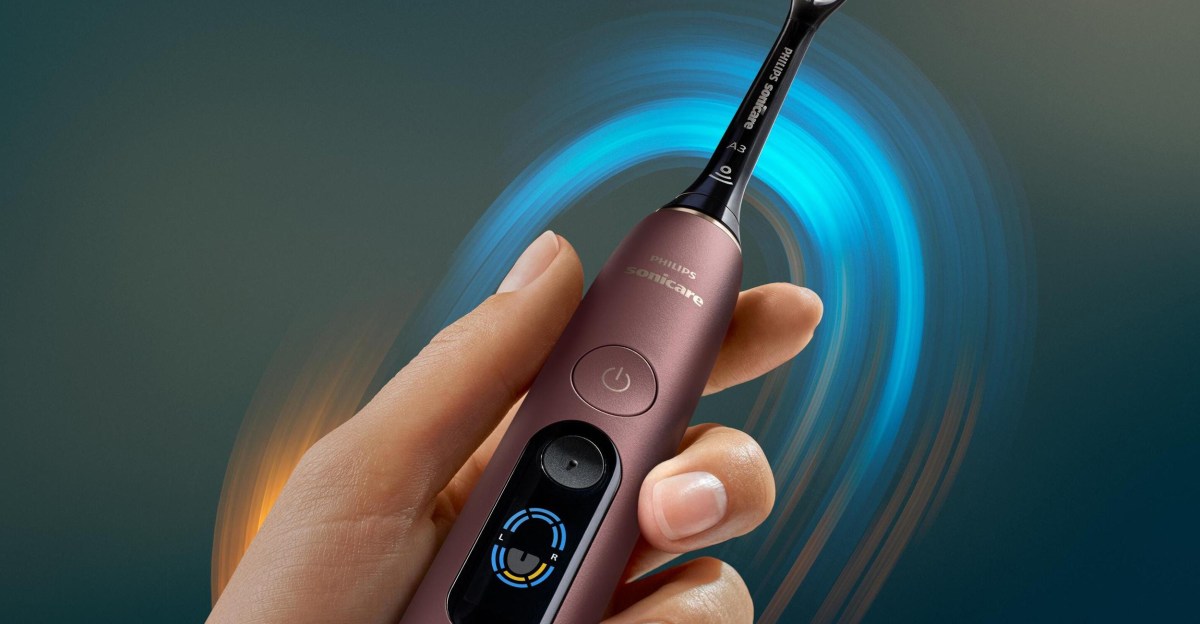
Philips is putting more software into the morning chore of cleaning teeth. The company’s next Sonicare DiamondClean 9900 Prestige electric toothbrush uses an AI model, pressure sensors and a small touchscreen to show users which parts of their mouth may need another pass after brushing.
The product, formally called the Sonicare Next-Generation DiamondClean 9900 Prestige, is due in Europe and the United States this fall, according to Philips. A broader international release is planned for 2027. Philips has not announced a price. The current DiamondClean 9900 Prestige has been listed at $430, so this is unlikely to be the cheap aisle at the drugstore.
How the brush grades your brushing
Philips says the new brush uses a third-generation AI model to follow how it moves while a person brushes. The company’s pitch is that the brush can translate that motion into a map of the mouth, then point out zones that did not get enough attention.
The interface is blunt enough: the toothbrush shows a “mouth map” on its touchscreen, splitting the teeth and gums into 12 sections. Philips says the screen marks those sections in blue or orange to indicate how effective the brushing was. Orange areas are the ones the brush thinks deserve a do-over.
That is the useful version of a smart toothbrush: less dashboard theater, more “you skipped the back left bit.” Philips has not provided independent evidence here about how accurately the system identifies missed areas, so the map should be treated as the company’s claimed feedback system, not a dentist in a handle.
Pressure warnings and automatic intensity changes
The DiamondClean 9900 Prestige also uses a light ring around the base for real-time feedback. Philips says the ring changes color when the user presses too hard, giving a visible cue to ease up.
The brush does more than complain with LEDs. Its pressure sensors can also reduce brushing intensity when too much force is detected, according to Philips, so the bristles move more gently against the gums. That is the same basic problem many electric toothbrushes have tried to address for years: people treat plaque like it owes them money.
The touchscreen also controls eight cleaning modes. Philips lists gum health, max clean and sensitive among the options. The company has not detailed every mode in the material available, but the point is clear enough: the handle is becoming the control panel, not just the motor casing.
Philips is framing the new 9900 Prestige as part of its Sonicare line of smart electric toothbrushes. The notable change is the attempt to keep the feedback on the brush itself, with the ring and screen telling users what to fix while they are still standing at the sink. If it works as advertised, the toothbrush will not just time a two-minute routine. It will tell users which 12th of their mouth got shortchanged.
This story draws on original reporting from The Verge.