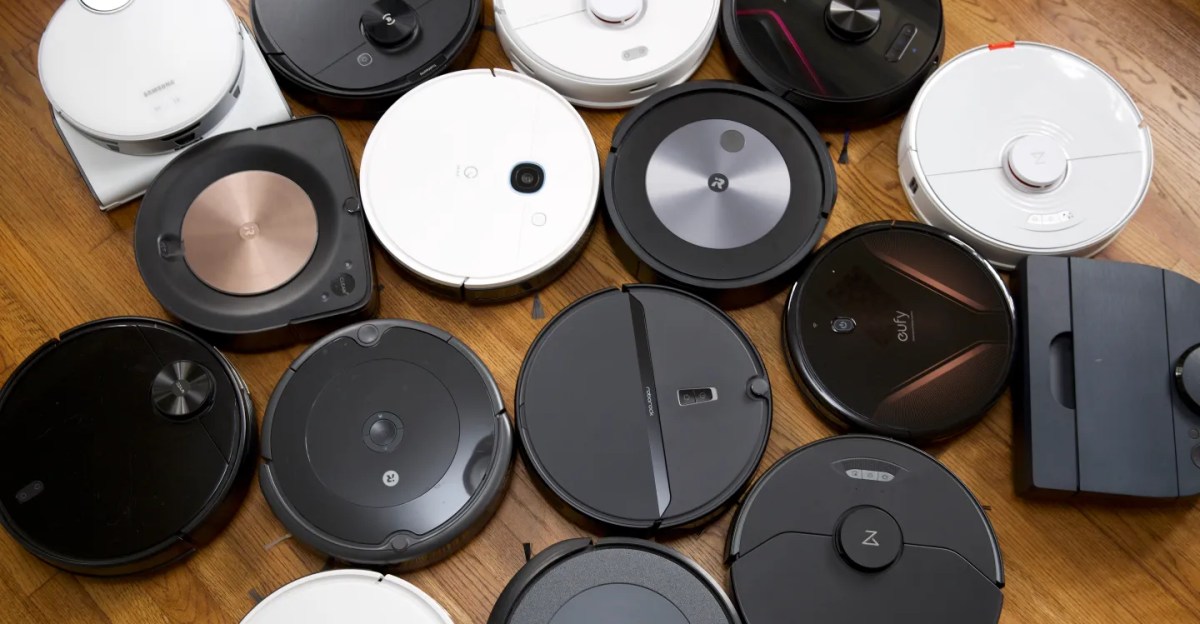
The robot vacuum ban issued by the Federal Communications Commission this week is aimed at national-security and consumer-safety risks, but its immediate effect is to block future foreign-made mobile robots from the US market, according to the agency’s public notice and reporting by The Verge.
The FCC said the rule addresses “unacceptable risks to the national security of the United States or the safety and security of United States persons.” The rule applies by manufacturing origin, rather than by whether a particular robot passes a cybersecurity review. For robot vacuums, that distinction matters: The Verge reports that major models sold in the US are not currently made in the United States.
Robot vacuums are unusually nosy appliances. Many build maps of a home, learn cleaning schedules, and include cameras or microphones. As object recognition and other AI features improve, the devices can understand more about what they see inside private rooms. A security rule for that category could require encrypted map storage, independent audits, vulnerability disclosure processes, and clearer data-retention policies. Encryption matters here because it can make stored maps or transmitted data unreadable to anyone without the key.
What does the robot vacuum ban do?
The ban covers foreign-made mobile robots, a category that includes robot vacuums as well as other autonomous consumer and commercial robots. Existing robot vacuums in US homes are not covered by the immediate sales restriction, and models already on sale can remain available, according to The Verge.
The FCC has said existing robots can continue receiving updates at least through January 2029, The Verge reported. That leaves owners with a practical question the FCC notice does not fully answer: what happens to software support after that date.
The policy also does not remove any already deployed device that might have a vulnerability. That is a fairly awkward hole if the stated problem is unsafe connected robots already moving through kitchens and bedrooms.
Why security concerns are real
The category has a documented security record that gives regulators plenty to worry about. The Verge cited past vulnerabilities or data incidents involving Dreame, Ecovacs, Roborock, iRobot, and Shark. In one reported case involving Ecovacs Deebot X2 robots, hackers took control of vacuums and used them to shout slurs and chase pets.
The FCC notice’s footnotes point to China as a particular concern, warning that foreign governments could exploit flaws in advanced robotics to obtain sensitive data. The New York Times reported that China’s commerce ministry described the policy as “discriminatory and suppressive against Chinese companies and products.”
Domestic production can reduce some risks. Mehul Nariyawala, president and co-founder of Matic, told The Verge that manufacturing in the US can make it easier to check for hardware backdoors and hold companies accountable. Matic is currently assembled in the US, according to The Verge, though it still uses too many foreign parts to qualify as American-made under the rule as described.
Matic also shows the cost problem. The Verge reported that its robot vacuum is rising to $1,450 next month, far above the roughly $300 robot vacuums available at retailers such as Walmart. If new imports are restricted before US manufacturing can replace them, buyers are likely to see fewer choices and higher prices.
Companies are waiting for clearer rules
The rule resembles recent FCC actions against certain foreign-made Wi-Fi routers and drones, according to The Verge. The agency has already granted some waivers in the router category, raising questions about how consistently the robot rule will be enforced.
Kristen Marion, global PR brand lead at Eufy, which is owned by Anker, told The Verge that the company plans to keep selling, supporting, and updating existing products while seeking more clarity on future models. Yunlin Kong, president of Narwal Overseas Business, told The Verge: “We’re not going anywhere. The US is one of our most important markets, and our commitment here is unchanged.”
Colin Angle, iRobot’s co-founder and former CEO, also backed the stated goal of stronger US robotics. He told The Verge that the moment creates an opportunity for domestic manufacturing, research, development, and talent. That may help US robotics companies over time. It does not, by itself, prove that the next robot vacuum sold in America will store maps safely, patch bugs quickly, or keep cameras away from the cloud.
This story draws on original reporting from The Verge.