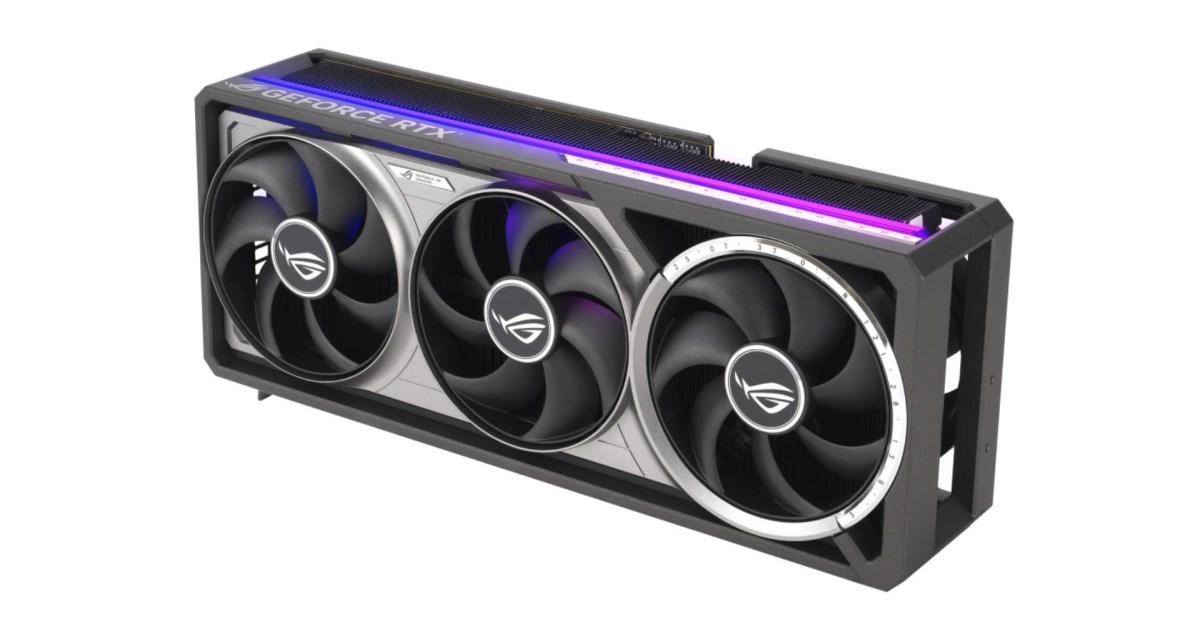
The RTX 5080 Best Buy price has crossed an awkward line: Best Buy is listing the Asus ROG Astral RTX 5080 OC at $2,099, according to VideoCardz. That puts one retail RTX 5080 above Nvidia’s $1,999 suggested price for the higher-tier RTX 5090, which is the kind of pricing inversion that makes PC builders check the tab twice.
VideoCardz reports this is the first time a major US retailer has directly sold an RTX 5080 for more than the RTX 5090’s manufacturer’s suggested retail price. MSRP is the price a manufacturer recommends, not a binding cap on what retailers charge. Still, it remains the cleanest public yardstick for how far a product has drifted from its launch positioning.
The Asus card launched at $1,499, according to VideoCardz. At $2,099, Best Buy’s current listing is 40 percent higher than that launch price. It is also more than twice Nvidia’s $999 MSRP for the RTX 5080 Founders Edition.
Why is the RTX 5080 so expensive at Best Buy?
The short answer is that this appears to be a high-end third-party RTX 5080 caught in a broader component pricing mess. VideoCardz says the Asus ROG Astral RTX 5080 OC is currently the only RTX 5080 sold directly by Best Buy that sits above the RTX 5090’s MSRP.
That distinction matters because this is not the listed price for every RTX 5080. VideoCardz notes that other RTX 5080 cards remain available for less, including from other retailers. Asus itself lists the same ROG Astral RTX 5080 OC for $1,899, which is still above the card’s launch price but below Best Buy’s $2,099 listing.
The pricing pressure is arriving alongside continued increases for RAM and other components. The Verge has reported on a global memory shortage and rising RAM prices, and those costs hit graphics cards because modern GPUs rely on large amounts of dedicated video memory. The RTX 5080 Founders Edition uses 16GB of GDDR7 memory, according to Nvidia’s branding cited in the retail listing.
Wccftech has also reported that Nvidia is preparing another graphics card price increase of 20 to 30 percent, describing it as the company’s third such increase this year. That remains a report, not a confirmed retail price sheet from Nvidia in this case.
There are already signs of the industry responding to pricier memory by cutting back elsewhere. The Verge reported that 4GB graphics cards have returned, including ASRock’s AMD Radeon RX 9050 Challenger. A 4GB card in 2026 is not exactly a victory lap for PC gaming; it is what the bill of materials looks like when memory stops being cheap.
For buyers, the practical read is narrow but painful. Best Buy’s $2,099 Asus ROG Astral RTX 5080 OC listing is an outlier among RTX 5080 cards at that retailer, per VideoCardz, yet it fits a wider pattern of GPU pricing moving away from the tidy numbers announced at launch.
This story draws on original reporting from The Verge.


