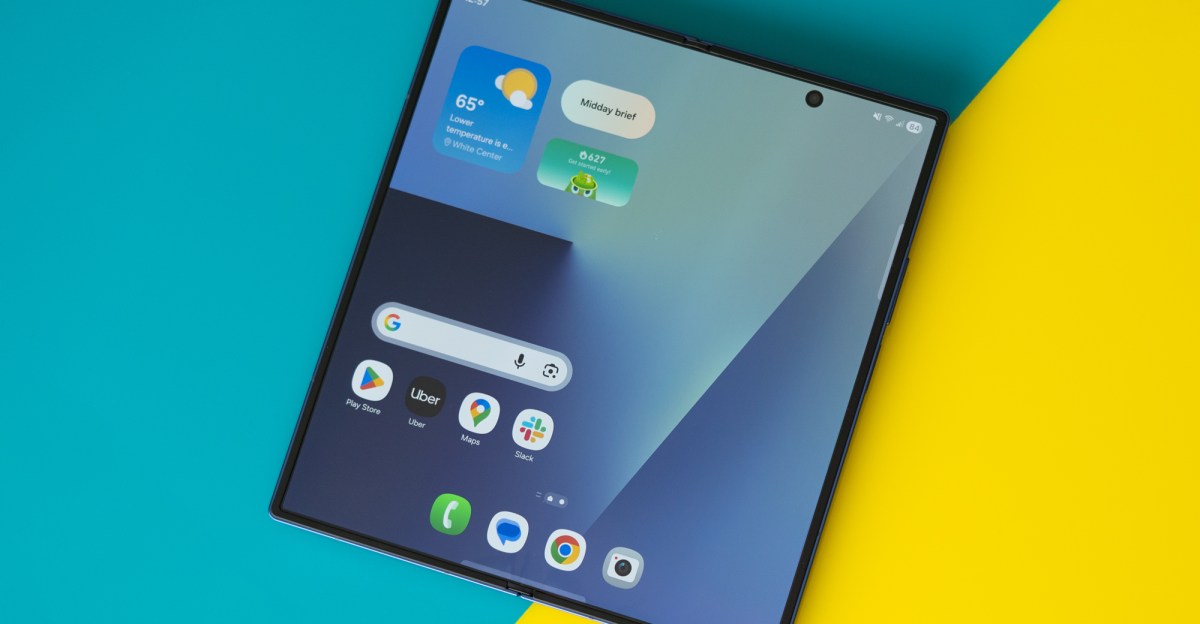
Samsung is expected to use its next Galaxy Unpacked event to introduce new Fold and Flip phones, plus a different Fold-style device with a shorter, wider shape, according to The Verge. If the reports hold, Samsung is not just refreshing hardware. It is adding another answer before Apple, the company that can turn a niche into a checkout-line default, is expected to enter foldables.
The reported design shift matters because foldables are still a small corner of the phone market, and Samsung has spent years acting as the category’s main rule-setter. For buyers, the practical question is less glamorous than the marketing: does the outside screen feel like a normal phone, and does the opened screen behave more like a tablet than a square-ish compromise?
A wider Fold would reverse Samsung’s own bet
Samsung has teased “a new shape” for foldable phones, The Verge reported, and its event imagery shows a ticket-stub-like graphic with a shorter remaining section. Leaks cited by The Verge have for months pointed to a wider Samsung foldable. Similar reports have also described Apple’s first foldable iPhone as having a squat, wider format.
That shape is not new. Huawei introduced the passport-shaped Pura X Max this year. Google’s first Pixel Fold used a wider body than most Fold-style phones. Oppo’s Find N did something similar, and Microsoft’s dual-screen Surface Duo was wider still. The mildly funny bit is that Samsung helped bury that direction by pushing its own Fold line toward narrow cover displays and more square internal screens.
Samsung could do that because it had leverage. Counterpoint Research has credited the company with dominant foldable sales, helped by its early start and scale. More recently, competitors have pressured Samsung with hardware improvements that The Verge described as nearly crease-free displays and dependable dust resistance. Samsung answered last year with the thin Galaxy Z Fold 7 and the Galaxy Z Flip 7, which added an edge-to-edge cover screen.
Apple changes the math
Apple has not announced a foldable iPhone. The threat is still based on reports and analyst expectations, not a product on a table. Still, IDC analyst Francisco Jeronimo said in a report that Apple’s first foldable iPhone would mark a turning point for the category. IDC predicted Apple could take 34 percent of the foldable market by value in its first year.
That is the uncomfortable part for Samsung. If Apple’s foldable arrives in September, as The Verge reported is expected, Samsung could face a rival with a similar format and a much larger ability to pull mainstream buyers into a product category. Launching a wider Fold-style phone now would give Samsung something comparable on shelves before Apple makes its pitch.
Samsung has tried format experiments before, with mixed results. The Galaxy Z TriFold, introduced last year, was another shake-up, but The Verge reported it lasted less than three months in the US market. Samsung’s Galaxy S25 Edge also arrived before Apple’s iPhone Air, and The Verge reported that sales did not materialize for Samsung’s slim phone. Apple’s Air has reportedly disappointed Apple as well.
So the reported wider Fold is a defensive move with real risk attached. Keeping the regular Flip and Fold lines would let Samsung cover its existing customers if the wider format fails to catch on. Adding a new shape gives it an answer if Apple’s foldable makes the old Fold design look dated overnight. That is not innovation by moral victory. It is product planning under pressure, which is usually when phone companies do their least boring work.
This story draws on original reporting from The Verge.


