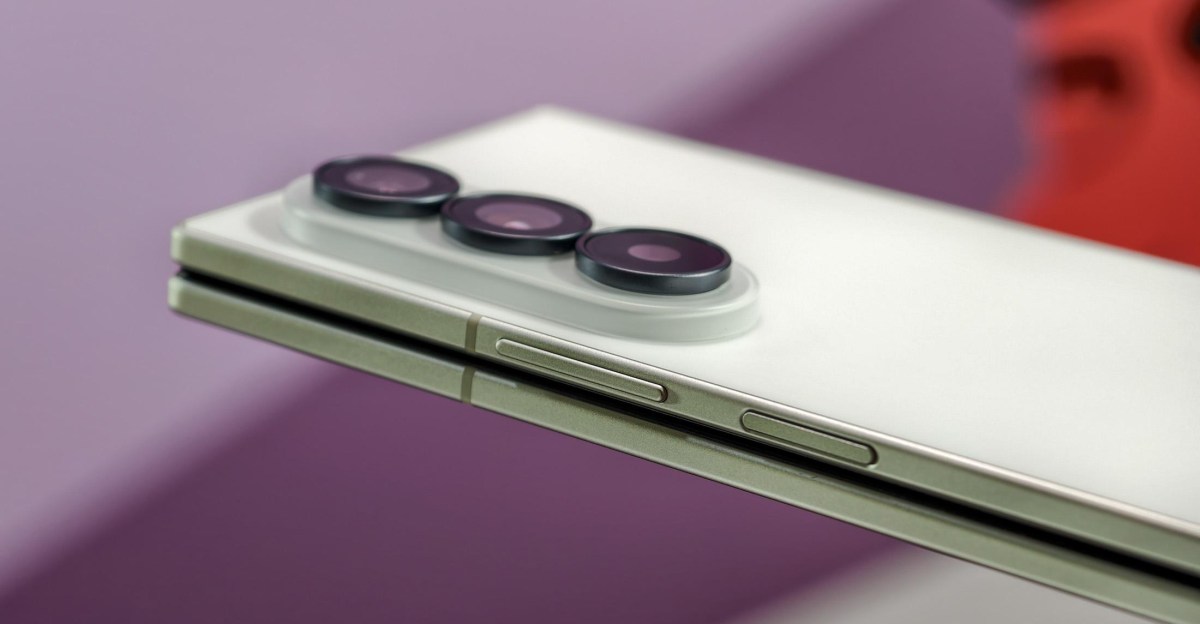
Samsung has introduced the Galaxy Z Fold 8 Ultra, a new book-style foldable whose main trick is aimed at the oldest complaint about this category: the trench down the middle of the inside screen.
According to Samsung, the Fold 8 Ultra uses a display construction it calls Flex Titanium. The company says the foldable OLED now sits above a titanium film, replacing the polymer film used in earlier Samsung foldables. Samsung claims that titanium layer has 20 times the mechanical stiffness of the older polymer material.
That film is also bonded to a new titanium plate, Samsung said. The point is straightforward enough: a foldable display has to bend in the same place thousands of times, and the support layers around that bend determine how much of a visible valley users see and feel. Samsung’s claim is that a stiffer titanium-backed stack keeps the folding area flatter without giving up the fold.
David Imel of The Verge spent three hours with the device and reported that the crease was difficult to detect in normal handling. He said he could feel it only by pressing deliberately at the center of the internal display and looking for it. That is still a hands-on impression, not a long-term durability test, so file the “crease is solved” takes under provisional. Foldable screens live harder lives than demo units on tables.
A familiar shape with a different display stack
The Verge reported that the Fold 8 Ultra keeps a shape very close to last year’s Galaxy Z Fold 7. Imel wrote that Samsung improved much of what worked on that earlier model, though the details available from the hands-on centered on the new display construction rather than a full spec-by-spec comparison.
The Fold 8 Ultra was part of Samsung’s July 2026 foldable launch, alongside other Galaxy foldable announcements. The company is working from a position few rivals have: Samsung has been selling large-screen foldables for years while Apple’s foldable iPhone remains in the rumor pile. That gives Samsung room to tune the hinge and display stack in public, one generation at a time, with paying customers doing some of the field testing. Charming system, if you are not the paying customer.
Samsung is not the only company chasing a flatter fold. Oppo has also tried to reduce the crease on its Find N6, using 3D liquid printing to fill uneven spaces around the hinge, according to The Verge. That is a different engineering route to the same buyer-facing promise: make the expensive folding screen feel less like a compromise.
For now, Samsung’s confirmed change is the material stack: titanium film below the OLED, bonded to a titanium plate, with a claimed stiffness gain over polymer. The early report says it works well in hand. The harder questions, including how the screen holds up after months of pocket grit, pressure, and repeated folding, will need more than a three-hour demo.
This story draws on original reporting from The Verge.