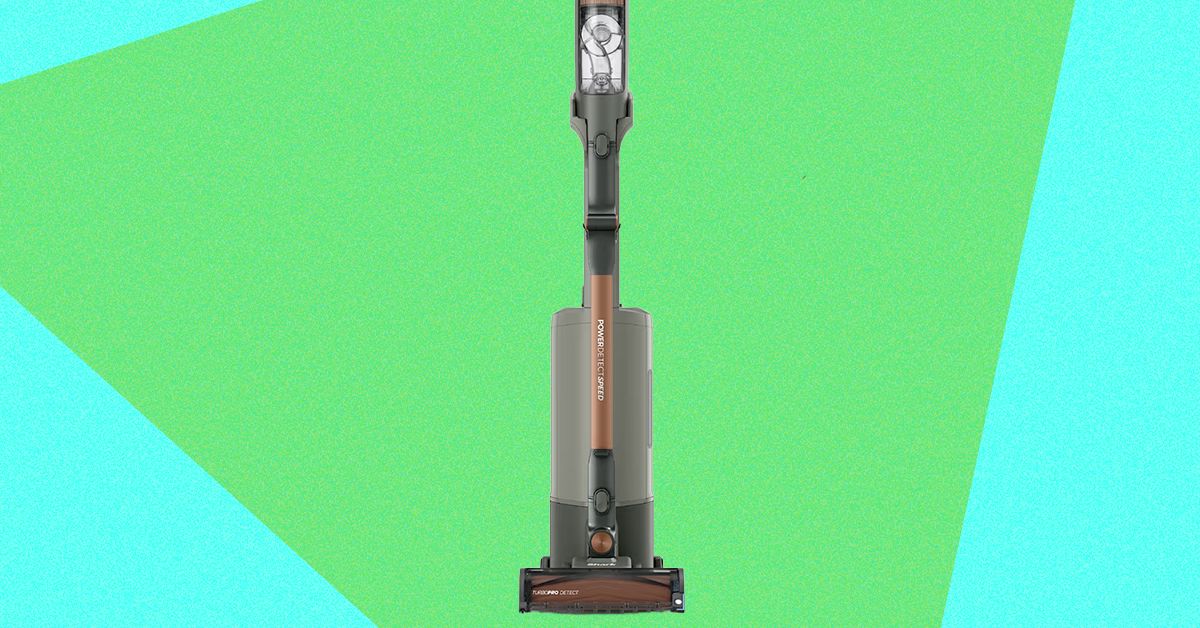
This Shark PowerDetect Speed review finds a capable cordless vacuum aimed at people tired of wrestling thick rugs, bending under sofas, and emptying a tiny bin after every pass. Independent tests point to strong carpet and pet-hair performance, while the Clean & Empty dock adds useful automation. The catches are less glamorous: hard-floor pickup trails some rivals with specialized heads, and battery runtime deserves particular attention in a larger home.
For U.S. buyers, the dock-equipped model is the IA3241. The Guardian tested a related UK package, the IA3241UKT Clean and Empty Pet Pro. Attachments, pricing and some specifications differ by region and bundle, so those names are not interchangeable.
Is the Shark PowerDetect Speed worth buying?
It looks best suited to carpet- and rug-heavy homes, particularly those dealing with pet hair, and to buyers who value a charging dock that also empties the vacuum. WIRED gave the Speed an 8/10, reporting excellent results on carpets and rugs. In its five cleanup tests, the outlet scored it 15 out of 20, behind the considerably pricier Dyson Gen5Detect and Dyson V16 Piston Animal, but ahead of several other Dyson models in that comparison.
WIRED reported perfect results on its sand and cereal rug tests, including a thin-rug test where Dyson models sometimes tried to eat the rug instead of cleaning it. The review also found the 350-watt motor competitive with more expensive Dysons on thick-rug debris tests. RTINGS, which reviewed the IA3241 on August 5, identifies it as a cordless, bagless stick/handheld vacuum with a HEPA anti-allergy filter and says it is not wet compatible.
The hard-floor story is more conditional. WIRED found that litter and similar messes required more passes than with some Dyson units fitted with the Fluffy Optic hard-floor head. The tested Shark configuration has no dedicated hard-floor head, which is an actual limitation rather than a software problem awaiting a branding exercise.
How do the wand and Clean & Empty dock work?
The floor head detects the floor type and dirt level, then adjusts its operating speed, according to WIRED. The Clean & Empty version adds a blue light for hard floors and a brighter carpet light. Popular Mechanics also reported that the vacuum increased suction across a hardwood-to-rug transition and in dirtier areas during its testing.
The MultiFLEX wand has a hinged section that lets the vacuum head travel under furniture without requiring the user to crouch. WIRED found the machine easy to maneuver, though its reviewer initially had the head lock upright while cleaning stairs. That problem subsided after use. The original PowerDetect did better on stairs in WIRED's comparison because its head stuck less often.
With the dock, returning the vacuum to its station charges it and transfers debris from the onboard bin to a larger container. The Guardian says its UK model moved dirt from a 0.47-liter vacuum bin into a 2-liter dock chamber. Shark says the dock can hold up to 45 days of dirt, a manufacturer claim that will depend on what, and how much, gets vacuumed.
Who should buy it, and who should skip it?
- Buy it if carpets, rugs and pet hair are the main cleaning problem, and hands-free emptying is worth the dock's added space and cost.
- Consider alternatives if hard-floor cleanup is the priority, especially if a dedicated soft hard-floor head matters, or if you need a wet-compatible machine.
- Check runtime before buying for a larger home. Best Buy advertises up to 60 minutes, while the Guardian's testing-led review warns that runtime can fall short for larger homes. Listed maximums are conditions-dependent, as usual.
Against the original PowerDetect, WIRED says the Speed is one pound lighter and uses a 350-watt motor rather than 380 watts. The original has a larger dust cup, edge detection and a stated runtime 10 minutes longer. Buyers deciding between them should weigh those differences against the Speed's easier handling and optional dock.
This story draws on original reporting from WIRED.