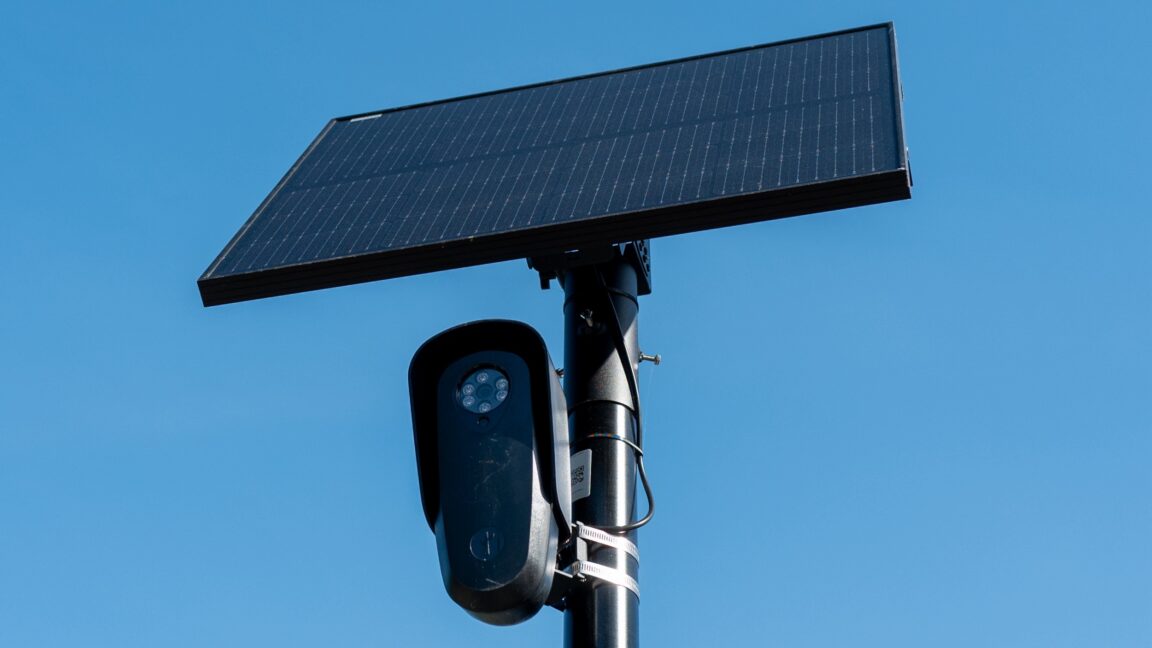
SignalTrace phone license plate surveillance is the new wrinkle in automatic license plate readers: Leonardo is marketing an add-on system that detects electronic signatures broadcast by nearby devices and associates recurring groups of them with plate records and time-stamped locations. The result is not a camera that extracts a name or phone contents from a handset. It is a searchable record of devices that repeatedly appear around particular vehicles, which can become a police lead once combined with other records.
Reporting by 404 Media in June described the product as a planned expansion of license-plate reader systems. Leonardo says SignalTrace is designed to work alongside those readers, which ordinarily record a vehicle’s plate and location.
How does SignalTrace connect a phone to a license plate?
According to Leonardo, the system collects electronic signatures already broadcast by devices, including Bluetooth and radio-frequency identification signals. It then looks for devices that regularly move together and links that recurring cluster to a plate record and a location history. Leonardo says investigators can search the pattern even if they do not begin with a plate number.
A regular carpool illustrates the mechanism. If the same device signature is repeatedly detected near a vehicle, the system could treat it as associated with that car. If that signature later turns up around another vehicle relevant to an investigation, it could point officers toward records or people to examine. That is an inference from repeated proximity, not proof of who held a device on a particular trip. A phone can be lent out, left in a car, or detected near a vehicle without its owner riding inside.
Leonardo says SignalTrace “does not identify people” because the signatures do not themselves include a person’s legal identity, and says investigative results need corroboration through ordinary methods. Its product material also says the system stores electronic fingerprints for later searches and can recognize a vehicle without reading its plate.
That distinction is technically real but limited in practice. A signature repeatedly found with a car can be paired with vehicle-registration information, a home location, or a case file. Plate records identify a registered owner, though they do not establish who was driving or carrying a device during any given scan.
Is SignalTrace already in use by police?
The available reporting describes SignalTrace as a tested, marketed capability, not an established police practice. The Conversation reported that devices were installed in Oxon Hill, Maryland, based on a separate report, but that does not establish broad deployment. Leonardo’s predecessor technology also appeared on a New York state contract price list, according to the report.
Important operational details remain unclear from the available evidence, including real-world accuracy, retention periods, data-sharing rules, and which agencies, if any, are using SignalTrace at scale. Claims that it is installed everywhere or captures every device are not supported by the reporting.
Why do device-to-car records raise privacy questions?
Repeated movement and proximity can be identifying even when a dataset starts without names. A Scientific Reports study cited by The Conversation found that four time-and-place observations could uniquely identify 95% of people in its dataset of 1.5 million people over 15 months. The study did not test SignalTrace, but it helps explain why a recurring device trail can be sensitive.
The legal answer is unsettled. The Supreme Court has held that obtaining certain cellphone location records is a Fourth Amendment search, but that ruling does not decide whether collecting nearby broadcast wireless signals through SignalTrace would receive the same treatment. The technical distinction may be tidy. The record of whom a device travels with is less so.
This story draws on original reporting from Ars Technica.


