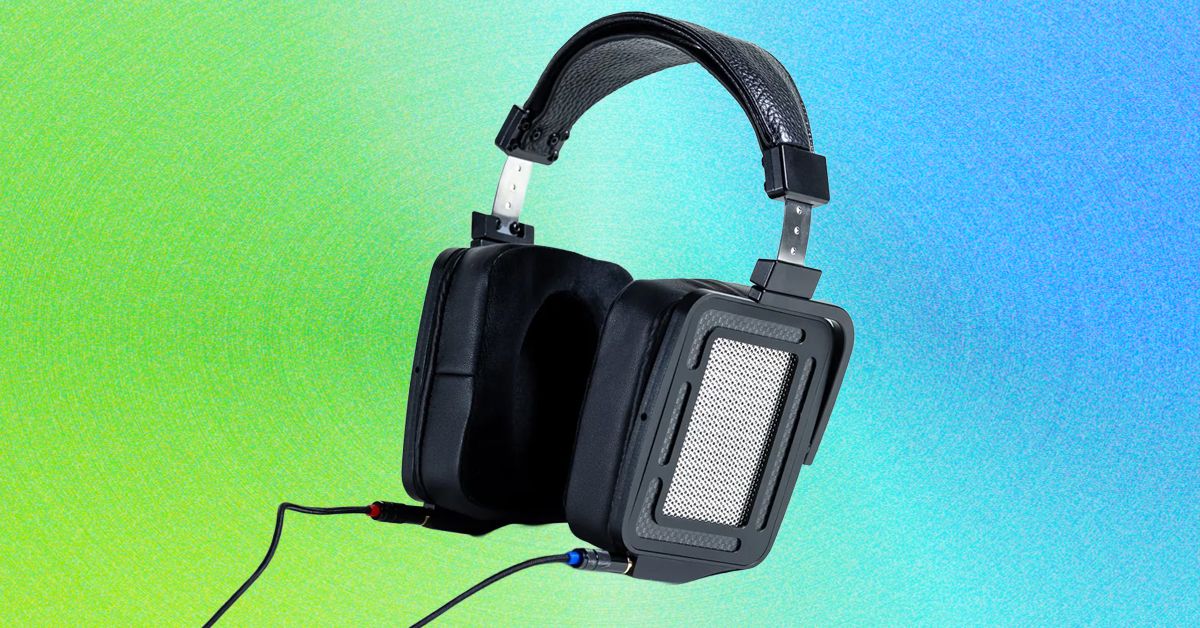
WIRED’s SJY Zeph review lands on a familiar audiophile tradeoff: the $999 open-back planar magnetic headphones deliver unusually detailed sound, according to reviewer Martin Cizmar, but they ask buyers to bring the right amplifier instead of hoping a laptop jack will do.
Cizmar rated the Zeph 9/10, citing its handmade build, comfort, lively presentation and fine detail. His complaints were practical ones: the headphones are relatively heavy, and their 4.4-mm balanced connection requires a powerful headphone amp that many listeners will not already own.
The Zeph is an open-back planar magnetic headphone, meaning its ear cups are vented rather than sealed. That design can make music feel more spacious, though it also leaks sound and does little to block outside noise. These are living-room or desk headphones, not commuter armor.
What makes the SJY Zeph different?
Most mainstream headphones use a voice coil to move a cone-shaped driver. The Zeph uses magnetic force to move a thin, flat diaphragm, a planar magnetic design that Cizmar said produced fast, highly resolved playback with the kind of detail he looks for in high-end headphones.
His listening notes focused on texture and separation. He said the Zeph made small studio details audible in the Who’s “Won’t Get Fooled Again” and brought out the glockenspiel, piano loops and left-channel metronome in Radiohead’s “Daydreaming.” He also reported enough bass weight for his taste, despite the common knock that planar magnetic headphones can give up some low-end punch.
The Zeph’s oddest trick is mechanical rather than digital. Its magnetic earpads can be flipped, and each side changes the tuning. Cizmar wrote that placing the perforated side toward the front of the ear makes the sound a little cooler and wider, while the opposite orientation makes it warmer and more blended. The effect, in his account, is audible without becoming a crude EQ gimmick.
That adjustability comes from a sparse physical design. WIRED described the Zeph as built around an aluminum chassis with very thin driver components and few parts to rattle, age or fail. Cizmar said the headphones feel sturdy in hand and ship with a padded case and braided cable.
Do the SJY Zeph need a headphone amp?
Yes, according to WIRED’s testing. Cizmar wrote that the Zeph needs at least one watt per channel, preferably more, and that only one of the amps and DAC dongles he had on hand could drive it properly: a Creative Sound Blaster X5 with a balanced 4.4-mm output.
That is the catch for buyers outside the headphone hobby. A 4.4-mm balanced jack is common on enthusiast gear, but it is not the 3.5-mm socket found on many portable devices or the 6.3-mm jack used on plenty of stereo equipment. Cizmar warned that buyers should not expect to plug the Zeph into a standard receiver and be done.
The weight is the other compromise. WIRED measured the Zeph at 570 grams with its cable, nearly 40 percent heavier than Apple’s AirPods Max. Cizmar still found it comfortable enough for long sessions, crediting the fit and the draw of the sound.
SJY is run by Jeffrey Yin, who started the company in 2020 the day after his 18th birthday, according to WIRED. The company’s headphones are made by Yin in Houston, with four models in the line and a fifth on the way. For a niche planar magnetic headphone, that small-shop context is part of the product. The Zeph is aimed at listeners willing to tolerate cables, weight and amplifier fuss in exchange for sound that WIRED’s reviewer called among his favorites.
This story draws on original reporting from WIRED.