Small-satellite companies that built launch plans around SpaceX’s low-cost Transporter rideshare missions are starting to ask an awkward question: how many Falcon 9 seats will be left for them after the current manifest runs out?
SpaceNews reported that several Transporter customers say SpaceX is not taking reservations beyond late 2028 or early 2029. Rocket Lab chief financial officer Adam Spice said Tuesday that his company is hearing the same concern from customers. He described recent conversations about Falcon 9 access as marked by “anxiety” and said “panic” appears to be setting in.
Spice said customers are less confident that SpaceX will keep Falcon 9 capacity available to the commercial market beyond launches it has already accepted. He expects SpaceX to use more of the rocket’s capacity for its own programs, including Starlink and a planned orbital data center system. SpaceX has not announced an end to Transporter, so for now the industry is reading booking behavior, not a formal cancellation notice.
Canada gets a German launch tenant
One alternative path is taking shape in Nova Scotia. Halifax-based Maritime Launch Services said Germany’s Isar Aerospace has signed a 10-year deal to build a dedicated Spectrum launch complex near Canso, CBC reported. Isar has also created a Canadian subsidiary, Isar Aerospace Canada Inc.
Maritime Launch CEO Stephen Matier said Isar plans to spend about $100 million as a tenant to prepare the pad. Construction is expected to start this year, with launches targeted for 2028. Canada currently depends on the United States to put its satellites in orbit, and Ottawa has identified launch access as a sovereign defense-industrial priority. German rockets from Canadian soil would be an imperfect but practical bridge while Canadian booster companies develop.
Europe’s launch bench is moving
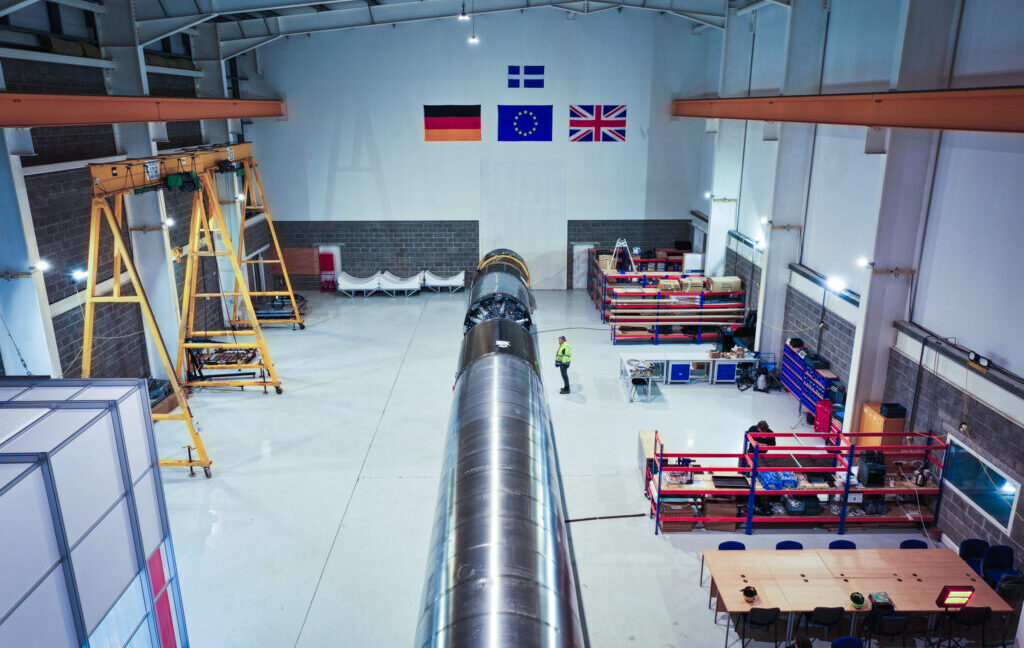
Rocket Factory Augsburg is also nearing another first-flight attempt. European Spaceflight reported that SaxaVord Spaceport in Scotland has announced an August 10 opening for a launch window tied to one of its clients. The details point to Rocket Factory Augsburg and its RFA One vehicle. The company’s first stage burned during a static-fire test nearly two years ago, so this campaign carries more than the usual debut-flight tension.
Ariane 6 suppliers are shifting from development into repeat production. ArianeGroup and Beyond Gravity said they signed a contract covering 27 payload fairings for Ariane 6 flights 16 through 42, including 20 long fairings and seven short fairings. Separately, European Spaceflight reported that ArianeGroup has tested a stronger Vinci upper-stage engine at DLR’s Lampoldshausen site in Germany. Corporate filings describe a 200-kilonewton version, up from 180 kilonewtons, with one long-duration firing lasting 570 seconds.
Old rockets, new uses
The Pegasus XL rocket likely made its last flight on July 4, launching Katalyst Space Technologies’ half-ton Link satellite from an aircraft that departed the U.S. Army’s Ronald Reagan Space and Missile Test Range on Kwajalein Atoll. Ars Technica reported that Link will try to raise NASA’s Swift satellite into a safer orbit. The equatorial launch point helped reach Swift’s 20.6-degree orbital inclination without buying a larger rocket.
The U.S. Space Force added Impulse Space and Relativity Space to the pool of companies eligible to compete for military launch work, Ars Technica reported. Relativity is developing the heavy-lift Terran R rocket. Impulse is not a launch company; it is building Helios, a kick stage designed to move payloads from low Earth orbit to geostationary orbit.
Falcon 9 keeps stretching its numbers
SpaceX flew booster B1067 for the 36th time on Thursday on the Starlink 10-42 mission, Spaceflight Now reported. The mission added 29 Starlink satellites, bringing the constellation to more than 10,700 spacecraft in orbit. B1067 landed on the droneship A Shortfall of Gravitas, which SpaceX counted as that vessel’s 160th recovery and the company’s 635th booster landing overall.
This story draws on original reporting from Ars Technica.