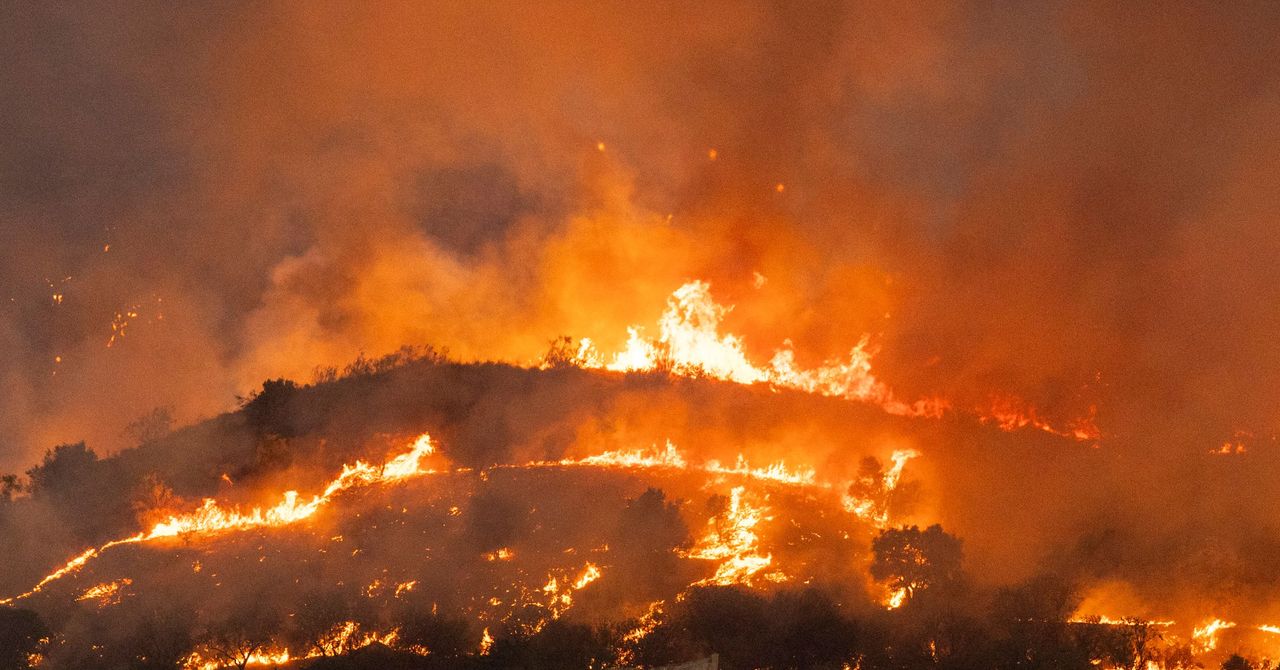
Spain wildfire technology is getting attention for a blunt reason: firefighters are dealing with fires that have outpaced normal response playbooks. Spain has declared a national emergency in the community of Madrid and the province of Ávila as intense wildfires continue to spread, while France is also fighting large blazes during an unusually destructive season.
Spanish prime minister Pedro Sánchez said the country faced a “dramatic situation” across several provinces and in nearby countries. He said “all available resources” had been sent to handle emergencies in Ávila, León, Toledo, Madrid and other areas under the national emergency.
The scale is already ugly. The European Forest Fire Information System says fires in Spain and France have burned more than 741,000 acres combined. Hundreds of thousands of people have been forced to evacuate. In Spain, burned area has reached twice the annual average; in France, the season has been six times more destructive than usual, according to the same reporting.
Extreme heat and unusually dry conditions have made vegetation easier to ignite and harder to control. Climate change is driving similar fire conditions in other parts of the world, and fire agencies are now looking at tools that can detect fires earlier, predict their movement and help residents avoid bad information when the smoke arrives.
What wildfire technology is Spain using?
Spain has developed or tested several firefighting and fire-monitoring systems, including a biodegradable suppressant, AI prediction tools, sensor networks, drones and public warning apps. None of these replaces crews, aircraft or evacuation orders; the useful bit is speed, because small fires are cheaper and less deadly than runaway ones.
Ecofire is a water-based biodegradable liquid made from organic substances. Its developers say it can extinguish fires up to 40 times more effectively than water and act six to 10 times faster. It can also be applied to vegetation before a fire, where it is intended to form an insulating layer that blocks heat and oxygen and helps prevent combustion at 100 degrees Celsius, or 212 degrees Fahrenheit, and above.
Predifire is aimed at the earliest phase of a fire, when detection still matters. The early-warning system is backed by the University of Córdoba and the companies Automatismos ITEA and Somnum Technologies. It combines artificial intelligence, sensors and autonomous drones to identify outbreaks when they cover only a few acres, with the stated goal of cutting response times and supporting earlier intervention.
SenForFire, a European project involving the Spanish National Research Council, the University of Extremadura and Spanish companies, takes the sensor-network route. It uses low-cost wireless smart sensors to measure combustion-related gases, environmental variables and weather conditions in real time. The purpose is to spot signals that a fire may start or intensify.
Spanish researchers, with funding from the Ministry of Science and Innovation, have also built a Wildfire Assessment Model. The AI model uses neural networks to process atmospheric variables and a satellite-derived vegetation greenness index. It estimates possible fire spread, the likely time needed to control a blaze and the ground, human and aerial resources needed in high-risk areas.
For residents, the most practical technology may be the least flashy. Spain’s official Civil Protection app provides emergency information, warning maps and access to emergency services. Google Maps can display wildfire perimeters and trigger emergency alerts in Spain. The Incendios España platform also shows active wildfire locations in real time using satellite data.
This story draws on original reporting from WIRED.