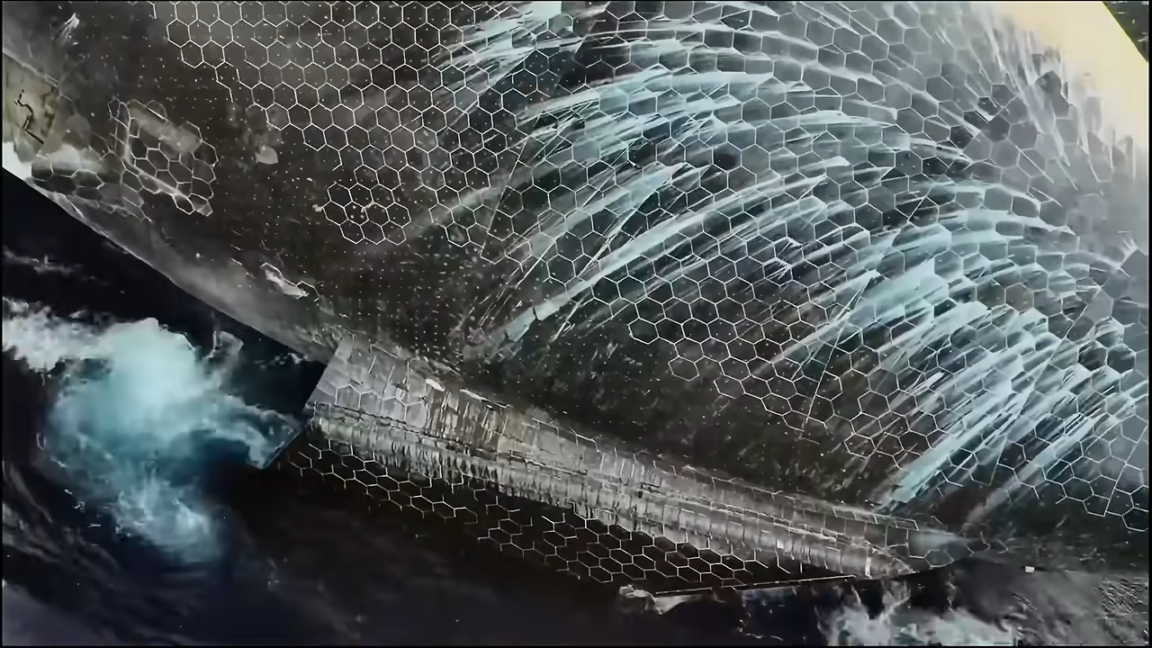
SpaceX’s Starship heat shield reuse problem is back in the foreground after the company’s 13th test flight showed progress on reentry, but also signs that the vehicle may still need close inspection and repair before flying again.
SpaceX launched Starship on Friday and, according to Ars Technica, appeared to move closer to several near-term goals: reaching orbit on a future flight, deploying satellites, and eventually bringing the upper stage back toward the launch site for a tower catch. The harder problem is less cinematic. Starship must survive orbital reentry and then be made ready for another flight without the slow tile-by-tile refurbishment that helped make NASA’s Space Shuttle expensive to operate.
Dan Rasky, a former NASA Ames Research Center engineer who worked on heat shield materials for nearly 40 years and co-invented PICA, the material used on Crew Dragon’s heat shield, told Ars Technica that Starship’s present thermal protection system is a “dead-end” for missions requiring full and rapid reuse.
Why is Starship heat shield reuse so hard?
Starship uses about 18,000 ceramic tiles on its windward side to keep reentry heating away from the vehicle. That basic idea has heritage: NASA’s Space Shuttle also used thousands of lightweight ceramic tiles, and while they did the thermal job, they demanded extensive inspection after flight.
Starship is not a shuttle clone. Its stainless steel structure can tolerate far higher temperatures than the shuttle’s aluminum structure, with Ars Technica reporting tolerance up to about 800 degrees Celsius in areas where tiles fail. That gives SpaceX more margin if a small number of tiles are lost.
The rapid reuse issue is the labor. A heat shield can be good enough to bring a vehicle home and still be poor enough, operationally, to require days or weeks of human inspection, replacement work, and caution before the next launch. For SpaceX’s larger Starship plan, “full” reuse means flying both the Super Heavy booster and Starship upper stage again. “Rapid” reuse means doing that on the order of days or weeks rather than after long refurbishment cycles.
What Flight 13 showed
Rasky, former NASA astronaut Charles Camarda, and Charles Miller, who led the NASA transition team for the Trump-Vance White House, said Flight 13 showed improvement. Ars Technica reported that only a small number of tiles appeared to be missing, and Starship made a controlled descent and landing in the Indian Ocean.
The same experts pointed to SpaceX drone footage showing white streaks across the heat shield after landing. Those marks appeared to start at tile boundaries, which they said could indicate hot gas getting between tiles. The footage also showed signs consistent with cracked tiles and damaged tile edges, according to their analysis.
The conclusion is awkward for SpaceX but not mysterious: the system may be adequate for reentry, while still falling short of the company’s stated operational ambitions.
SpaceX knows the tile problem is central
Elon Musk has described the reusable heat shield as one of Starship’s most difficult remaining problems. In a February podcast appearance with Dwarkesh Patel, Musk said a heat shield that requires laborious inspection of tens of thousands of tiles would not support a land, refuel, and relaunch model.
Ars Technica reported that SpaceX has worked on new tile material formulations, more standardized tile shapes, and repeated flight tests of thermal protection approaches. The independent experts described that as meaningful incremental work, while arguing it still rests on the same broad ceramic-tile architecture NASA wrestled with during the shuttle era.
They said the approach could be sufficient for launching a next-generation Starlink constellation. Their concern is whether it can support far higher launch rates, ranging from several hundred to thousands of lower-cost flights per year, for concepts such as lunar and Mars settlements, orbital data centers, or space-based solar power.
Where NASA fits
The experts also faulted the lack of recent basic research into thermal protection for vehicles returning from low Earth orbit at roughly Mach 25. They said the main technologies now in use trace back to work on the shuttle, National Aerospace Plane, and X-33 programs.
Miller said that during transition team interviews in late 2024, senior NASA officials told him there was no substantial basic research pipeline for this problem. He said he recommended a new NASA initiative focused on Mach 25 thermal protection research, development, and demonstrations. According to Miller, that initiative has not yet happened.
This story draws on original reporting from Ars Technica.


