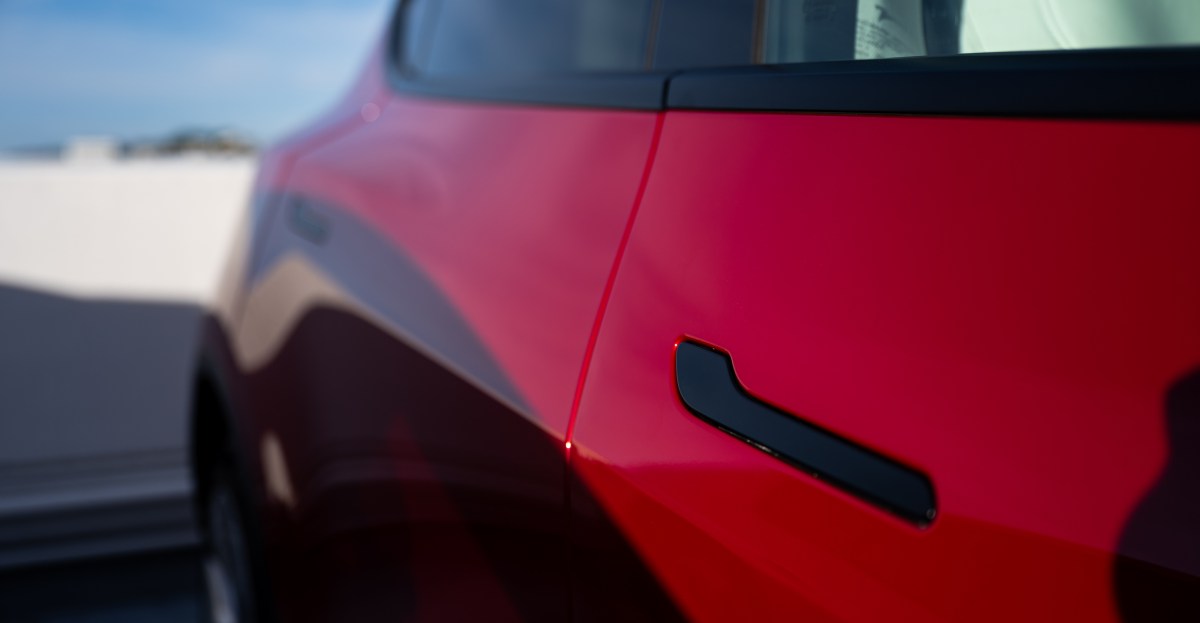
Federal safety officials may turn Tesla door handle rules into a broader requirement for the auto industry after complaints that people could not get out of Tesla vehicles when power failed after crashes.
In a notice published July 24, the National Highway Traffic Safety Administration denied a petition asking it to open a defect investigation into Tesla’s mechanical door releases. The agency said the complaints did not justify that specific probe, but said the problem would be better addressed through rulemaking that could require a “robust and obvious door egress system in all motor vehicles.” If the agency finishes such a rule, it would cover new vehicles across the industry, not just Tesla.
The safety issue is the gap between a clever-looking door design and a vehicle after a hard crash. Tesla’s flush, electrically operated handles are designed to sit flat against the bodywork, which helps aerodynamics. When electrical power is lost, occupants may need to find and use a mechanical release. Complaints cited by NHTSA alleged that those emergency controls are not easy enough to find or identify when seconds count.
What rules could NHTSA write for Tesla door handles?
NHTSA could write a federal rule requiring vehicles to have door-exit controls that remain usable and easy to understand after a power loss. In plain terms, a person who survives a crash should not have to know a hidden release procedure, hunt through trim, or climb through the cabin to escape.
The petition came from Kevin Clouse, a Silicon Valley engineer, after a crash involving a 2022 Tesla Model 3. According to NHTSA’s summary of his petition, Clouse said the car lost all electrical power after a head-on collision and caught fire. With the electric handles dead, he said he could not locate the mechanical handle, moved into the back seat, and escaped through a rear passenger window.
NHTSA has also been looking at situations where Tesla door handles stop working because of low-voltage battery problems. Separately, China’s government banned electronic door handles earlier this year, citing safety concerns. Reported Tesla crash incidents include cases in which occupants who survived the initial impact were later seriously injured or killed after being trapped inside burning vehicles.
Why this would take years
A denied defect petition does not produce an immediate design change. Federal rulemaking commonly takes two to five years, so any finished door-egress requirement would likely arrive around 2030 or later. Automakers have also fought rules that add cost or engineering work, including a recent proposal for stronger automatic emergency braking requirements.
Congress has entered the same lane with legislation that would require manual door releases in new vehicles and give first responders a way to enter vehicles when power is gone.
Tesla said last year that it planned to redesign its electronic door handles. In a Bloomberg interview, Tesla design chief Franz von Holzhausen said the company wanted to make the handles easier to understand during “a panic situation.” Tesla did not give a timeline in that account.
Andrew McDevitt, a lawyer representing families in two fatal Tesla cases, urged NHTSA to move faster. In a statement, McDevitt said Tesla had received consumer reports for years about doors trapping occupants in situations ranging from parking lots to severe crashes, and said the families would continue pursuing their cases in court.
This story draws on original reporting from The Verge.


