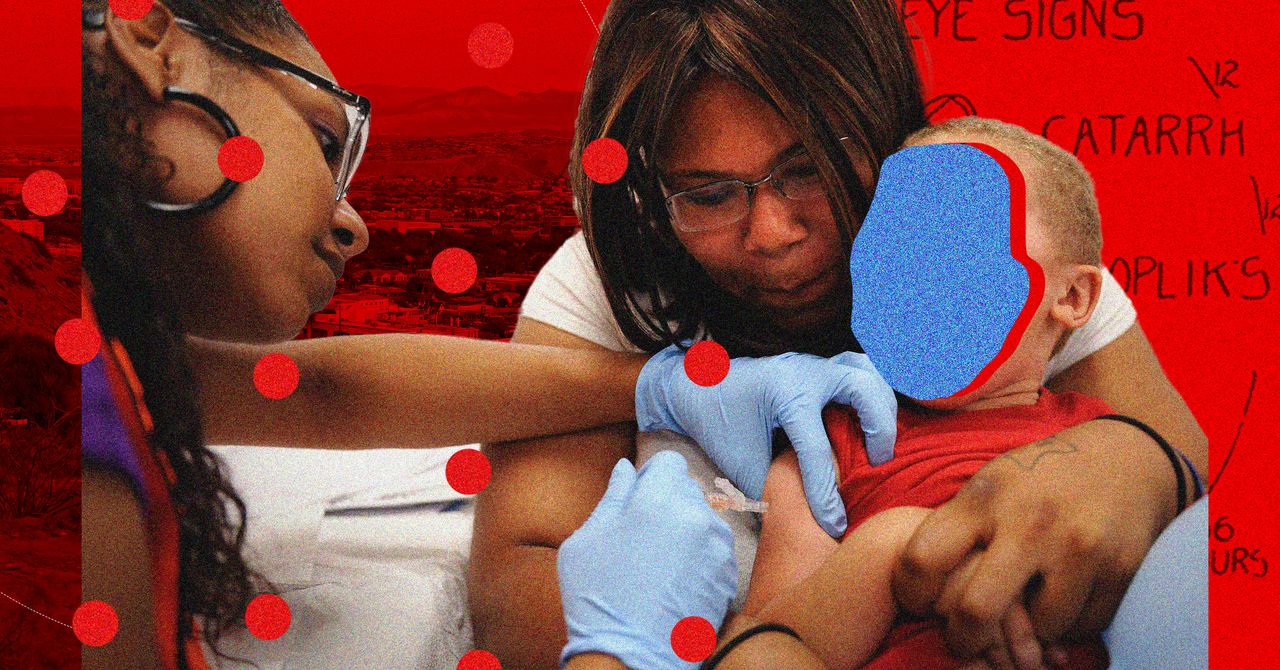
Measles in the United States has reached a 35-year high, and pediatricians in Utah say the numbers now look like children struggling to breathe in hospital rooms, parents facing quarantine orders and doctors having the same vaccine conversation again and again.
Confirmed cases have already hit that high by July, according to a Johns Hopkins measles tracker cited by WIRED and KFF Health News. Cases recorded this year and last now exceed the combined total from the previous 25 years. Nearly 400 people have been hospitalized over that period, three people have died, and at least three developed brain swelling with symptoms that continued afterward, according to federal and medical reports cited by WIRED and KFF Health News.
The U.S. also appears to have crossed a line it had avoided for about a quarter-century. Measles elimination does not mean zero cases. It means outbreaks are sporadic and transmission chains die out within 12 months. Utah’s outbreak has continued since June 2025, according to a New England Journal of Medicine Evidence report cited by WIRED and KFF Health News.
The Centers for Disease Control and Prevention is expected this month to complete an internal review of national measles data from January 2025 through June 2026. A CDC scientist familiar with that report told WIRED and KFF Health News that sustained transmission over the past year is hard to deny. The report will go to a national committee of measles experts and then to the Pan American Health Organization, which reviews elimination status across the Americas. PAHO is expected to make decisions at its annual meeting this fall.
Anne Schuchat, who led the CDC’s immunization and respiratory disease group from 2006 to 2015, told WIRED and KFF Health News that the November review is largely a scheduling matter. She described the return of measles as a warning, with some patients likely to become severely ill.
What Utah doctors are seeing
Six Utah pediatricians interviewed by WIRED and KFF Health News described measles as a brutal illness, not the quaint childhood rite some parents remember from family stories. Emilie Morris, a hospital pediatrician in Salt Lake and Utah counties, said some children arrive hunched over with swollen airways, drooling, dehydrated and breathing with visible effort.
Nathan Money, another hospital pediatrician in Salt Lake and Utah counties, said an unvaccinated child with fever or breathing trouble forces doctors to search more aggressively for life-threatening infections such as sepsis or meningitis. That can mean blood work and lumbar punctures, procedures that hurt and frighten families, because clinicians cannot safely assume the child is protected.
Trahern W. Jones, a pediatric infectious disease specialist in Salt Lake City, described children with harsh coughs and high-pitched breathing who cannot sleep because the coughing does not let up. He said some parents tell him they delayed vaccines after hearing about a possible vaccine reaction in someone they knew, intending to catch up later.
Morris described one uninsured family weighing the cost of care while a child needed oxygen for pneumonia. The family also had other unvaccinated children at home. Because the window for post-exposure vaccination had passed, doctors recommended keeping those children at home for 21 days and avoiding contact with the community.
Trust is the broken infrastructure
The doctors told WIRED and KFF Health News that many parents they see are hesitant rather than committed anti-vaccine activists. Tim Duffy, a Salt Lake County pediatrician, said younger parents often arrive after months of online “research” that reinforces their fears.
A southern Utah pediatrician, unnamed by WIRED because of harassment concerns, said parents often ask about autism or vaccine ingredients. The doctor said families need straight answers and continued care, not dismissal from a practice that ends future conversations.
Several doctors said politics has made the work harder. Jones said vaccines have become a partisan weapon in a way they were not 20 years ago. The southern Utah pediatrician pointed to federal changes to vaccine recommendations and the replacement of members of the Advisory Committee on Immunization Practices, saying professional groups including the American Academy of Pediatrics and the American Academy of Family Physicians have said those changes were not evidence-based.
Money said rebuilding trust will require consistent public messaging from pediatricians, health departments, community leaders and state officials. He said Utah needs visible campaigns explaining the safety of the measles, mumps and rubella vaccine and the risks of measles. For now, he said, reliable information often requires parents to go looking for it.
This story draws on original reporting from WIRED.