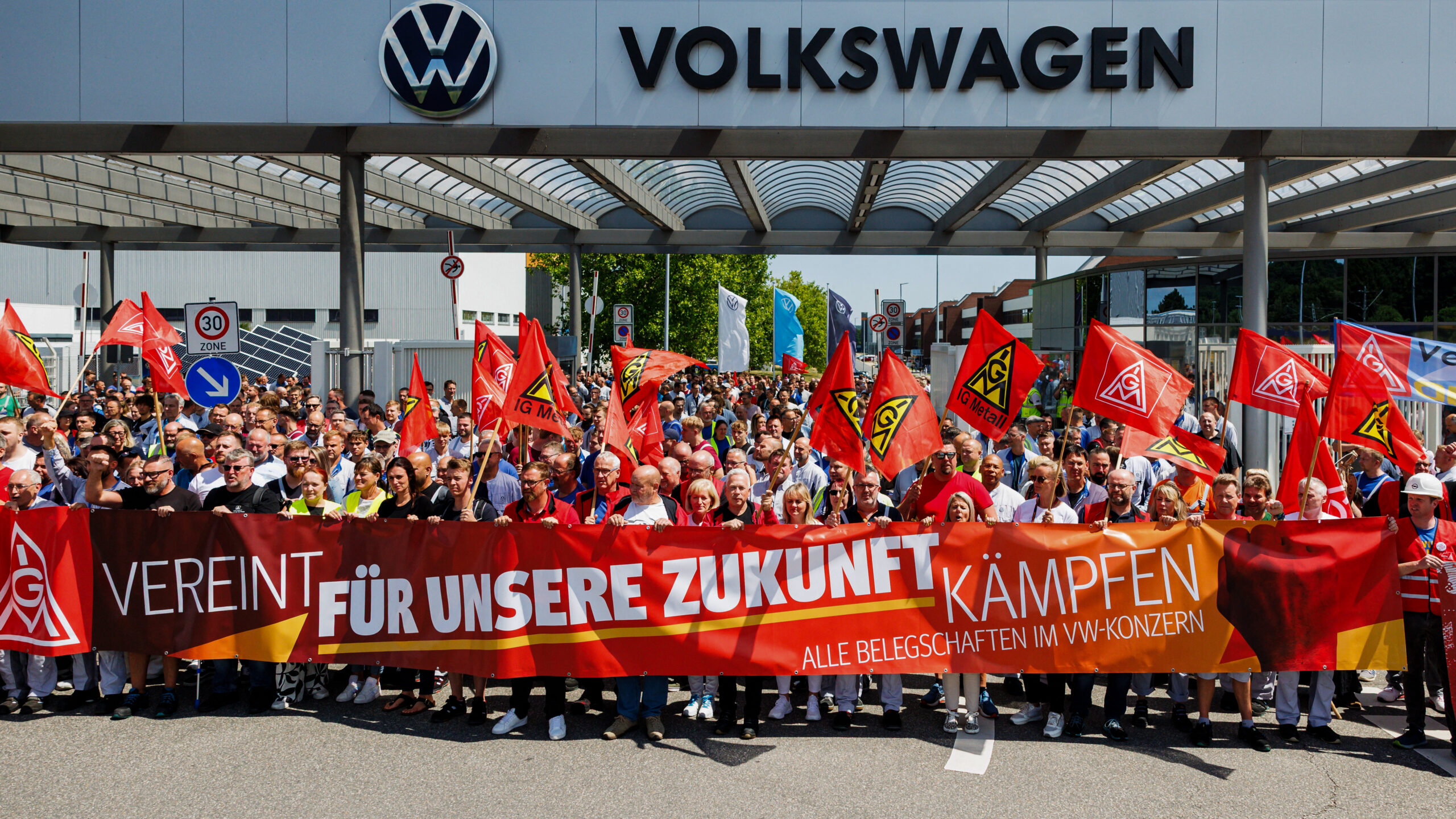
Volkswagen Group’s attempt to push through a broad simplification plan has hit the wall inside its own governance system. Reuters reported that the company’s supervisory board rejected the measure by a 12-7 vote after tense talks among stakeholders.
The fight matters because Volkswagen is trying to fix a cost problem without detonating a labor war in Germany. The group is selling electric vehicles well in its home region, according to Ars Technica, but tariffs and weaker positions in China and North America have hurt the company. Its margins have been squeezed at the same time it is carrying more factory capacity than current demand supports.
Volkswagen’s public statement on the proposal did not directly announce plant closures or layoffs. That absence is doing a lot of work. Previous reports had pointed to much harder medicine, including possible factory closures and job reductions, but the plan put in public focused on fewer models, fewer configurations and less industrial complexity.
What Volkswagen proposed
Volkswagen said its executive board presented a future plan that would cut the number of vehicles offered across its brands by half. The company, which owns Audi, Porsche, Skoda and Lamborghini in addition to the Volkswagen brand, said the remaining models would be focused on what it called the “most attractive market segments.”
The plan also targeted options bloat, the quiet enemy of every factory manager and a dependable source of customer confusion. Volkswagen said the number of available equipment choices and other offering complexity could be reduced by as much as 75 percent.
The industrial logic is plain enough. Fewer nameplates and fewer option combinations mean fewer build variants, fewer parts paths and less retooling pain. That can make factories cheaper to run. It can also mean less labor is needed, even if the company avoids writing “job cuts” in neon on the first page.
Volkswagen also described a capacity problem. The group said global demand for its vehicles is about 9 million units a year, compared with annual production capacity of 10 million vehicles. It added that it has already cut capacity by 2 million units since the Covid period.
Why unions can block the plan
Volkswagen is not governed like most car companies. Worker representatives hold 10 of the 20 seats on the supervisory board, according to Ars Technica. Two other seats are tied in part to Lower Saxony’s partial ownership of the company and are currently held by the German state’s education minister and minister-president.
That structure gives labor a real veto point, not a ceremonial chair in the corner. Volkswagen and its unions have fought repeatedly over job reductions. In 2024, the two sides spent months negotiating before agreeing to a plan to cut 35,000 jobs by 2030.
By March, that figure had reportedly grown to 50,000. In late June, a German magazine reported that Volkswagen was considering cutting 100,000 jobs by 2030 and closing four German factories. Ars Technica noted that closing German plants would be unprecedented in Volkswagen’s history.
Volkswagen’s published plan stopped short of those specifics. Reuters’ reporting indicates that restraint was not enough to get the proposal through the supervisory board. The company now has to find another way to reconcile weaker margins, excess capacity and a workforce with enough power to say no.
This story draws on original reporting from Ars Technica.