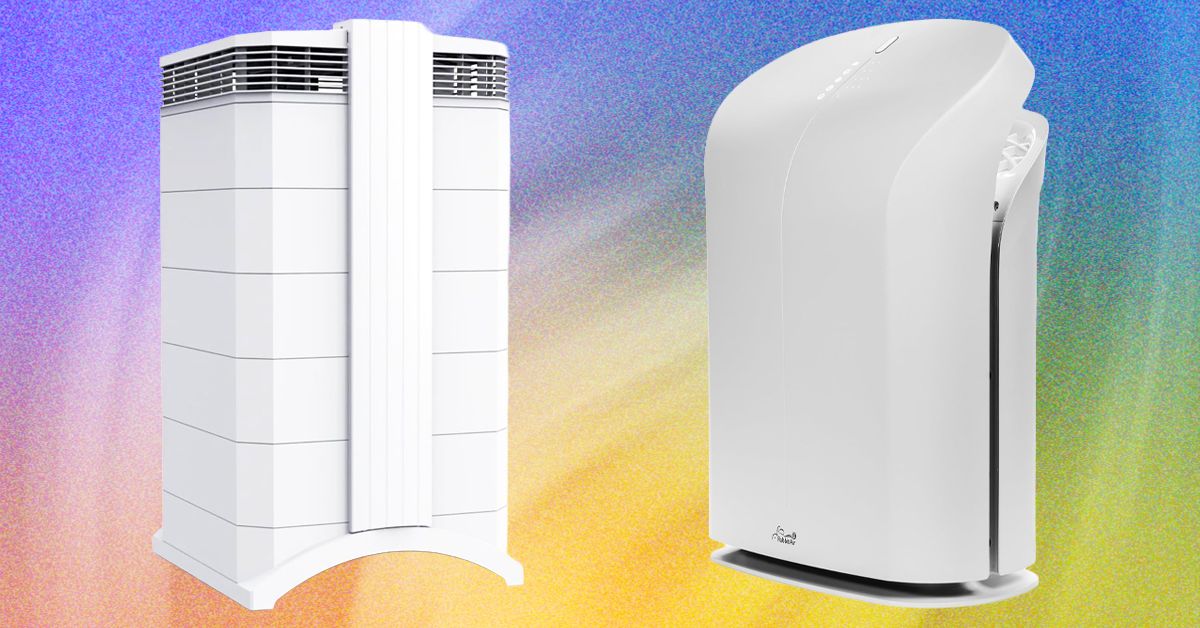
WIRED has updated its 2026 air purifier recommendations, naming the IQAir Atem X as its best overall pick and pushing readers to look past the marketing-friendly room-size numbers that purifier makers love to print on boxes.
The guide, updated in July 2026, is based on testing by WIRED reviewers including Lisa Wood Shapiro and Molly Higgins. WIRED said it added the Shark BreatheClear Max and IQAir Healthpro Plus, expanded its explanation of testing practices, and refreshed links and prices.
Shapiro’s top pick, the IQAir Atem X, costs $1,400 through Amazon or IQAir, according to WIRED. The machine uses IQAir’s HyperHEPA filter, supports app control and a remote, includes a built-in sensor, and can sit against a wall. WIRED lists its ideal room size at 1,650 square feet and its weight at 28.7 pounds.
The Atem X’s big practical hook is support, not mysticism in a round plastic shell. WIRED said the purifier can be covered by a 10-year warranty if the buyer registers it and maintains a filter subscription. Shapiro’s main caveat is also a real one: the Atem X does not include a carbon filter, so it is not designed to remove gases.
Coway gets two slots, with caveats
For odor control, WIRED picked the Coway Airmega 450, priced at $499. Shapiro described it as a 30-inch tower weighing 24.9 pounds, with wheels and a concealed handle that make it easier to move than its size suggests. Its filter stack combines a vacuumable prefilter, Coway’s True Green HEPA filter, and activated carbon.
WIRED said the Airmega 450 can clean a 300- to 400-square-foot room at five air changes per hour at a quieter setting. That five-change target tracks with guidance from the Centers for Disease Control and Prevention cited by WIRED. Coway claims the unit can clean a 3,285-square-foot room, but WIRED noted that figure refers to one air exchange per hour at the loudest setting, which it measured at 57.7 decibels.
That distinction is the unglamorous part of buying an air purifier. A one-hour room-size claim is not the same thing as cleaning the air often enough for a living room, bedroom, or smoke-filled apartment. WIRED’s rule of thumb is to divide the claimed one-hour coverage by five, then cut expectations again if you do not want the fan screaming all day.
The Airmega 450 lacks Wi-Fi and a remote. Shapiro also criticized its air-quality light colors because they do not match the standard Air Quality Index palette. She liked its control-panel lock, timer, filter replacement button, and energy-saving eco mode, which stops airflow after 10 minutes without detected pollution.
WIRED also highlighted the Coway Airmega Mighty2, a $270 update to the earlier Airmega Mighty. Higgins reported that it uses a washable prefilter plus a combined activated-carbon and HEPA filter that needs annual replacement. WIRED lists the Mighty2 for spaces up to 1,800 square feet based on one air exchange per hour, with a 15.2-pound body and no app or remote.
The Mighty2’s sensor system detects PM1.0, PM2.5, and PM10 particles, according to WIRED, spanning material from very small airborne particles up to pet fur. In Higgins’ smoke-filled tent test, the purifier restored healthy air quality in about four minutes and reached about 70 decibels on its highest fan setting.
Other picks for specific problems
WIRED named the Levoit Vital 200S-P as its pick for homes with pets. The guide listed it at $170 on Amazon, down from $190 at the time of publication. For wildfire smoke, Shapiro recommended the Rabbit Air BioGS 2.0 at $375.
Shapiro framed the guide around ordinary indoor pollution as much as disaster smoke: vehicle exhaust, cigarette smoke, building emissions, pollen, gas cooking without a hood vent, pet dander, and wildfire smoke drifting across regions. The testing setup is domestic and a little messy, which is appropriate. Air purifiers do their work in rooms with cats, stoves, allergies, dust, and people who would rather not calculate air changes per hour before breathing.
This story draws on original reporting from WIRED.


