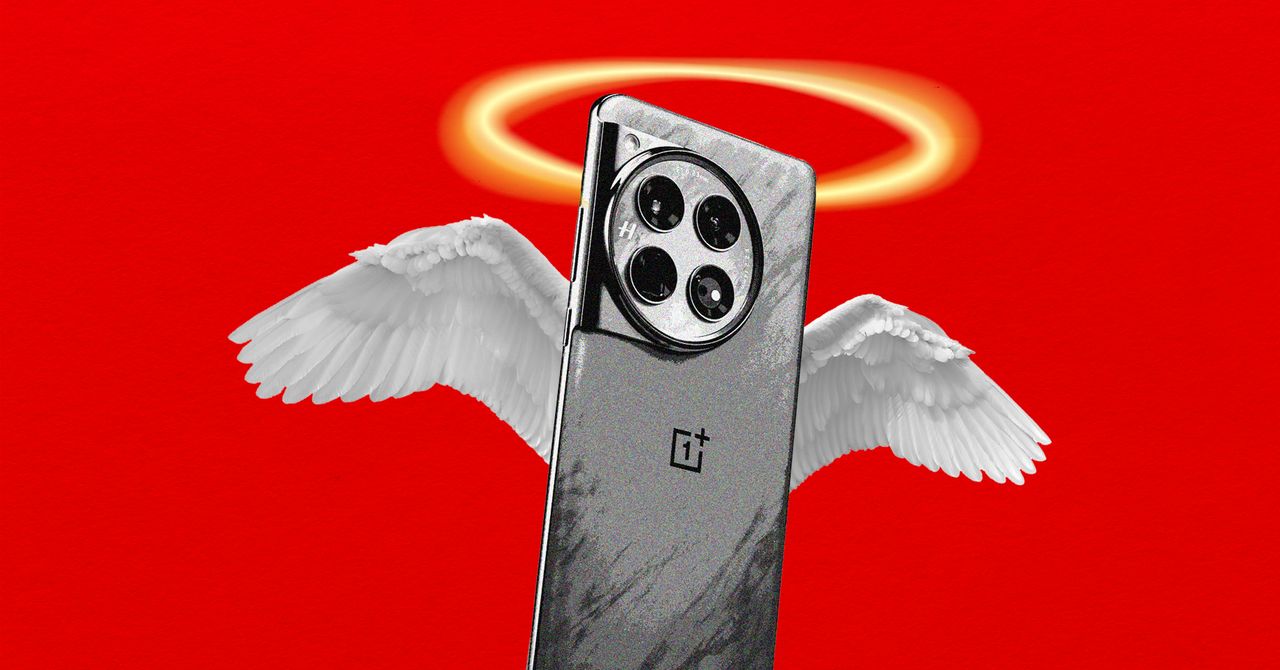
Oppo appears to be shrinking OnePlus outside China, a retreat that would leave US and European phone buyers with one fewer credible alternative to Apple, Samsung, and the usual carrier-approved shelf furniture.
WIRED reported that OnePlus, an Oppo subsidiary, has laid off employees across several regions over recent months. The publication said it confirmed departures and transfers by speaking with former OnePlus employees and reviewing dozens of LinkedIn updates, with many workers leaving roles between March and June.
Many European OnePlus employees moved into jobs at Oppo or Realme, another Oppo subbrand, according to WIRED. A former OnePlus employee, speaking anonymously to protect future job prospects, told WIRED they were laid off in April, after their managers had already been cut, and said the company eliminated its New York City office.
Oppo did not confirm to WIRED whether OnePlus is formally leaving North America or Europe. Its statement focused on China and said Realme would concentrate on overseas markets and stop launching new products in China, while OnePlus’ China product plan would continue unchanged. Oppo also said Realme and OnePlus would keep offering premium gaming and performance devices.
That statement answers the least uncomfortable question. It does not say whether OnePlus phones will remain available in the US or Europe, nor what happens to people who already own the devices. Oppo did not respond to WIRED’s questions about future software updates or repair support for existing OnePlus products. OnePlus also did not respond to WIRED’s requests for comment.
The carrier problem caught up with OnePlus
OnePlus built its early reputation by selling Android phones with high-end specifications at lower prices than the flagship models from Apple and Samsung. Nabila Popal, senior research director for consumer devices at IDC, told WIRED that OnePlus was never a US market leader, but its sales fell sharply after T-Mobile ended its partnership in 2023.
IDC figures cited by Popal show OnePlus shipped 1 million smartphones in the US in 2019 and just under 130,000 in 2025. That is roughly a 90 percent decline over six years. Popal told WIRED that carriers accounted for as much as 66 percent of US smartphone volume in 2025, which makes losing a major carrier channel a serious problem rather than a footnote. T-Mobile declined to comment to WIRED.
The geographic mix also changed. Popal said the US made up about 22 percent of OnePlus shipments in 2021, with Europe at a similar level and China at 18 percent. By 2025, China accounted for 56 percent of OnePlus volume, and Asia Pacific as a whole reached 91 percent, according to the IDC data she cited.
OnePlus also moved away from the price positioning that made it distinctive. Popal pointed to the OnePlus 6 in 2018, which launched at $529 with high-end specifications, then said the company later chased premium pricing and became harder to distinguish from competitors. She told WIRED that Apple and Samsung have been the brands most able to sustain that higher-price strategy.
A weaker phone market gives Oppo less room
The retreat comes during a rough period for phone makers. Counterpoint Research said global smartphone shipments fell 11 percent year over year in the second quarter of 2026, the weakest second-quarter level in 13 years. Counterpoint attributed pressure partly to memory shortages tied to data-center demand from the AI boom. It said Apple and Samsung grew, while Xiaomi, Oppo, and Vivo had the steepest declines.
WIRED also reported rumors that Oppo may replace OnePlus’ OxygenOS Android interface with Oppo’s ColorOS. That remains unconfirmed, and it is unclear whether existing OnePlus phones would receive any update that removes OxygenOS.
For US buyers, the likely effect is less choice. Popal told WIRED that OnePlus fell from 1.8 percent of the US smartphone market in 2021 to 0.1 percent in 2025, while Apple and Samsung rose from a combined 73 percent to 80 percent over the same period. OnePlus may keep shipping phones somewhere. The question Oppo has not answered is whether customers outside China are still part of the plan.
This story draws on original reporting from WIRED.