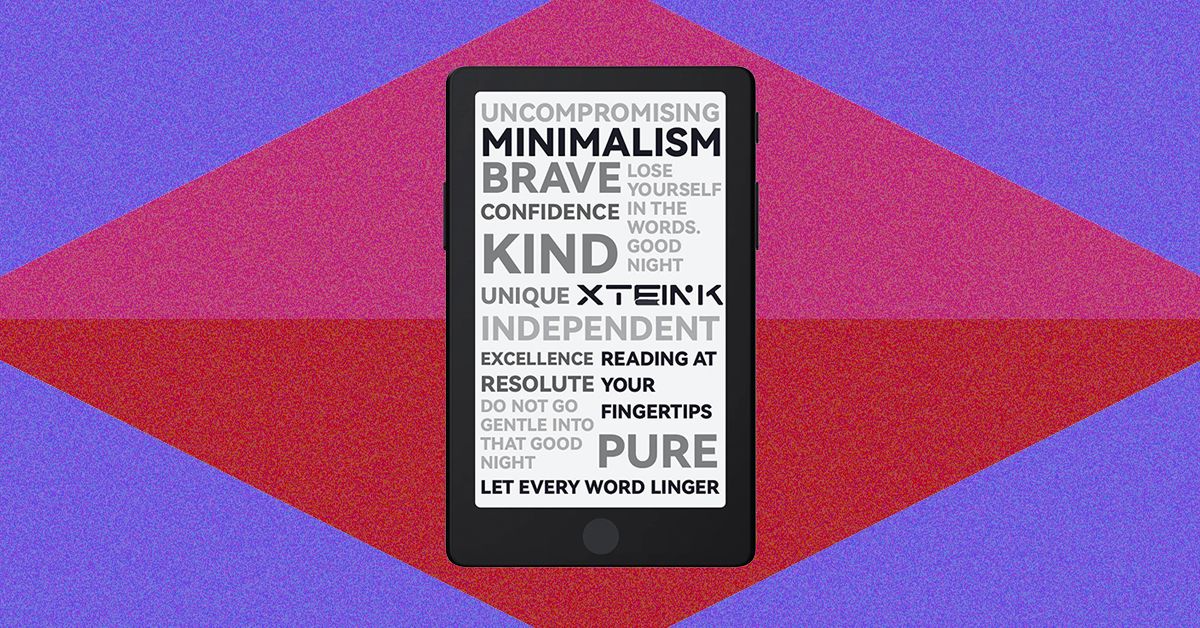
This Xteink X4 Pro review reaches a fairly clean verdict: buy it if a 72 g reader that can live in a pocket matters more than frictionless access to a book store. Xteink’s upgraded X4 is built for short, text-heavy reading sessions, with a front light and physical page buttons. It is a poor fit for anyone expecting Kindle-style purchasing, large type, or roomy pages.
The hardware is doing the charming part. Xteink lists a 4.3-inch, 219-ppi E Ink display in a 111 by 69 by 5.95 mm body. The company says it weighs 72 g and includes a 16 GB microSD card, with support for cards up to 256 GB. WIRED’s Nena Farrell found the display sharp enough to read comfortably, but reported seeing only about a paragraph and a half per default-font page. That means a lot of page turns. Physics remains annoyingly immune to product design.
The Pro’s upgrades over the X4 are substantive: an adjustable warm/cool front light, touchscreen navigation, a home button, stronger rear magnet and an 1,100 mAh battery, up from 650 mAh in the earlier model, according to WIRED. It retains physical side buttons for turning pages. The official specifications list a pogo-pin port rather than USB-C.
Is the Xteink X4 Pro worth buying?
It is worth considering for readers who already have compatible local files and want a very small device for novels, essays and articles. It is harder to recommend as a general-purpose e-reader. The screen favors reflowable text over PDFs, comics and other fixed-layout material, and the absence of an integrated store leaves the reader responsible for finding and moving books.
Xteink says users can transfer files with its companion app over Wi-Fi or connect the reader to a computer in USB mode. The company’s current FAQ specifically lists EPUB and TXT as supported document formats, JPG and BMP for images, and BIN and XTF for fonts. It advises prospective buyers to check with support before assuming compatibility for PDF, MOBI, PNG, retailer-specific formats or DRM-protected titles.
That caution is not cosmetic. Farrell reported a broader format list in her review, including PDF, MOBI and PNG, but Xteink’s later detailed FAQ is narrower. Buyers should treat the official list as the safer pre-purchase guide and confirm support for any file outside it. A separate Lifehacker review said DRM commonly limits whether ebooks bought from major stores can work on a sideloaded reader. That is the core tradeoff: this device reads the files you can legitimately use, rather than serving as a storefront in your hand.
How does the Xteink X4 Pro handle in daily reading?
The mixed-control design is sensible on paper. Tap or swipe to browse and adjust settings, then use the side buttons while reading. In practice, Farrell said the touchscreen sometimes needed repeat taps, while a three-week review by Pixel Leaves found the physical buttons more responsive. Pixel Leaves also noted an option to disable touch input during a book, useful when the small device is being handled one-handed.
The front light expands where the X4 Pro can be used, with brightness and warmth controls. Battery life remains uncertain. Xteink publishes the 1,100 mAh capacity but no standardized runtime claim; Pixel Leaves recorded about 10 hours with the light at its lowest setting on stock firmware, one reviewer’s result rather than a promise.
- Buy it for: pocketability, physical page turns, low-light reading and compatible EPUB or TXT files.
- Skip it for: a built-in ebook shop, large text, fixed-layout pages, or an appliance-like setup process.
- Check before ordering: file support, current app behavior and the Bluetooth feature you need. Xteink lists Bluetooth but does not specify accessory uses in its FAQ.
The pogo-pin charging arrangement deserves a small warning label. Xteink says the box includes a magnetic charging adapter, but not a charging cable. It is not USB-C charging, although the adapter is meant to work with a compatible cable and power source.
The X4 Pro is a fun bit of deliberately constrained hardware. It removes the phone from reading without removing the file chores that mainstream e-readers hide behind their stores. For the right reader, that is a tolerable tax. For most people, a larger reader with direct bookstore access will be less clever and more useful.
This story draws on original reporting from WIRED.