Zoox paid robotaxi rides are now cleared under a temporary National Highway Traffic Safety Administration exemption, giving the Amazon-owned company permission to put vehicles without conventional driver controls into paid service. The agency said Thursday that Zoox may deploy up to 2,500 vehicles a year for the next two years.
The decision moves Zoox from free demonstrations into commercial rides, at least in the markets it has named. Zoox said in a press release that it will start charging fares in Las Vegas next month. The company also plans to bring the service to Miami and Austin.
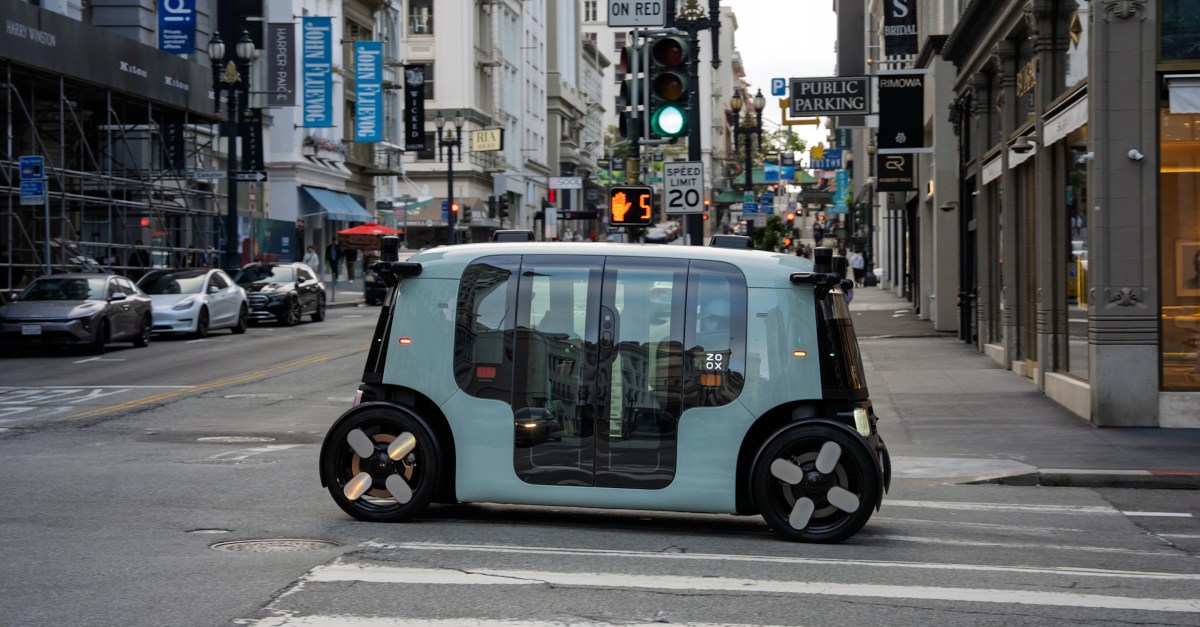
The exemption matters because Zoox’s vehicle was not designed around a human driver. It has no steering wheel or pedals, and NHTSA’s decision also exempts it from requirements tied to equipment such as mirrors and windshield defrosting. Those rules were written for cars with drivers. Zoox is trying to run a passenger pod, which makes the old checklist awkward in ways regulators can no longer dodge.
Why did Zoox need NHTSA approval?
Federal motor vehicle safety standards generally assume someone can sit in a driver’s seat and take physical control. A company building a vehicle without that hardware needs an exemption before it can deploy those vehicles on public roads for uses covered by the rules.
In its decision, NHTSA said it found that Zoox’s robotaxis provide an “equivalent or greater level of motor vehicle safety” compared with vehicles that meet the applicable federal standards. That is the agency’s safety finding, not independent proof that the service will perform flawlessly in city traffic.
Zoox’s vehicle layout reflects that regulatory bet. The cabin uses two bench seats facing inward and sliding doors, according to prior descriptions of the vehicle. The design treats all occupants as passengers rather than making one seat the command position, which is tidy from a product-design perspective and messy from a 20th-century rulebook perspective.
Until this clearance, Zoox had been offering free rides in San Francisco and Las Vegas under a demonstration exemption. The new approval lets the company charge passengers, which changes the service from a controlled preview into a commercial robotaxi operation.
When can riders pay for Zoox robotaxi rides?
Zoox says paid rides will begin in Las Vegas next month. The company has not provided fare details in the facts announced here, and the NHTSA exemption itself sets a deployment ceiling rather than a public launch schedule for every city.
The approval also puts Zoox more directly into the same market conversation as Waymo and Tesla, both of which have been expanding robotaxi services in the United States. Reuters reported earlier on the NHTSA approval. For riders, the practical change is narrow but real: in Las Vegas, Zoox can now ask for money for a ride in a vehicle built without the parts a human driver would normally grab, press, or check.
This story draws on original reporting from The Verge.