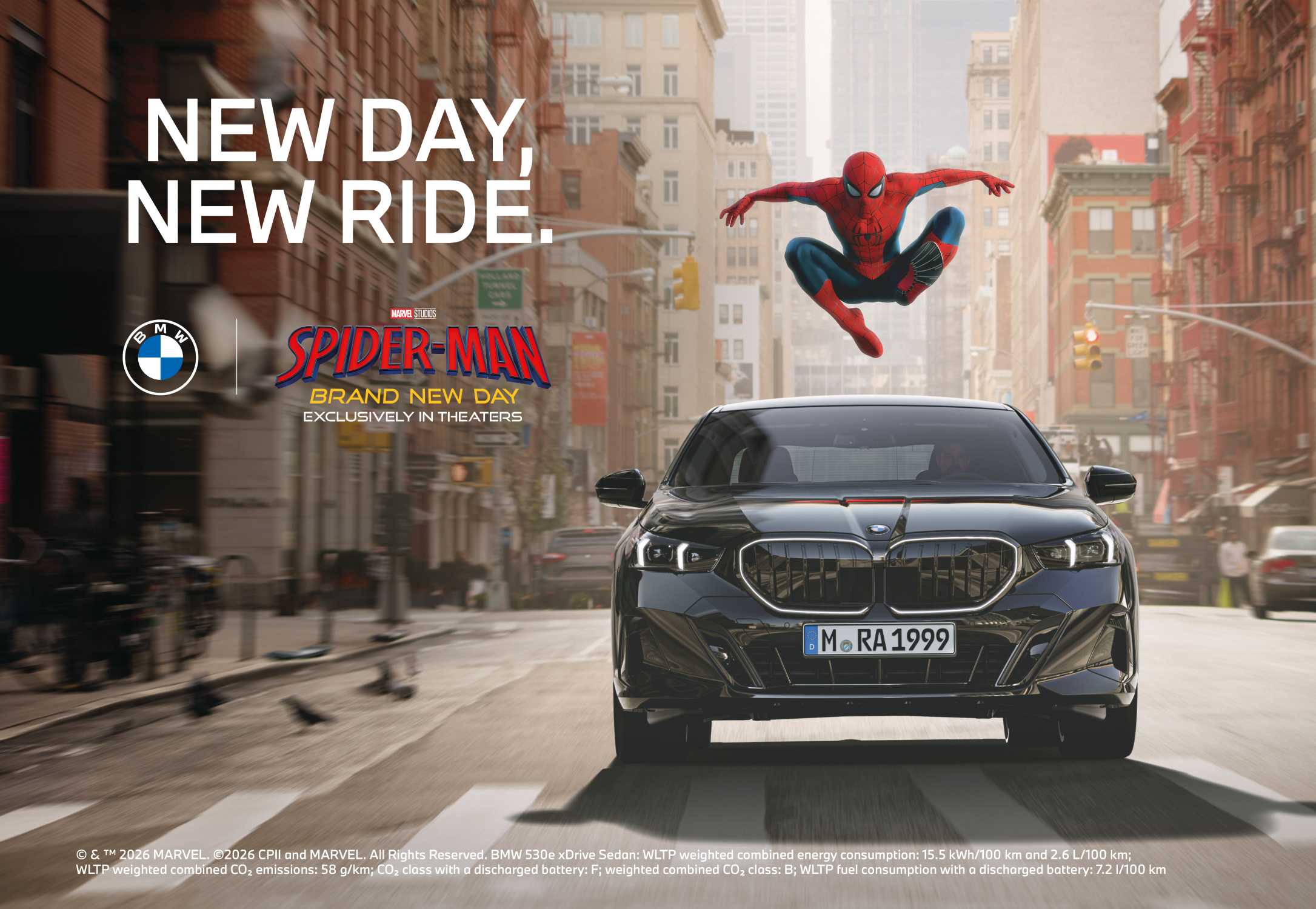
The BMW Spider-Man dashboard ads controversy has produced a confident claim with a conspicuous hole in it: none of the public material supplied by BMW or later reporting identifies who paid whom. BMW confirmed a marketing partnership tied to Sony Pictures’ Spider-Man: Brand New Day, including cars in the film and a temporary in-car animation. It did not publish a contract, price, invoice, or payment direction.
That leaves the claim that Sony paid BMW to place the promotion in customers’ cars unproven. The reverse claim, that BMW paid Sony, is also not established by disclosed deal records. It is a reasonable commercial inference from the form of the partnership, not a reported fact.
BMW announced the collaboration on July 28, ahead of the film’s July 31 cinema release. The automaker said its iX3 and 5 Series Sedan would appear as significant vehicles in the movie, with the cars incorporated into its plot. BMW also said eligible drivers in many markets could access a Spider-Man animation on their Control Display from the film’s premiere through August 10.
Did BMW or Sony pay for the Spider-Man dashboard promotion?
Neither company’s disclosed material in the available record says. BMW’s announcement markets the arrangement as a collaboration and lists the film placement and dashboard feature, but omits its financial terms.
A paywalled August 5 newsletter from Huddle Up called a circulating assertion that Sony paid BMW $300 million inaccurate. Yet the portion available publicly provides no underlying agreement or other documentation establishing either a payment figure or the payer. A viral number does not become accounting because it has commas in it.
The confirmed facts instead describe reciprocal promotion. BMW received on-screen exposure for two models, while the movie received an in-car tie-in aimed at drivers with compatible BMW features. Product-placement arrangements can involve fees, marketing commitments, or other negotiated consideration, but the evidence here does not reveal which terms applied.
What BMW says drivers saw
BMW said the display animation was available for a limited period in many markets for vehicles equipped with the relevant features. Reporting by FuelCellsWorks attributed a further explanation to BMW: the company said the feature was optional, available while the vehicle was stationary, and started by a driver through the touchscreen.
BMW also told that outlet the animation belonged to a broader brand partnership that included the film’s vehicle placement and a special-edition car at the Los Angeles premiere. The company disputed the description of the feature as advertising and said it did not plan to introduce advertising into its vehicles.
Online reaction nevertheless treated the movie material on a car display as an ad. The Hollywood Reporter’s August 5 coverage documented owner anger, and social-media posts made similar complaints. Those reactions establish that some drivers objected; they do not establish that the feature reached every BMW, appeared automatically, or was financed by Sony.
The clean version is less satisfying than the viral one: BMW and Sony had a broad promotional arrangement. BMW’s own announcement confirms both the movie placement and the dashboard animation. The public record does not disclose the money trail.
This story draws on original reporting from BMW Group PressClub.