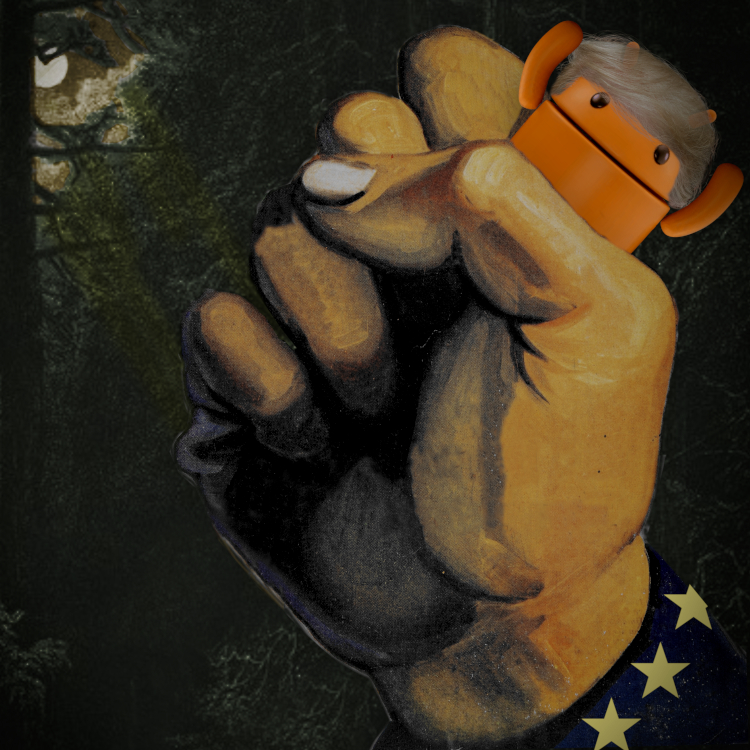
The EU punish Google fight now has a second front: not another fine, but a proposal to stop American tech companies from using European courts against European firms that modify their products. Cory Doctorow, writing at Pluralistic, argued that the European Union has limited leverage over Google directly under President Donald Trump, but full control over its own copyright rules.
The immediate trigger is the European Commission’s July 23 announcement that it had fined Google €890 million for breaches of the Digital Markets Act, according to the Commission notice cited by Doctorow. He wrote that the penalty followed conduct that cost Europeans “many billions,” and argued the fine did not recover all of the alleged gains from Google’s behavior.
Trump responded by threatening the EU with tariffs if it kept enforcing its rules against Google, according to a Le Monde report cited by Doctorow. The point, in Doctorow’s reading, is larger than one Google case: the Digital Markets Act and Digital Services Act allow escalating penalties for repeat violations, so U.S. pressure could chill the whole enforcement regime.
How can the EU punish Google?
Doctorow’s answer is blunt: repeal Article 6 of the EU Copyright Directive, the anti-circumvention rule that makes it legally risky to reverse-engineer or modify devices and apps without the manufacturer’s permission. In plain English, anti-circumvention law protects digital locks, even when breaking or bypassing those locks could let users repair, inspect, interoperate with, or alter software they rely on.
Doctorow says Article 6 was adopted in 2001 after pressure from the U.S. Trade Representative, which he says threatened tariffs unless the EU adopted rules similar to America’s anti-circumvention regime. He argues the rule now blocks European technologists from building tools that would make U.S. platforms comply with European privacy, consumer, labor and tax expectations.
The mechanism matters. A fine requires money to move, and Doctorow argues Trump could pressure U.S. banks not to transfer serious penalties to Europe, even after a European court order. A local software modification business, by contrast, would operate inside Europe and be subject to European law.
Doctorow connects the Google dispute to a broader shift in transatlantic tech politics. He wrote that during the Biden administration, U.S. antitrust officials such as Lina Khan, Rohit Chopra, Jonathan Kanter and Tim Wu were aligned with European efforts to restrain large technology companies. He also cited South Korea and Japan as governments that used facts developed through EU actions against Google and Apple in their own cases.
That alignment has broken, Doctorow argues. He cited reports that Trump warned EU officials at Davos against enforcing the DMA or DSA, pressured Canada and the United Kingdom over digital taxes, and pushed the EU to weaken or delay AI regulation. He also cited U.S. actions targeting European officials involved in content moderation laws.
The proposal is not that Brussels can make Google or Apple behave by wishing harder. It is that Brussels can decide whether European law continues to protect the technical locks those companies use. Repealing Article 6, Doctorow argues, would let European companies build compliant versions, adapters or modifications for U.S. tech exports, while keeping those European companies within reach of EU regulators and courts.
This story draws on original reporting from Pluralistic.