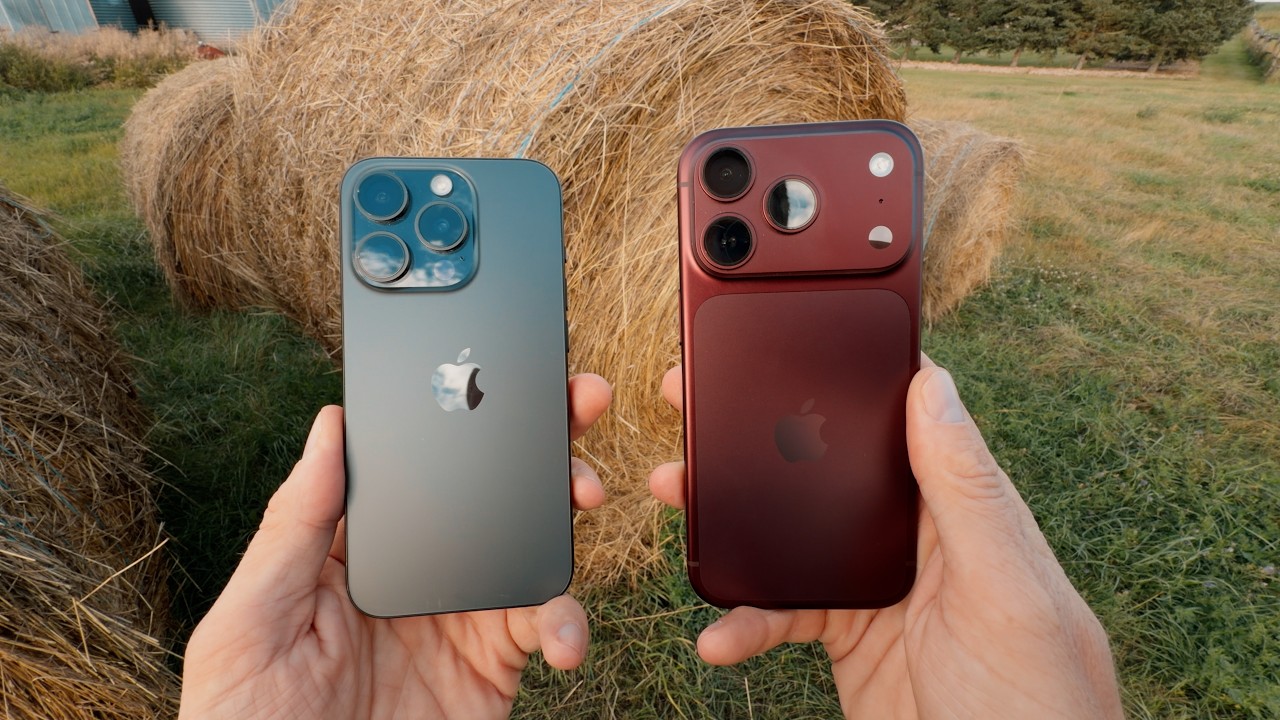
Apple may ship two modem configurations of the iPhone 18 Pro, with U.S. models using Qualcomm hardware and versions sold elsewhere using Apple’s own C2 modem, according to AppleInsider’s Marko Zivkovic, who cited documents exposed in a Tata Electronics data breach.
The split would matter because modem choice affects two things users can actually feel: battery life and network support. Qualcomm’s apparent role in the U.S. model would preserve 5G millimeter-wave support, the very fast, short-range 5G variant heavily promoted by Verizon. Apple’s C-series modems, at least so far, do not support mmWave, according to Daring Fireball’s John Gruber.
AppleInsider reported that a bill of materials tied to the U.S. iPhone 18 Pro refers to several Qualcomm components, including SDX80M, SDR875, QDM8771, QDM8720, PMK75, PMX75, and QET7100A. Zivkovic said Tata documentation for iPhone 18 models intended for other markets points instead to Apple’s proprietary C2 modem.
That would be a strange-looking product matrix only if you assume all 5G is the same. It is not. MmWave can deliver very high speeds, but it has limited range and availability. Gruber wrote that Apple’s C1 and C1X modems are widely regarded as more power-efficient than Qualcomm’s iPhone modems, which would give an otherwise identical Apple-modem iPhone a battery-life advantage.
Gruber also said the current C1 and C1X lack mmWave support, and that the leaked Tata material suggests the C2 may continue without it. If that reading is right, Apple would still need Qualcomm silicon in U.S. Pro models to keep mmWave on the spec sheet.
The practical value of that trade is less clear. Gruber, testing on Verizon from his office with Ookla’s Speedtest app, said his Qualcomm-equipped iPhone 17 Pro measured 80 Mbps down and 15 Mbps up on LTE, then 320 Mbps down and 18 Mbps up on 5G. He said an iPhone Air using Apple’s C1X modem measured 390 Mbps down and 21 Mbps up on 5G, with LTE around 80 Mbps down and 13 Mbps up.
Those are anecdotal tests, not a controlled benchmark. They do illustrate the awkward point for carriers: regular 5G and even LTE may already be fast enough for many phone tasks, while battery drain remains a daily annoyance.
Gruber argued that U.S. carrier politics may explain the split more than user need. Verizon, and to a lesser extent AT&T, spent heavily on mmWave networks and have sold flagship 5G support as a marketing point since Apple introduced 5G iPhones in 2020 with the iPhone 12. If AppleInsider’s reading of the Tata data is accurate, U.S. buyers could get mmWave support, while buyers elsewhere could get Apple’s more efficient modem instead.
Apple has not confirmed the iPhone 18 Pro modem configuration described by AppleInsider. The documents came from a breach, and the reporting describes pre-release hardware plans, which can change before launch.
This story draws on original reporting from Daring Fireball.