A New York Times investigation reported that a search of X found more than 75 known child sexual abuse material images between January and June. The reported x known csam images finding matters because it concerns material already cataloged by child-safety organizations, rather than a claim about the total amount of illegal content on the platform.
According to Techdirt’s detailed account of the Times investigation, the Times reported the material to authorities after finding it, and the images were removed. Some had been viewed hundreds of times before removal. The Canadian Center for Child Protection verified the matches, Techdirt reported.
The Times’ direct search-result summary says its review with the Canadian Center for Child Protection found that explicit images of children remained on the social-media platform. The supplied reporting does not establish how prevalent such material was across X, whether X knew about any particular match before it was reported, or whether the removals reflected a broader policy change.
How did The New York Times identify known CSAM on X?
Techdirt reported that the Times built an automated program to search related terms on X without displaying images to its reporters. The program sent links to images to a Microsoft service, which checked them against lists of previously known abusive material compiled by the National Center for Missing and Exploited Children and other child-safety groups. Analysts at the Canadian Center for Child Protection then verified the reported matches.
That workflow is different from searching for newly created material. It used lists of material already known to the groups that compile them, while avoiding display of the images during the Times’ search process, according to the account of the investigation.
The finding also should not be collapsed into a separate reported issue involving Grok, X’s chatbot. The Canadian center found 65 instances in which Grok had created sexualized or exploitative images of children before X halted the bot, according to Techdirt’s quotations from the Times. That is a distinct finding from the Times’ reported discovery of more than 75 known images through its search and comparison process.
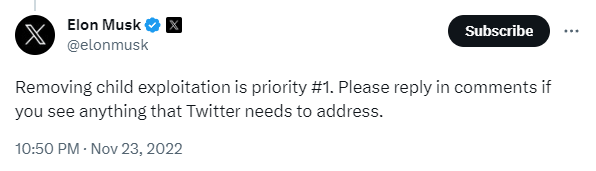
Elon Musk had publicly made child-exploitation removal a stated priority shortly after buying Twitter. In a Nov. 23, 2022 post reproduced by Techdirt, Musk wrote that removing child exploitation was “priority #1.” The more recent Times findings describe material located and reported during the January-to-June period; they do not, on their own, establish the effectiveness of X’s moderation system overall.
For readers, the important distinction is mundane but necessary: known-image checks look for material that is already on child-safety lists, while reports about generated images concern a different failure mode. Both were reported in connection with X, but they involve different systems and different evidence.
This story draws on original reporting from Techdirt.