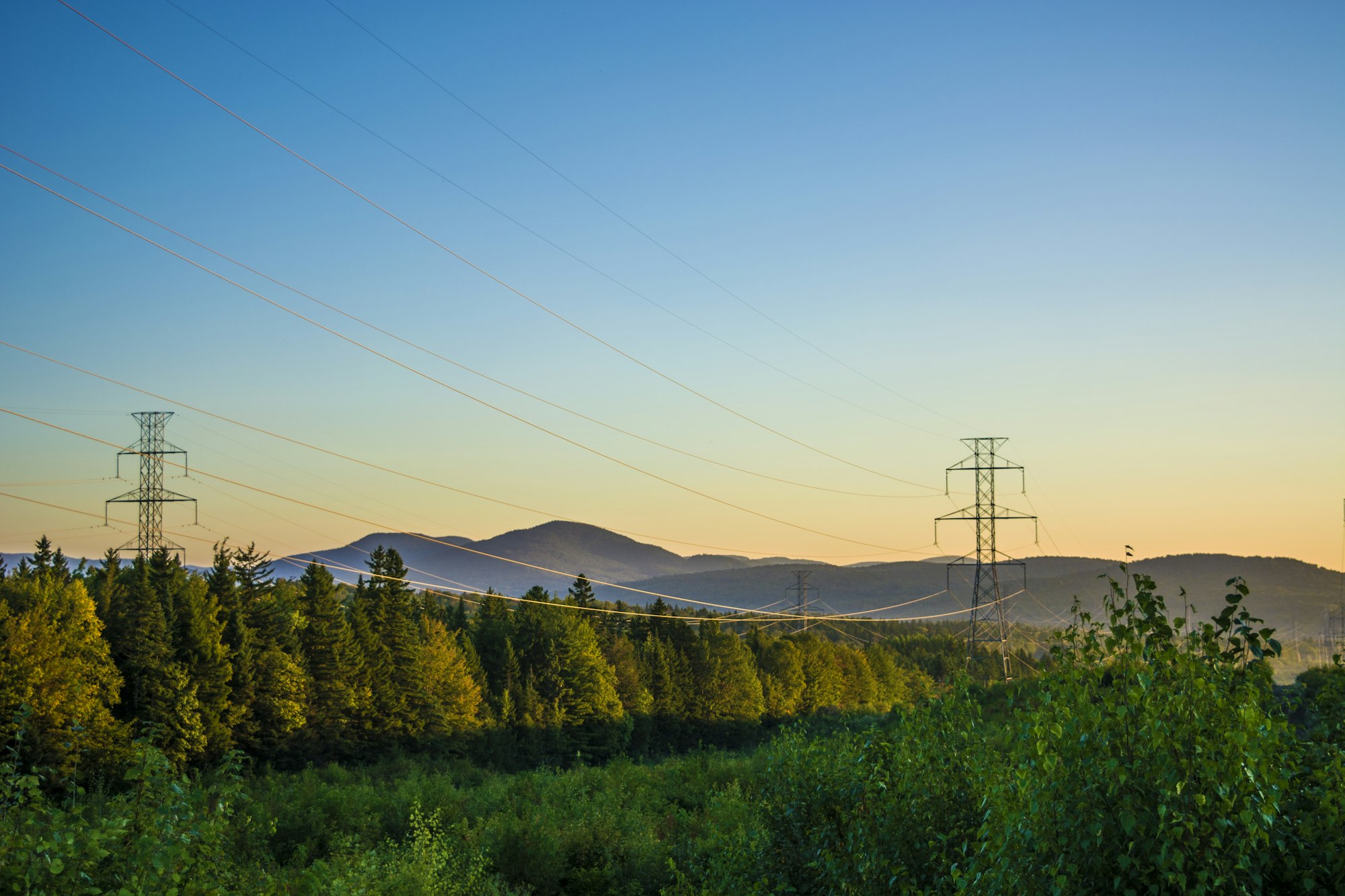
A data center power grid problem briefly became visible Wednesday when lights flickered in homes from Washington, D.C., to Chicago after a data center disconnected from PJM, Reuters reported. PJM serves 67 million customers across 13 states, including North Carolina, Virginia, New Jersey and Michigan, so a single large load dropping off the system is not a local inconvenience. It is a preview of the less glamorous side of the AI buildout: the computers are easier to buy than the electricity system needed to run them.
AI data centers pack large numbers of GPUs into buildings that can be erected relatively quickly. The grid equipment needed to feed those buildings moves on a different clock. Suzanne Glatz, an energy consultant and co-author of a Johns Hopkins report on data centers and the grid, told 404 Media that a new greenfield transmission line is likely to take seven to eight years after approval, and can take 10 years or more.
Why does powering data centers take so long?
Transmission lines have to be planned, routed, permitted, engineered and connected to substations and existing lines. Glatz said each project depends on geography, voltage, length, affected communities, environmental effects, visual impacts and available alternatives, which is bureaucratic code for “bring a chair.”
Transformers are another choke point. These devices move electricity from generation sites into forms that can be distributed to homes and businesses. Glatz said large power transformers can take one to two years from order, sometimes longer, and that delivery can be difficult. She also said poles and towers can carry long lead times, though usually less severe than transformers. Tariffs are adding pressure, she said.
Some developers are trying to dodge the grid queue by generating power on site. FTAI, a company that refurbishes jet engines, sees repurposed engines as a way to serve AI hyperscalers. David Moreno, FTAI’s chief operating officer, told Construct Connect News that AI demand has created a need for immediate and flexible power.
That shortcut has its own delays. Kevin O’Leary’s planned Box Canyon, Utah, data center would use on-site generation, but Glatz said new gas turbines have been cited in PJM discussions as having lead times of up to five years. The Utah project would require nine gigawatts of power, more than twice the state’s current power consumption rate, according to reports cited by 404 Media. The current plan would use gas from the Ruby Pipeline, which could raise Utah’s carbon emissions by 64%, according to The Salt Lake Tribune. Utah Gov. Spencer Cox has said the site should not fully run on natural gas and should eventually rely on nuclear, solar and wind, Grist reported.
Gas-fired workarounds also bring pollution fights. Reuters reported that Elon Musk’s xAI operates its Colossus 2 data center in Tennessee with 59 natural gas turbines. Many of the turbines are across the state line in Mississippi, Reuters reported, and some were not disclosed. A lawyer for the Southern Environmental Law Center told Reuters the turbines violate the Clean Air Act. On July 27, Reuters reported that the Trump administration’s Environmental Protection Agency said power plants used only to run data centers would not be subject to that law.
Tech companies including Meta, Amazon, Google and Microsoft are pursuing nuclear power for future AI capacity. Microsoft’s plan to bring Three Mile Island back online has faced delays, and small modular reactor startups have not yet delivered the fast, scalable breakthrough they have promised for years.
The near-term effect is already showing up in public budgets. In Henrico County, Virginia, which has 37 data centers, officials recently told government employees that electricity bills for government and school facilities would rise 25%, according to 404 Media. Glatz warned that PJM projections show a possible supply shortfall in coming years, with the highest risk on extreme-demand days.
This story draws on original reporting from 404 Media.